



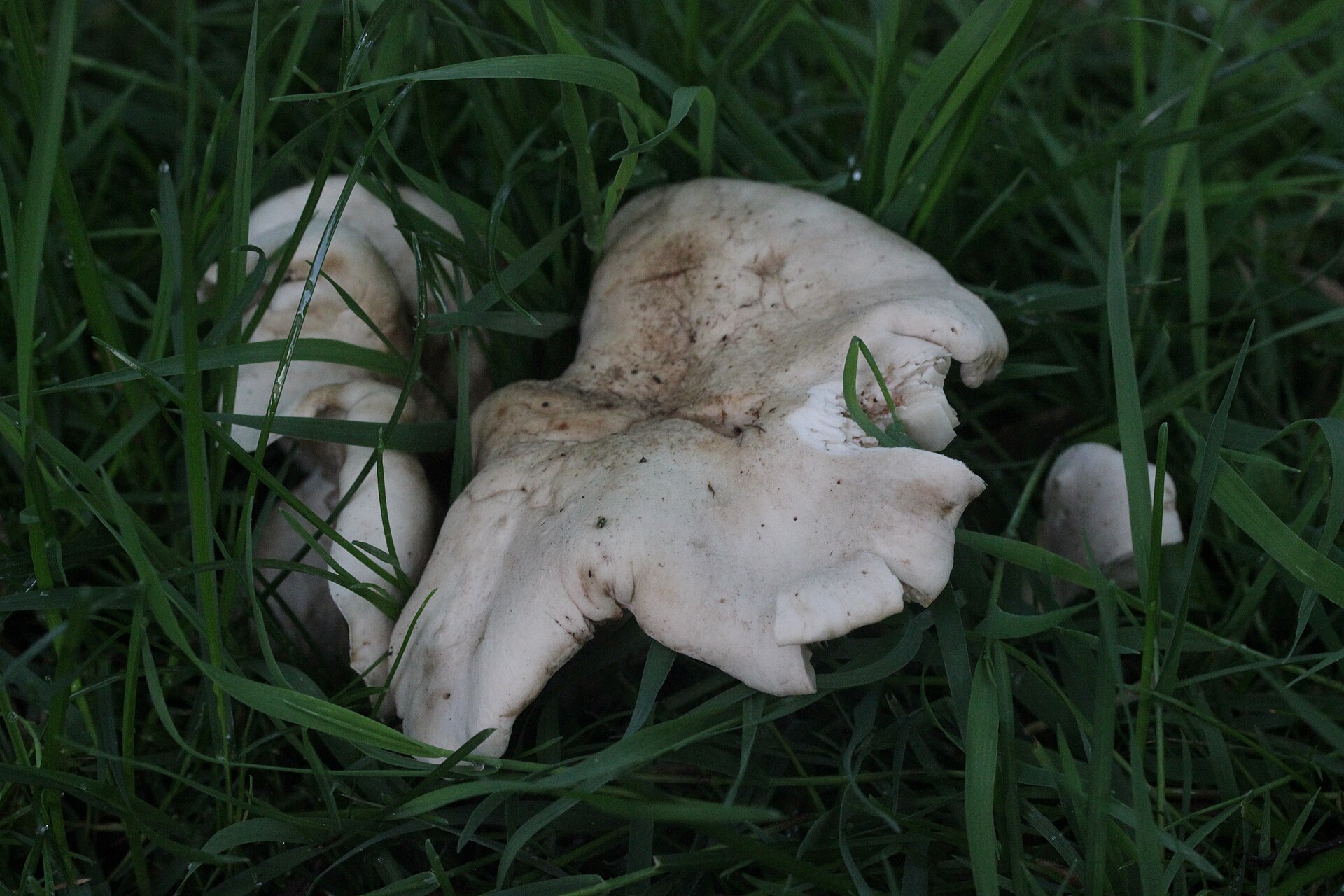
St. George's mushroom
Calocybe gambosa
Edible
★★★★☆
Taste rating: 4 out of 5
How to identify it
Cap
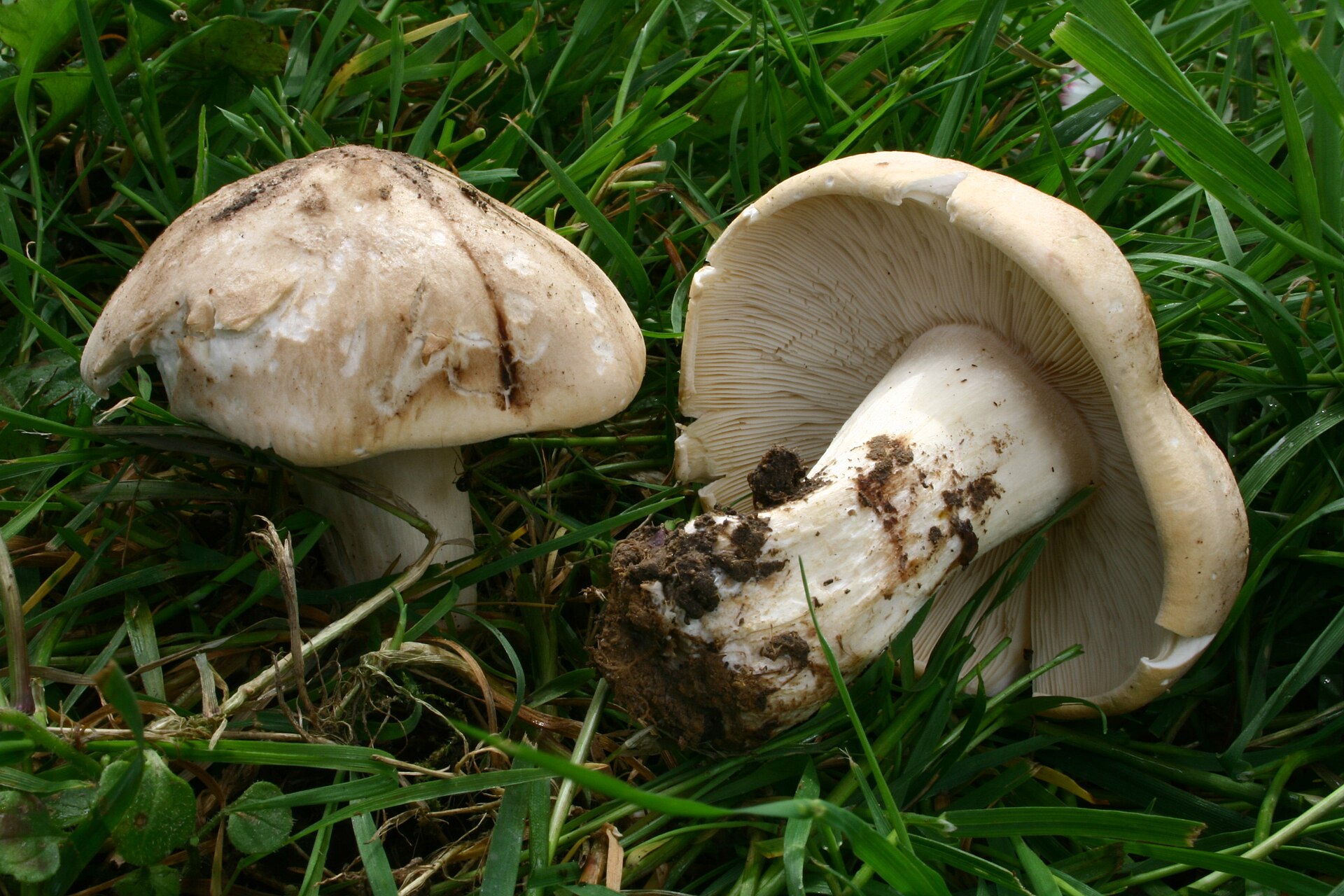
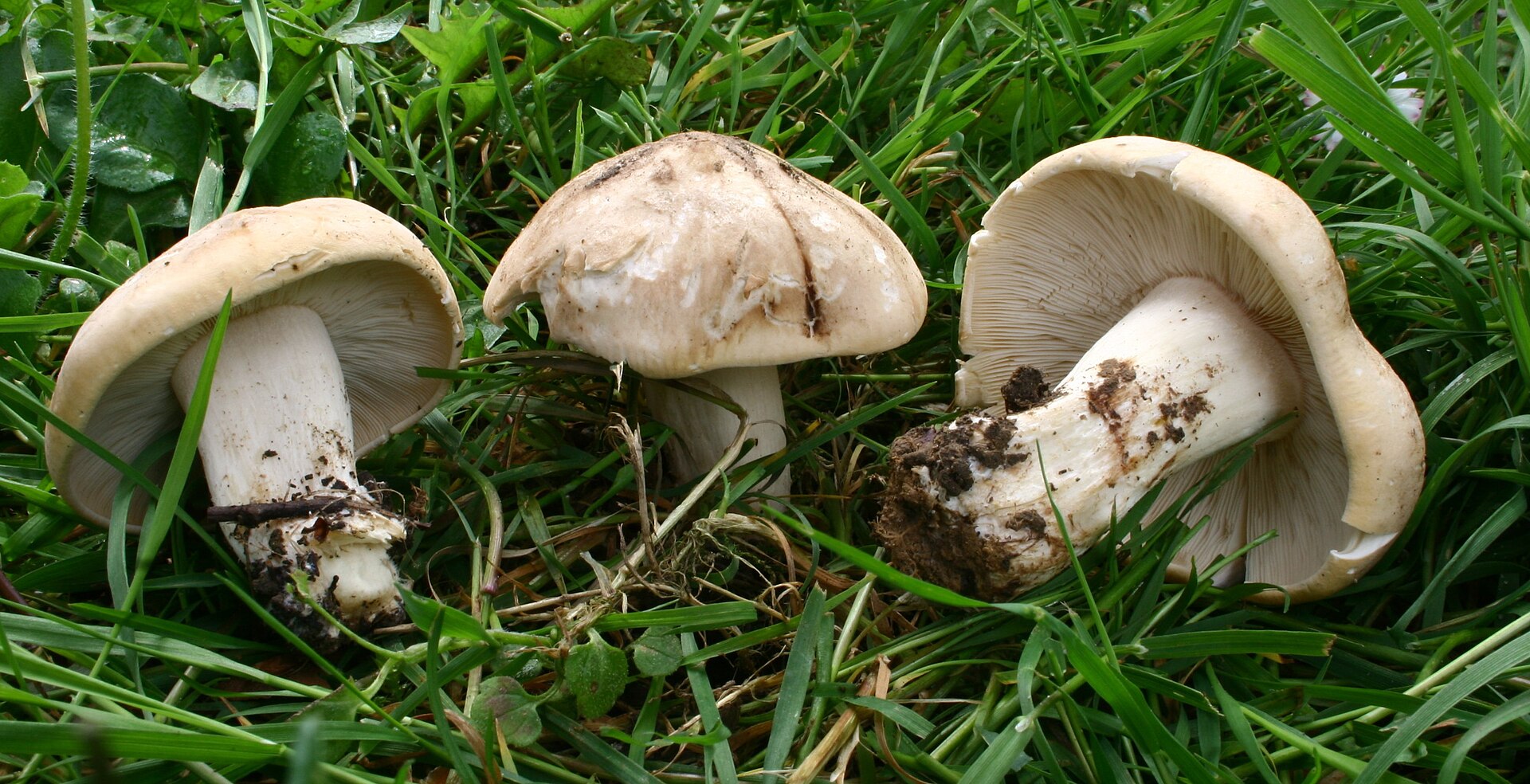
The cap is whitish to cream-coloured, sometimes beige, initially convex and later expanded. The edge may be slightly inrolled.
Underside
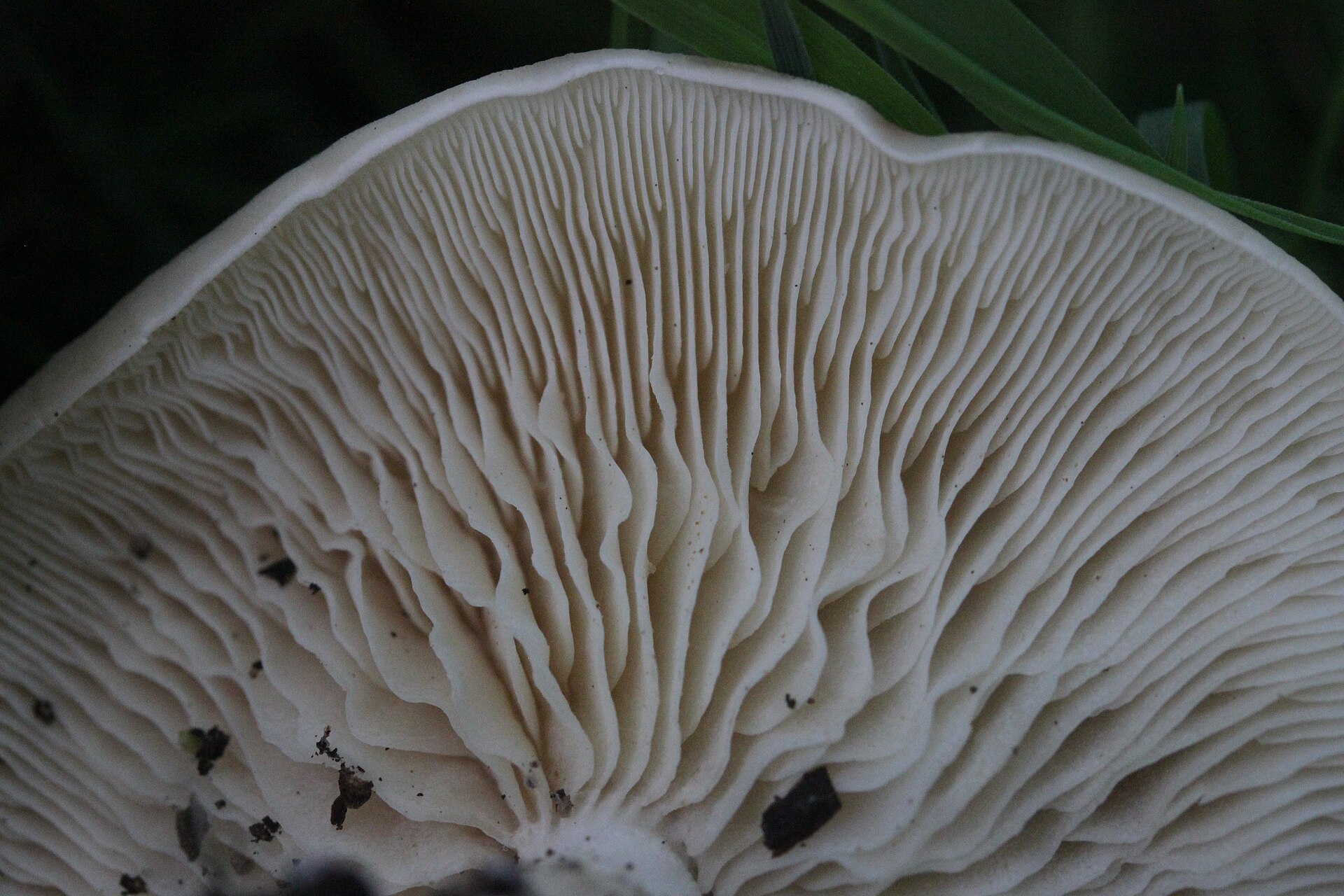
The gills are white to cream-white, crowded and notched at the stem.
Stem
The stem is stout, whitish and solid, without a ring.
Smell
Strong, floury and characteristic smell.
Occurrence and habitat
Grows on the ground in grassland, meadows, deciduous forest and woodland edges. It often appears in fairy rings and early in the season.
Look-alike species
These mushrooms can resemble St. George's mushroom. Look closely at features, habitat and images to see the differences.
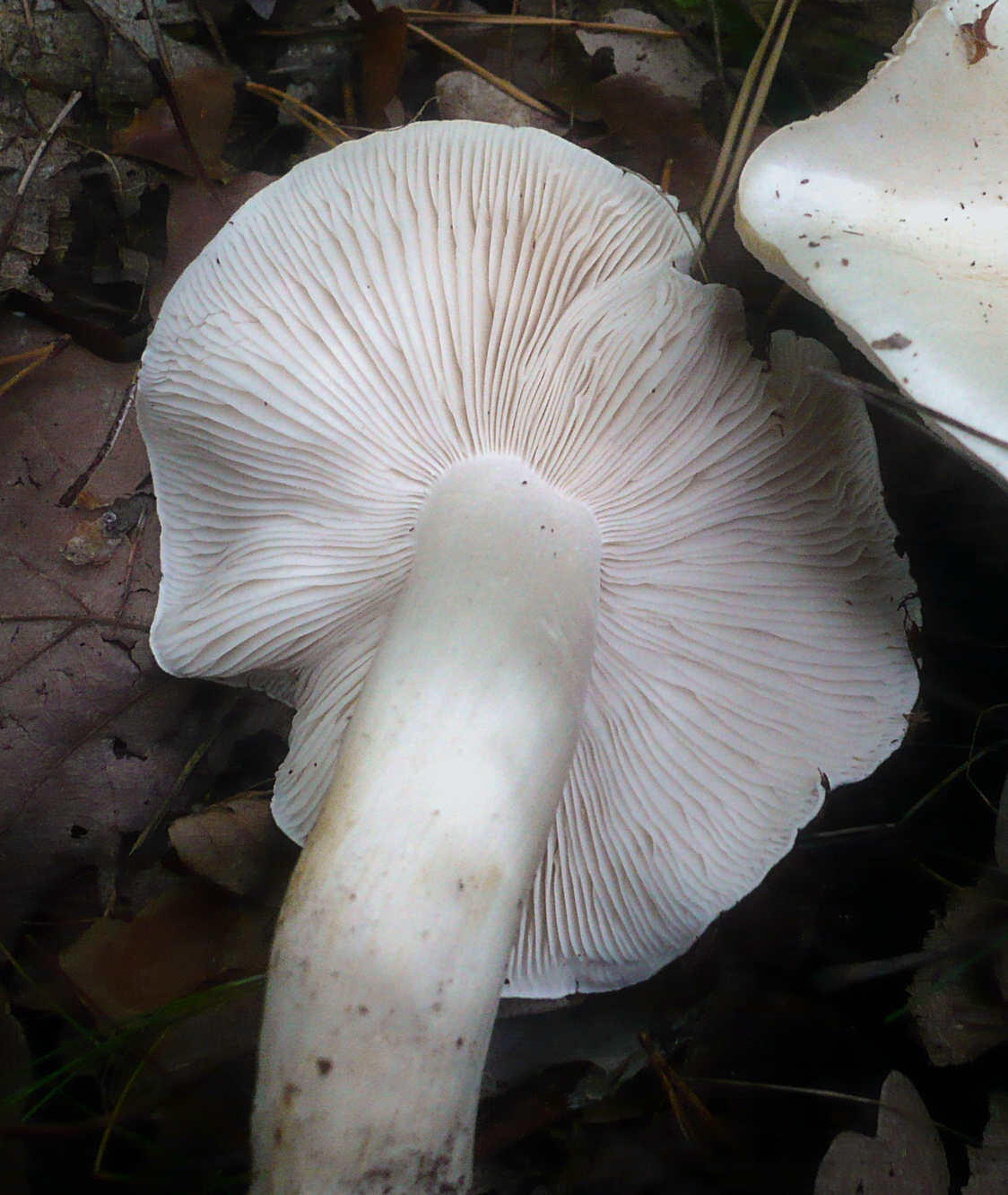
Silky blewit
Tricholoma columbetta
★★★★★
Good edible mushroom
The silky blewit is white and silky-fibrous, but has a different growing season and often a different smell. The spring blewit has a very characteristic mealy smell.
Read more about Silky blewit ›Preparation
Clean and cut away the dirty base of the stem. Fry thoroughly in butter. Its strong flavour also works well in sauces and stews.
Recipe suggestions
St. George's mushroom on toast: fry sliced mushrooms with shallot in butter. Add cream, black pepper and parsley and serve on toasted sourdough bread.
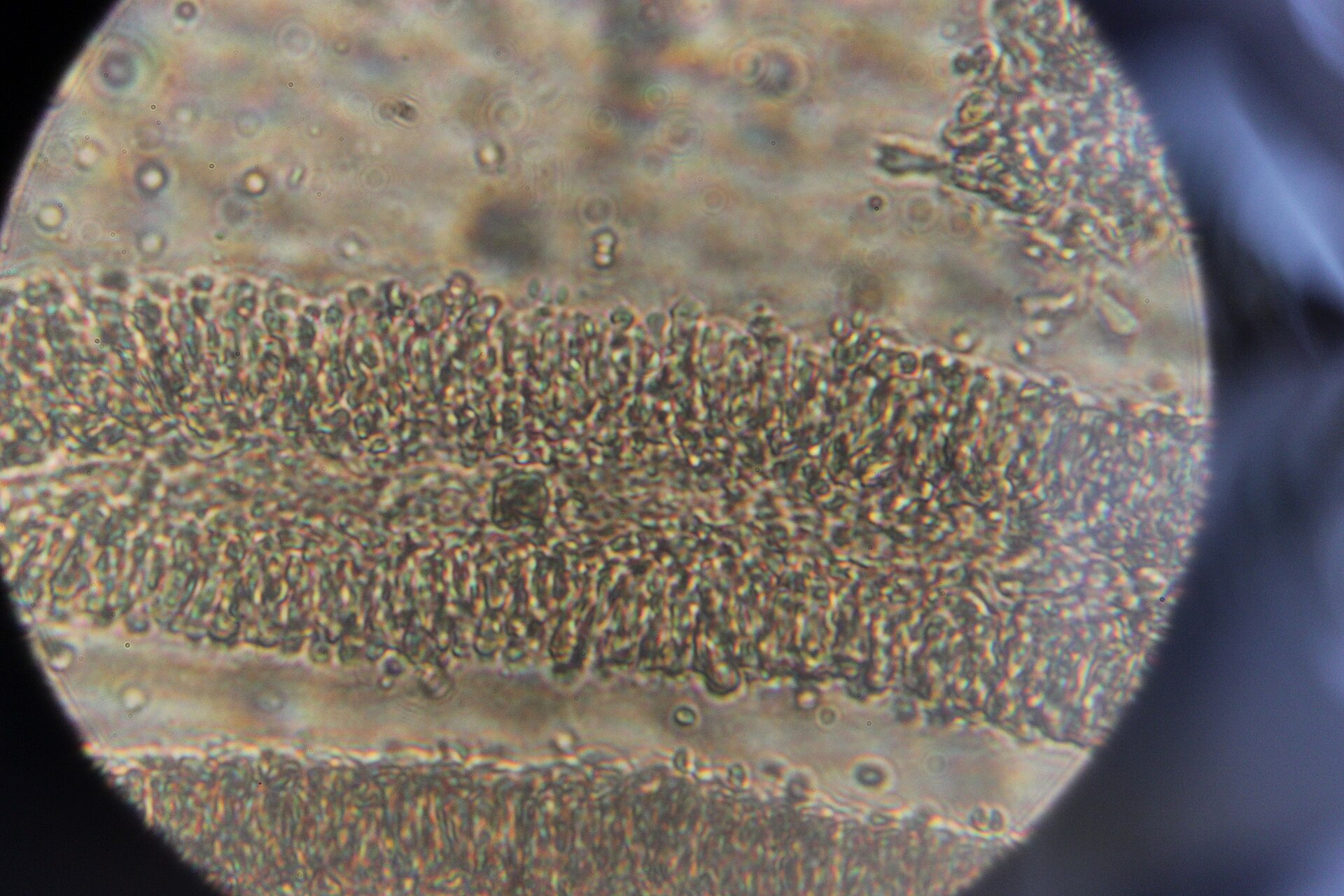
Images – study the mushroom from several angles
Click an image to display it as the main image.
⚠ Important safety information
Den mjöliga lukten och tidiga växtsäsongen är viktiga kännetecken, men säker artbestämning krävs alltid.
Den mjöliga lukten och tidiga växtsäsongen är viktiga kännetecken, men säker artbestämning krävs alltid.
Facts and sources
Sources
Svampguiden; SLU Artdatabanken/Artfakta.
Svampguiden; SLU Artdatabanken/Artfakta.
Batch 12 supplemented – should be finally checked against a