



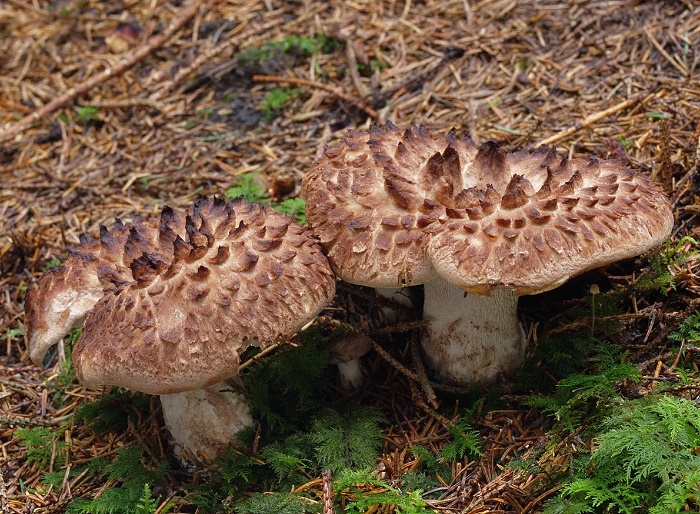
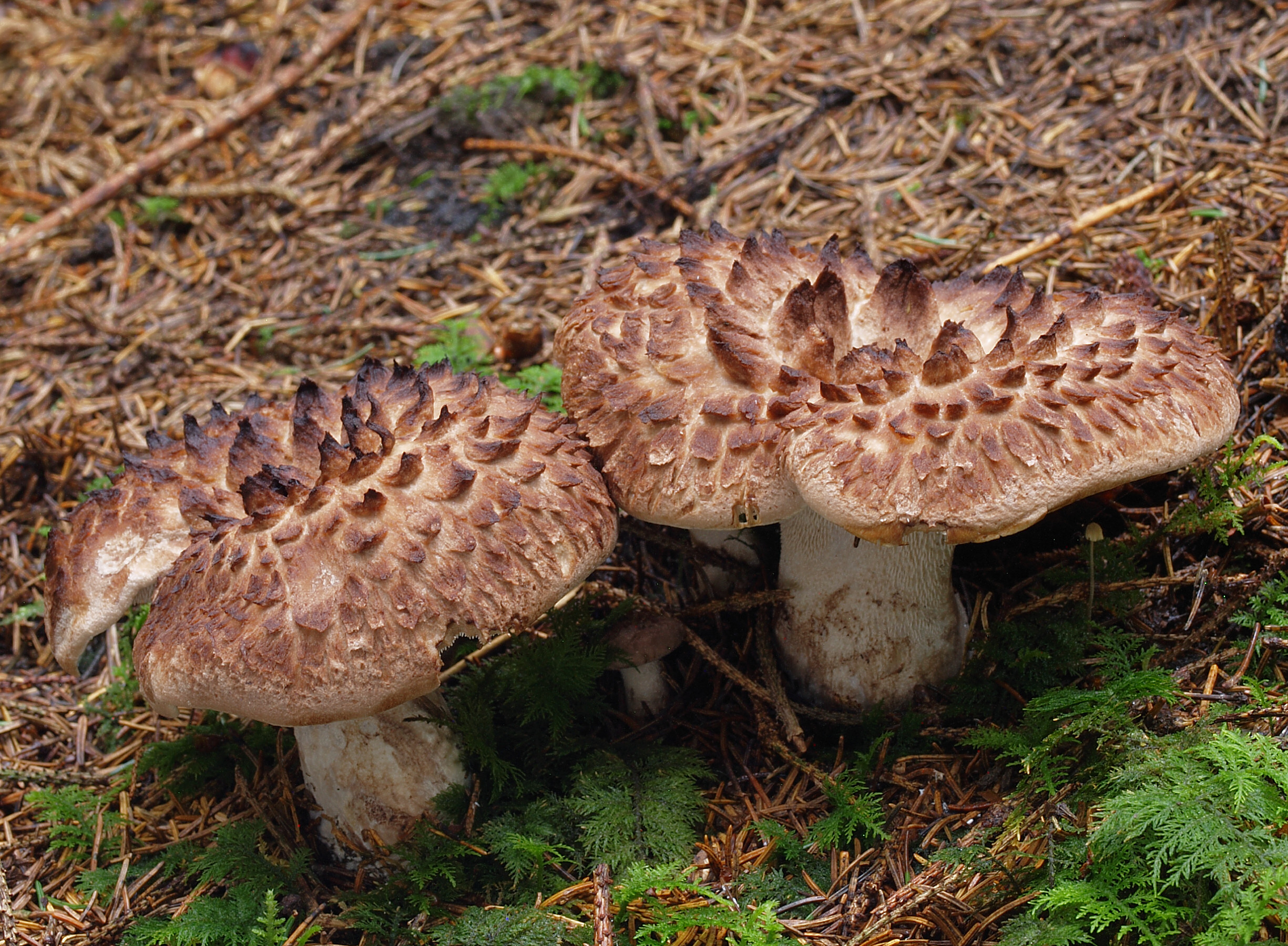
Scaly tooth fungus
Sarcodon imbricatus
Edible
★☆☆☆☆
Taste rating: 1 out of 5
How to identify it
Cap
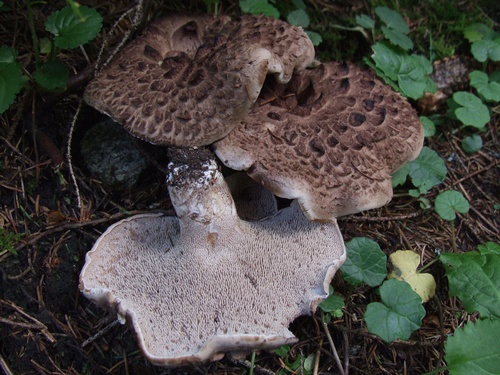
Cap large and brown with distinct dark scales arranged concentrically.
Underside
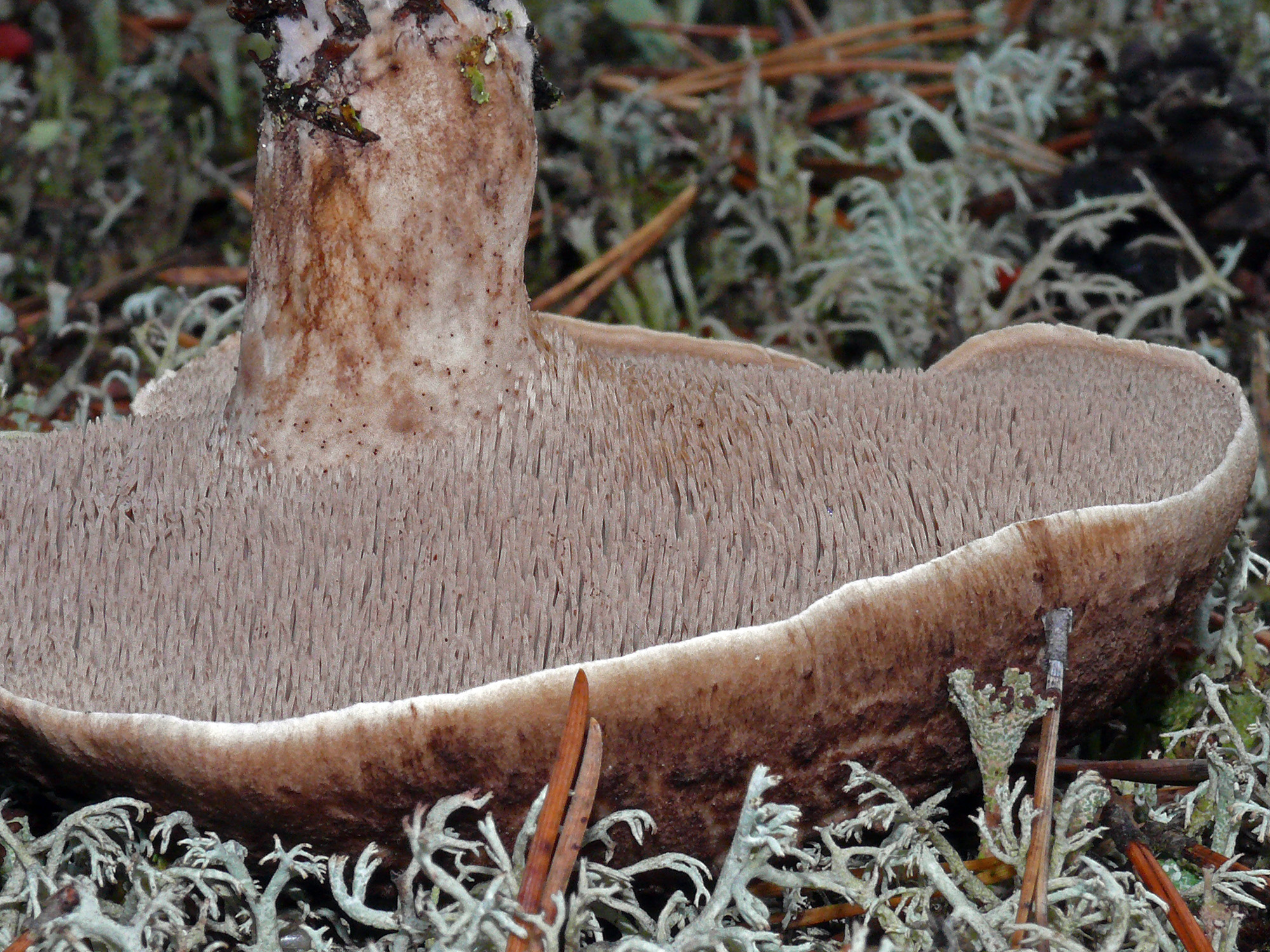
Underside consists of dense downward-pointing spines instead of gills or tubes.
Stem
Stem stout, light brown to brown and often short relative to the cap.
Smell
Mild to slightly earthy.
Occurrence and habitat
Grows mainly in coniferous woodland, often with spruce or pine, on mossy and nutrient-poor soil.
Look-alike species
These mushrooms can resemble Scaly tooth fungus. Look closely at features, habitat and images to see the differences.
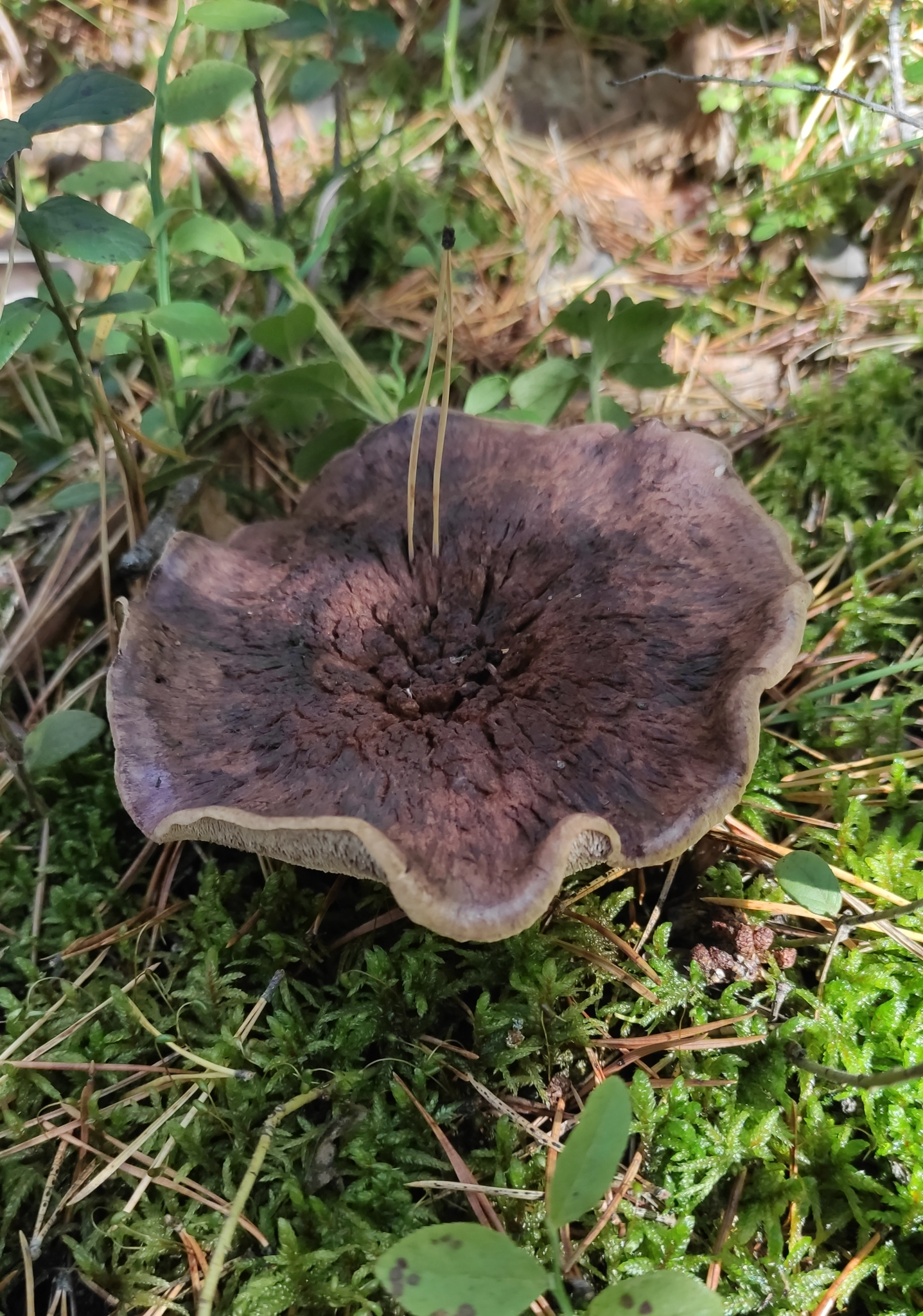
Tooth fungus
Sarcodon squamosus
★★★★★
Fair edible mushroom
Compare several characteristics and always verify the identification.
Read more about Tooth fungus ›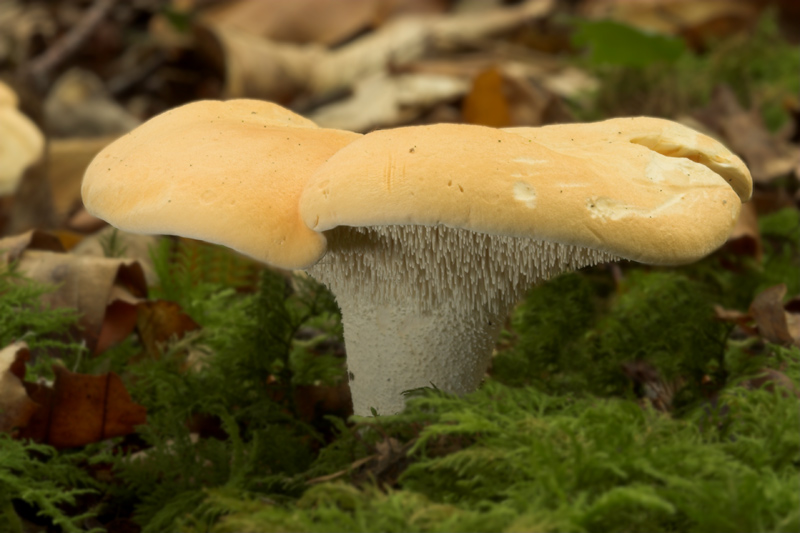
Hedgehog mushroom
Hydnum repandum
★★★★★
Excellent edible mushroom
Compare several characteristics and always verify the identification.
Read more about Hedgehog mushroom ›Preparation
Older specimens can become tough and bitter. Young parts can be cooked after careful cleaning, but the species has low food value.
Recipe suggestions
Slice young parts thinly and fry for a long time in butter with onion. Use sparingly together with other mushrooms.
Images – study the mushroom from several angles
Click an image to display it as the main image.
⚠ Important safety information
Eat only safely identified tooth fungi. The species can be confused with other large brown tooth fungi.
Eat only safely identified tooth fungi. The species can be confused with other large brown tooth fungi.
Facts and sources
Sources
Svampguiden; SLU Artdatabanken/Artfakta. Fact text compiled for Svampboken.
Svampguiden; SLU Artdatabanken/Artfakta. Fact text compiled for Svampboken.
Checked batch 06 – fact text compiled against