



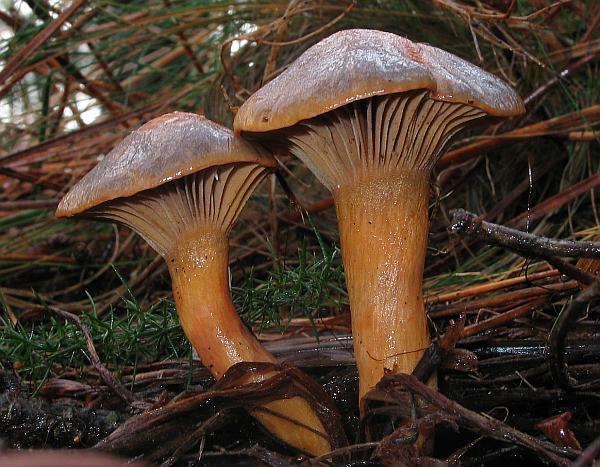
Rhubarb Bolete
Albatrellus subrubescens
Edible
★★☆☆☆
Taste rating: 2 out of 5
How to identify it
Cap
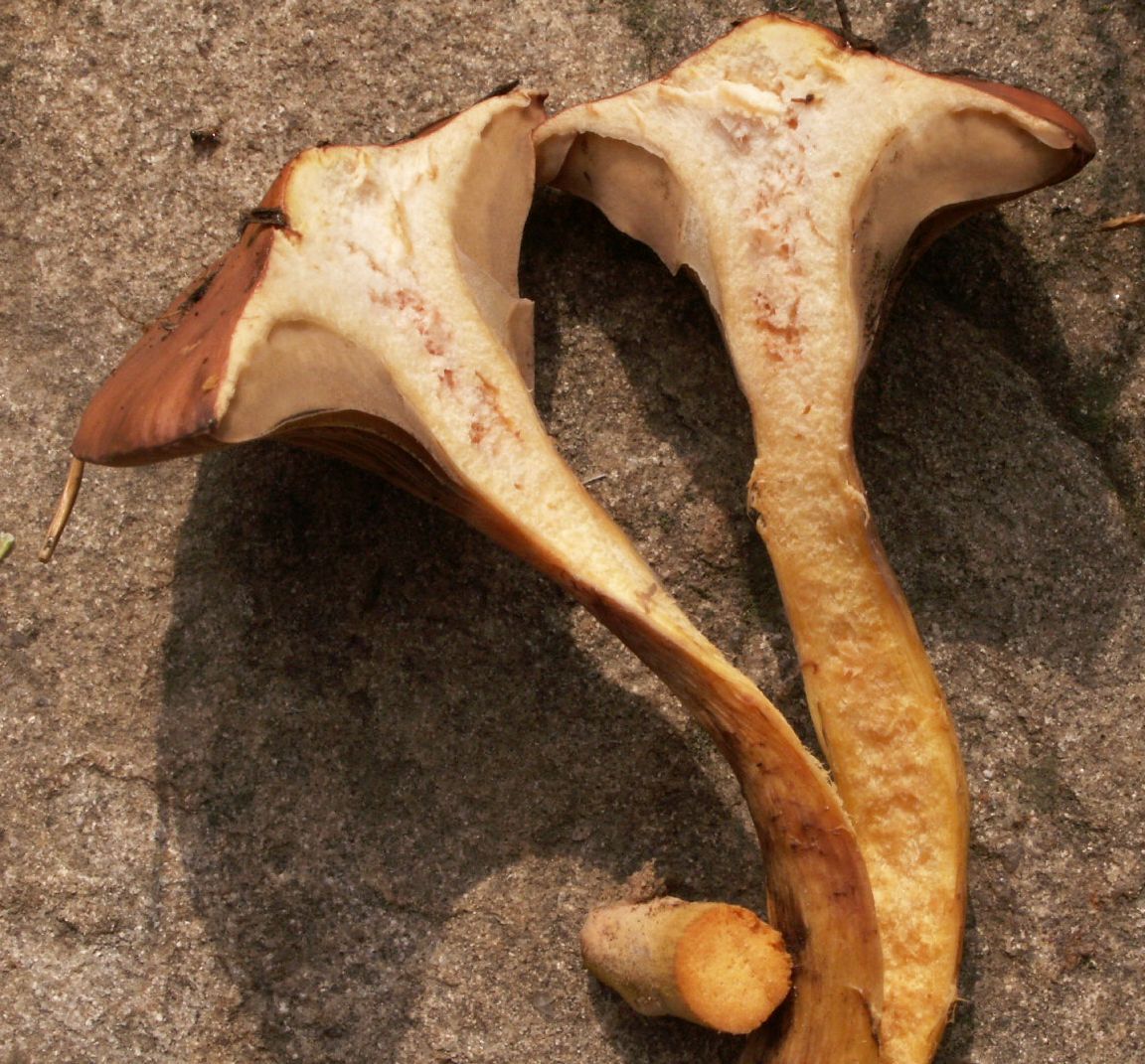
The cap is whitish to cream-coloured with pink, reddish or yellowish tones. The surface may crack or become scaly with age.
Underside
The pores are small and whitish to cream-coloured. They may darken or discolour slightly when pressed.
Stem
The stem is short and stout, whitish to cream-coloured and often slightly off-centre.
Smell
Mild mushroom smell.
Occurrence and habitat
A ground-growing polypore in coniferous woodland, especially on poor, mossy ground. Forms mycorrhiza with conifers.
Look-alike species
These mushrooms can resemble Rhubarb Bolete. Look closely at features, habitat and images to see the differences.
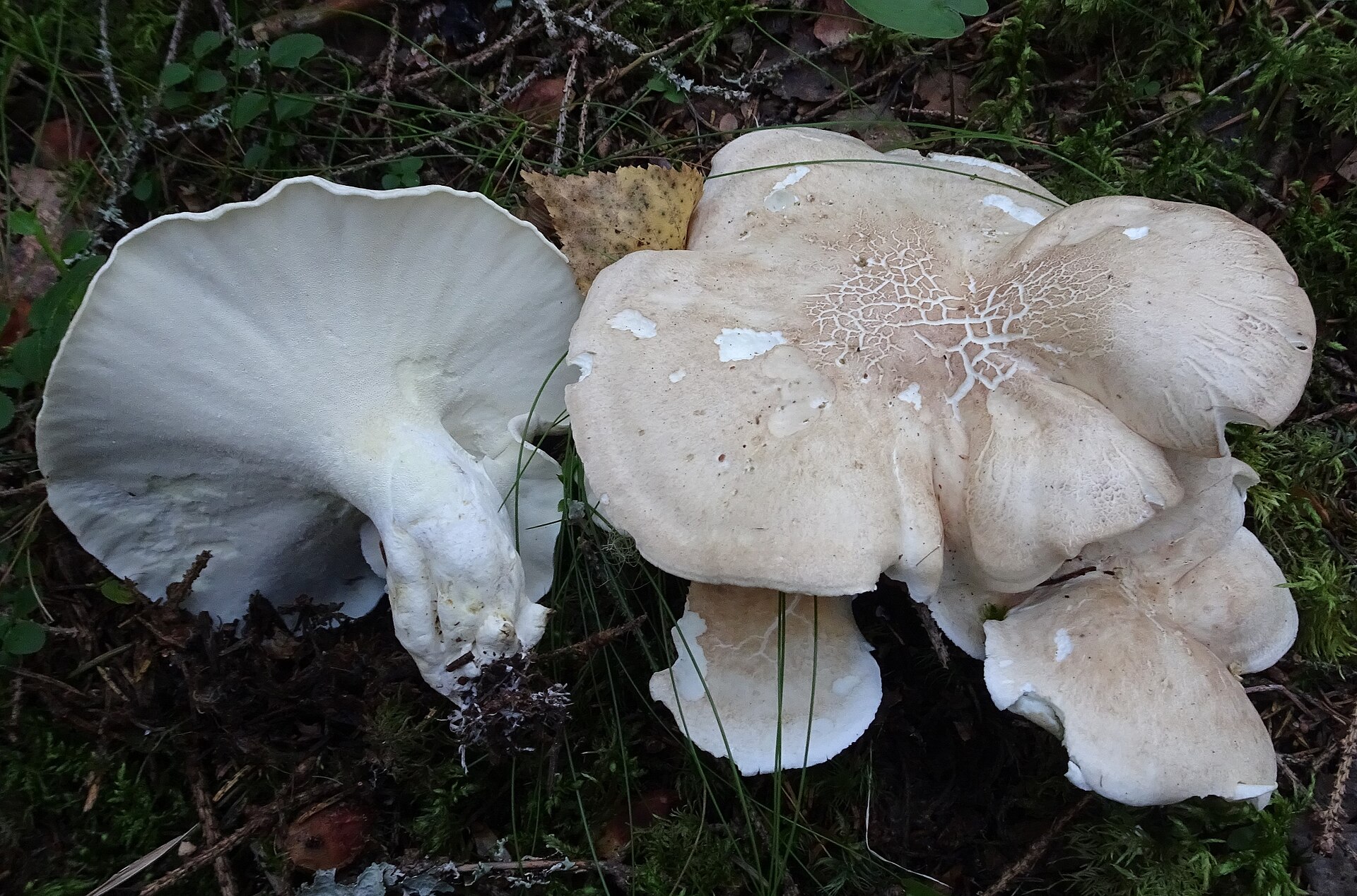
Sheep polypore
Albatrellus ovinus
★★★★★
Good edible mushroom
A similar whitish, ground-growing polypore. Cap colour variations, pores, ecology and other characteristics need to be compared.
Read more about Sheep polypore ›Preparation
Use young, firm specimens. Clean thoroughly, remove hard parts and cook well. Older specimens can become tough.
Recipe suggestions
Rhubarb Bolete in a pan: cut young specimens into pieces and fry in butter until the liquid has evaporated. Add cream, black pepper and a small amount of Dijon mustard.
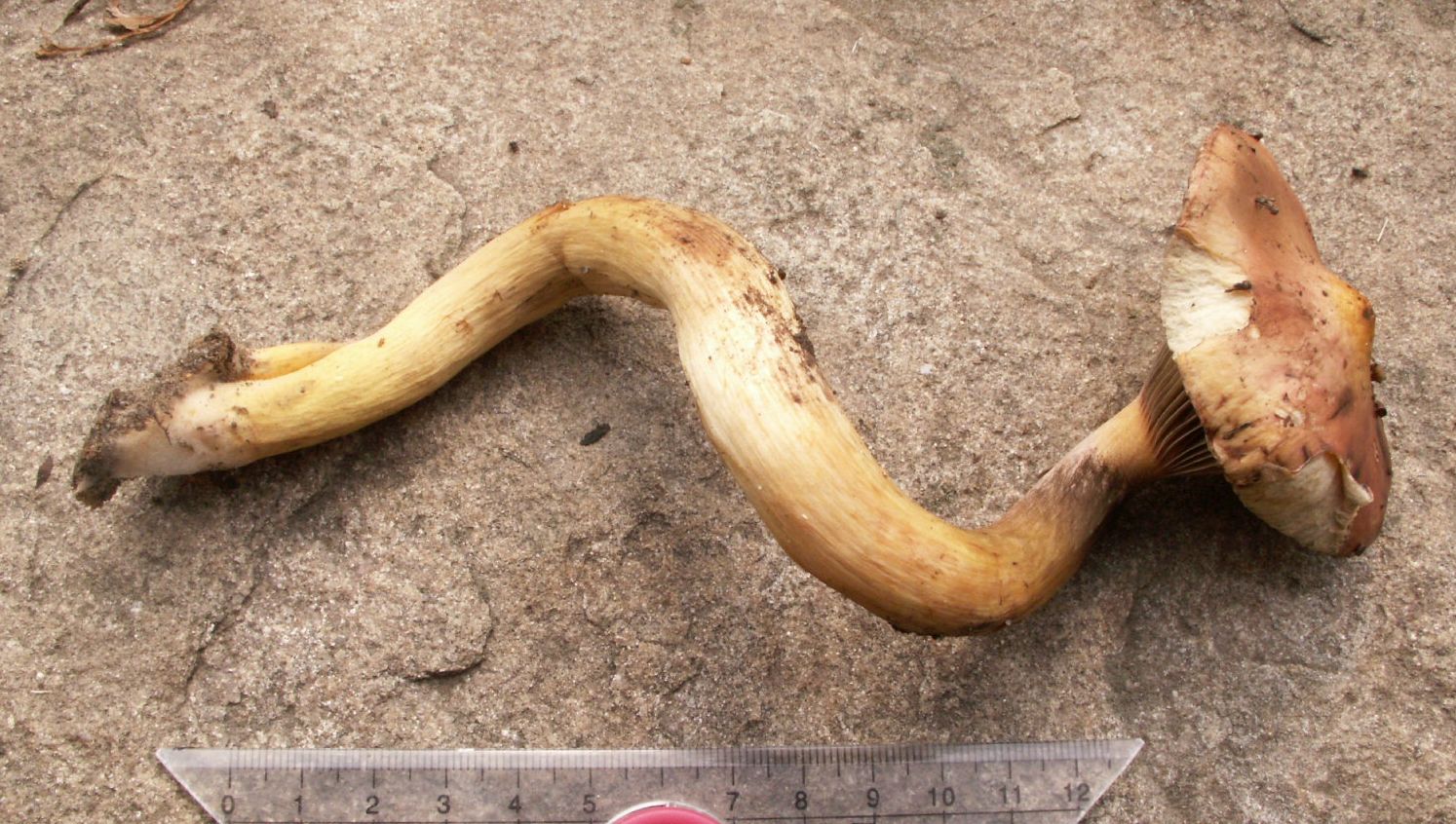
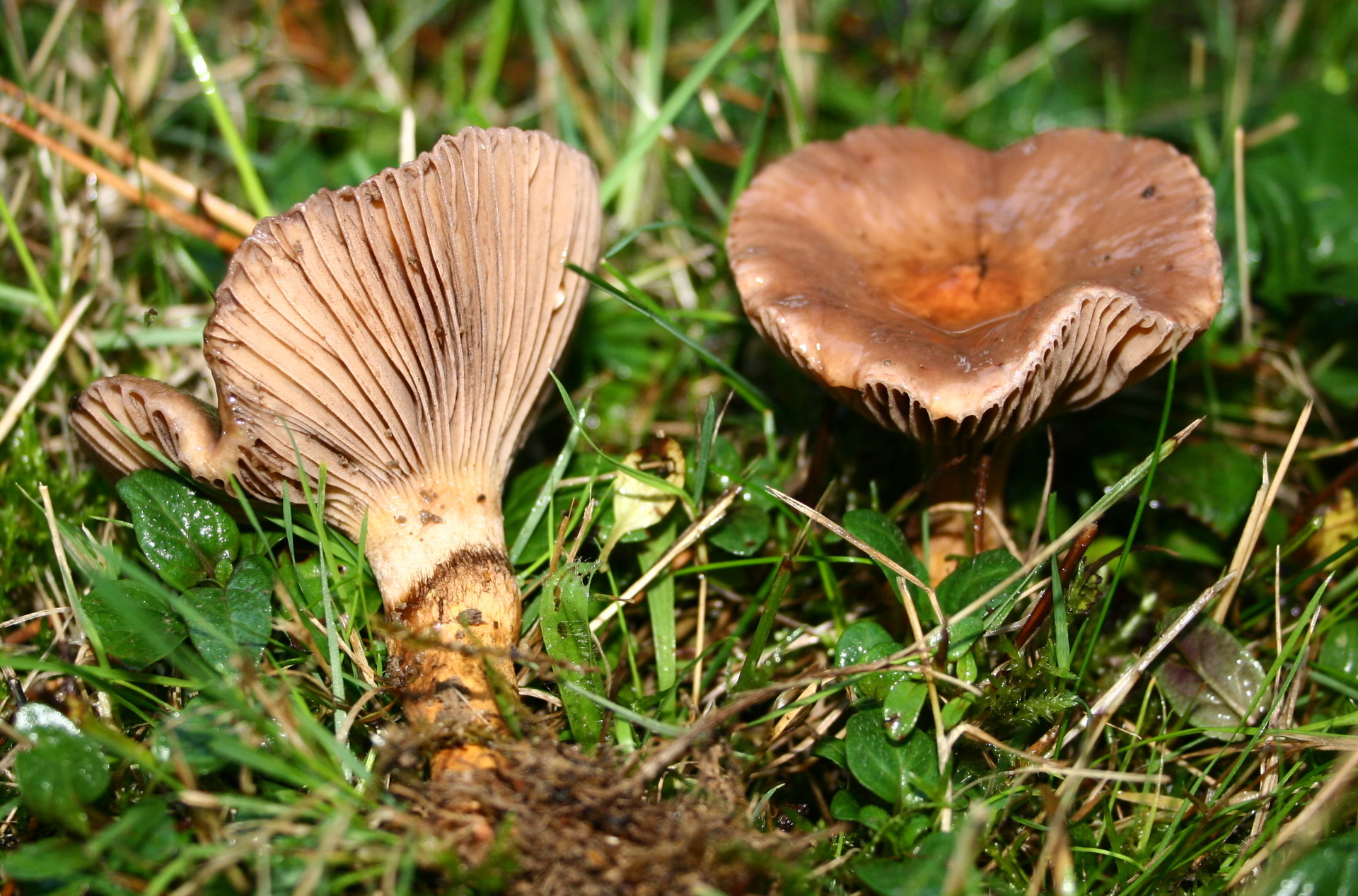
Images – study the mushroom from several angles
Click an image to display it as the main image.
⚠ Important safety information
Boletes can be difficult to distinguish. Eat only reliably identified, young and healthy specimens.
Boletes can be difficult to distinguish. Eat only reliably identified, young and healthy specimens.
Facts and sources
Sources
Svampguiden; SLU Artdatabanken/Artfakta. Scientific name and species delimitation should be checked against current taxonomy before final publication.
Svampguiden; SLU Artdatabanken/Artfakta. Scientific name and species delimitation should be checked against current taxonomy before final publication.
Batch 11 supplemented – should be finally checked against current