



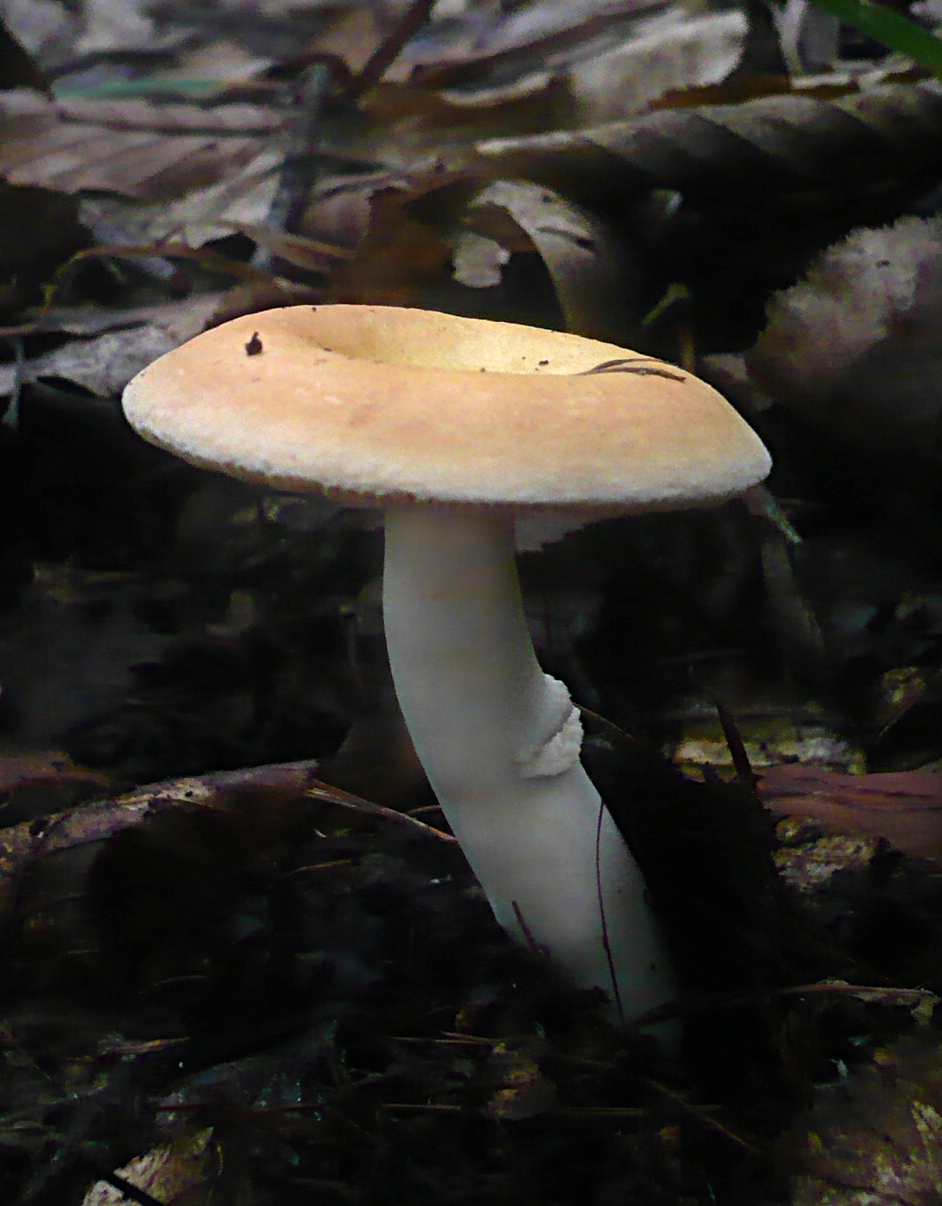
Apricot brittlegill
Russula risigallina
Edible
★★★☆☆
Taste rating: 3 out of 5
How to identify it
Cap
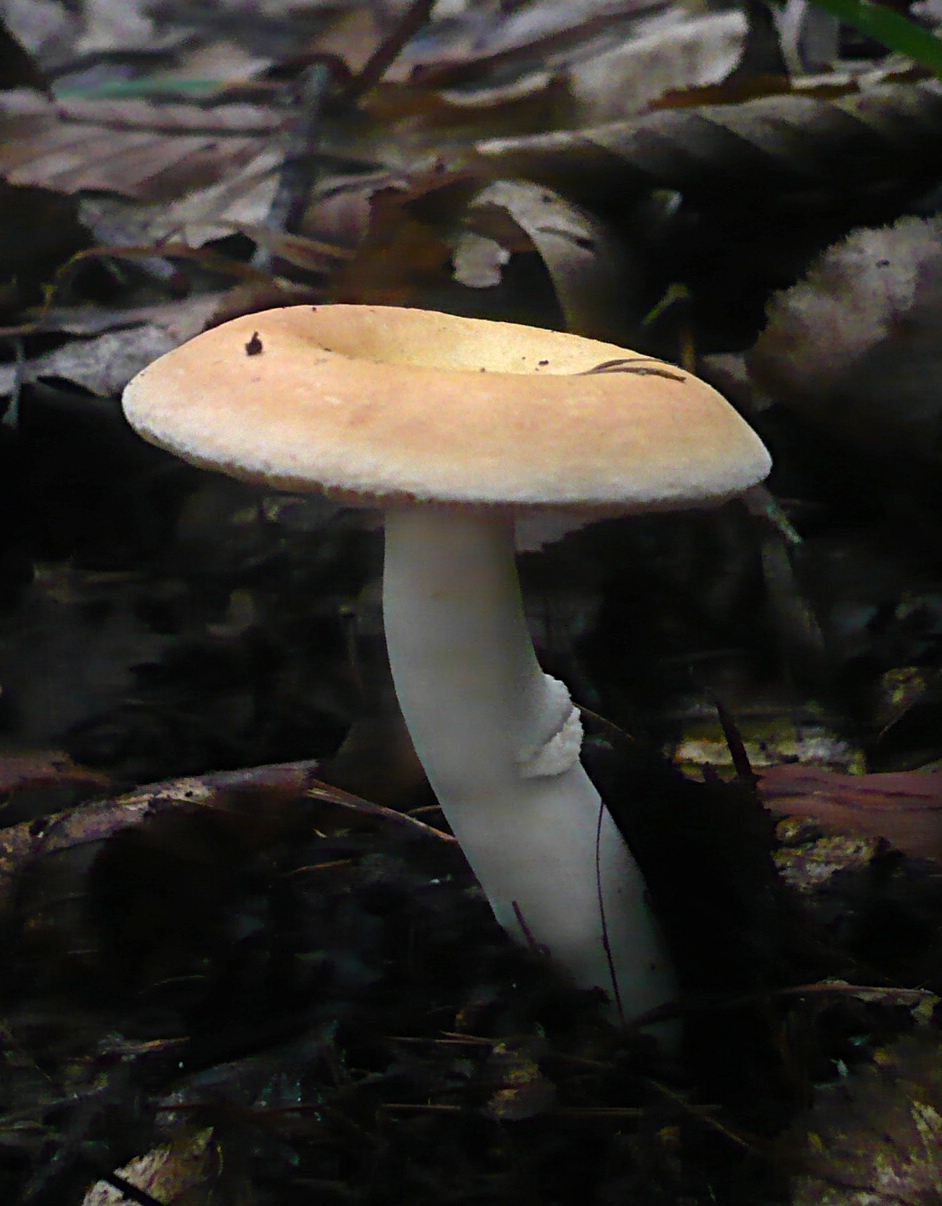
Small to medium-sized russula with a yellowish to apricot-coloured cap. The cap is smooth and the colour can vary considerably between specimens.
Underside
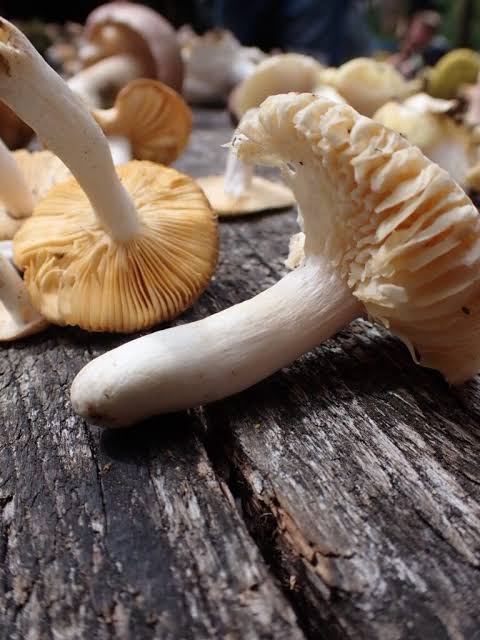
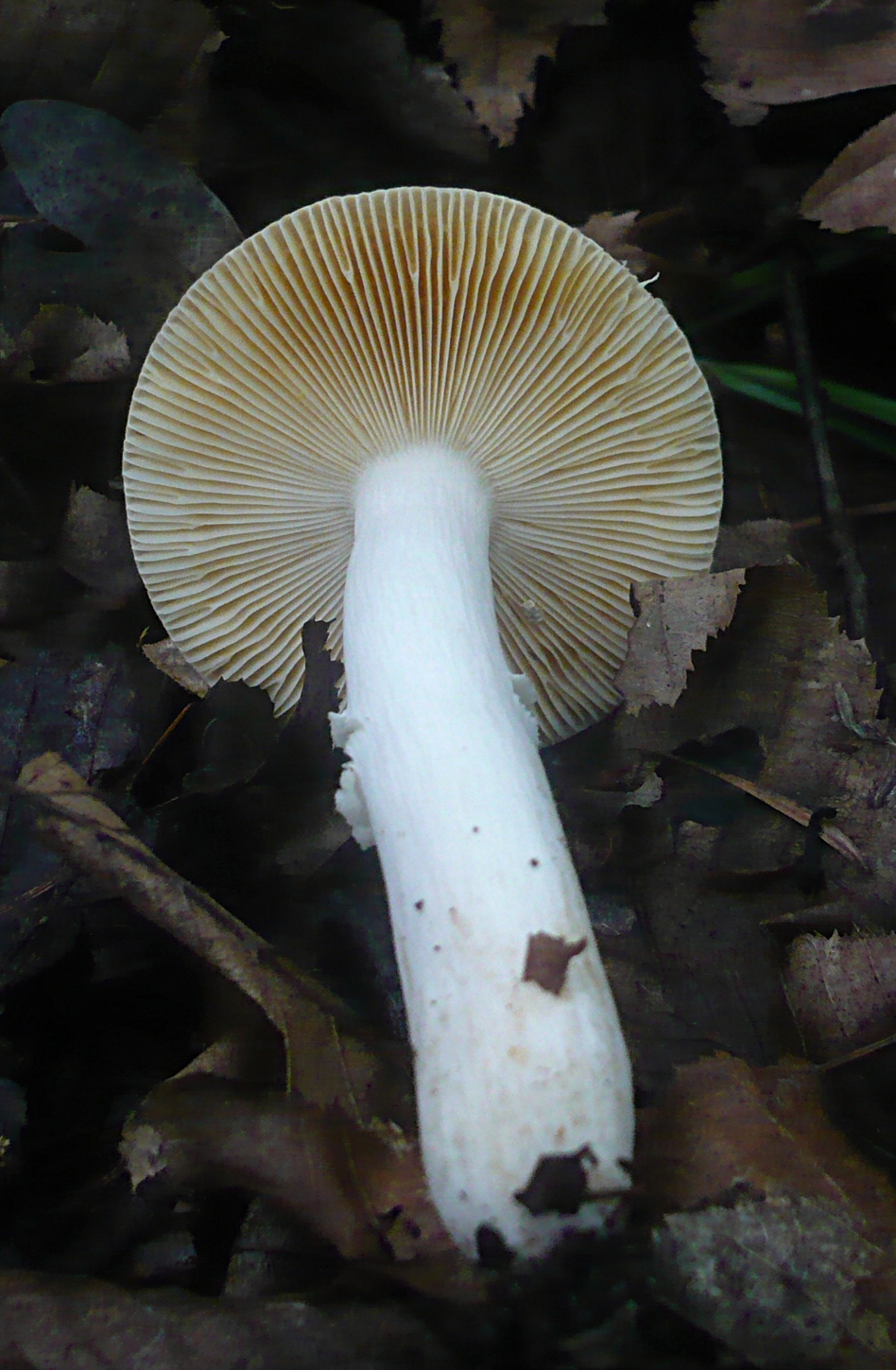
Gills are pale to yellowish and brittle, typical of russulas. The gills can be fairly crowded.
Stem
White, brittle stem that crumbles easily. Russulas lack a ring and volva.
Smell
Mild and subtle.
Occurrence and habitat
Forms mycorrhiza mainly with beech and oak, also with hazel. Mainly found in deciduous woodland on nutrient-rich soil, especially in southern Sweden.
Preparation
Clean carefully and preferably use firm specimens. Russulas can become fragile when rinsed. Fry in butter or oil and add salt towards the end. Can also be pickled.
Recipe suggestions
Pickled apricot russulas: brush clean, cut firm specimens into pieces and blanch. Place in a vinegar brine with water, sugar, salt, bay leaf and allspice. Cool and keep chilled before serving.
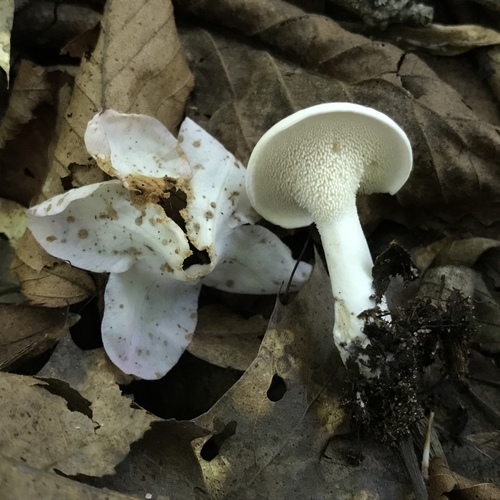
Images – study the mushroom from several angles
Click an image to display it as the main image.
⚠ Important safety information
Only eat if the species has been safely identified as a russula. Avoid confusion with poisonous fly agarics. Never use a website alone as the basis for safe identification.
Only eat if the species has been safely identified as a russula. Avoid confusion with poisonous fly agarics. Never use a website alone as the basis for safe identification.
Facts and sources
Sources
Svampguiden; SLU Artdatabanken/Artfakta. Supplementary ecological source: Torsebro Svamp.
Svampguiden; SLU Artdatabanken/Artfakta. Supplementary ecological source: Torsebro Svamp.
Checked batch 01 – fact text compiled against