



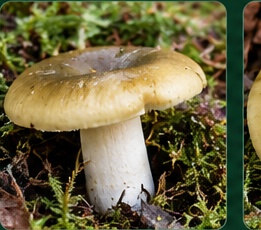
Olive Herring Brittlegill
Russula clavipes
Edible
★★★★★
Taste rating: 5 out of 5
How to identify it
Cap
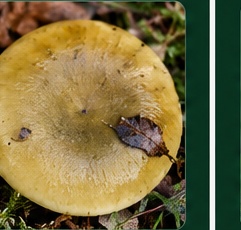
The cap is olive-green to olive-brown, convex when young and later more expanded.
Underside
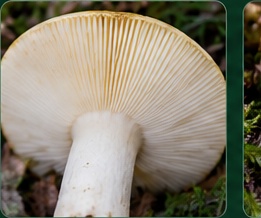
The gills are pale when young and become yellow with age.
Stem
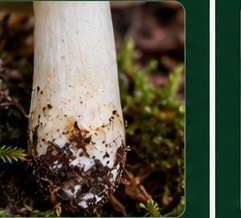
The stem is white to grey-white, often stout, and may develop yellow-brown or greyish tones.
Smell
Mild when young, becoming more characteristic with age.
Occurrence and habitat
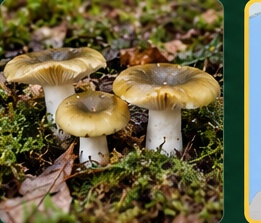
Grows in coniferous and mixed woodland, often on nutrient-rich soil.
Look-alike species
These mushrooms can resemble Olive Herring Brittlegill. Look closely at features, habitat and images to see the differences.
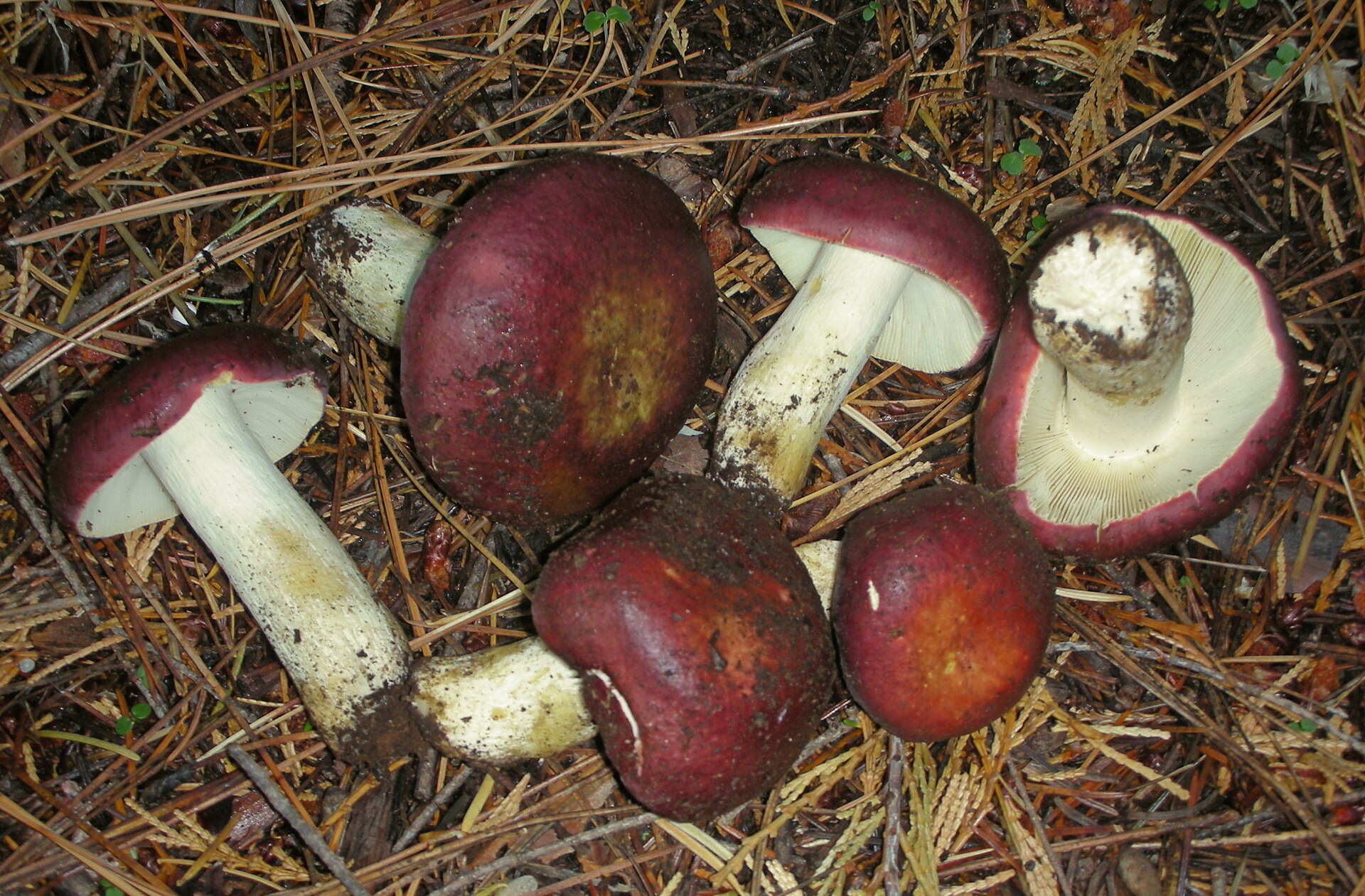
Herring brittlegill
Russula xerampelina
★★★★★
Excellent edible mushroom
See the species features above and always compare several characteristics.
Read more about Herring brittlegill ›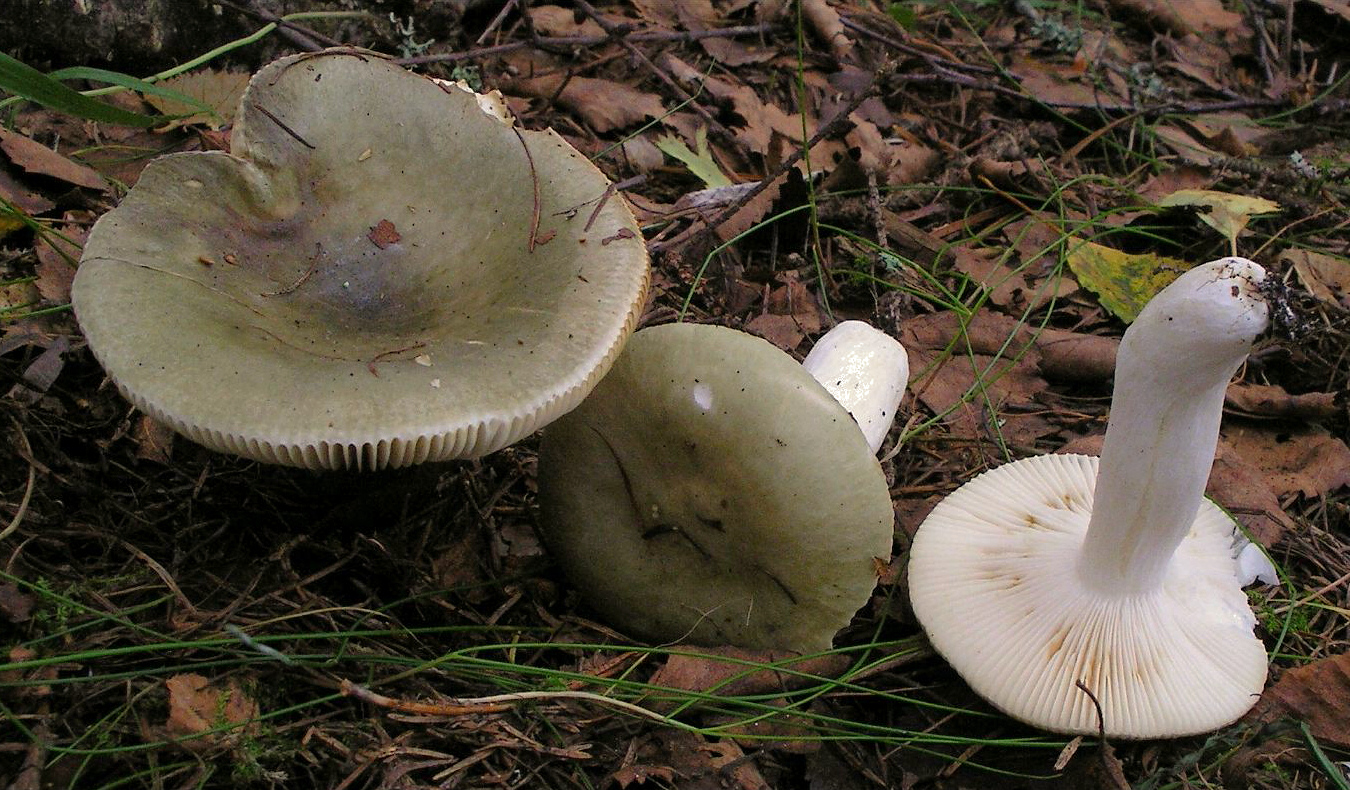
Green brittlegill
Russula aeruginea
★★★★★
Good edible mushroom
See the species features above and always compare several characteristics.
Read more about Green brittlegill ›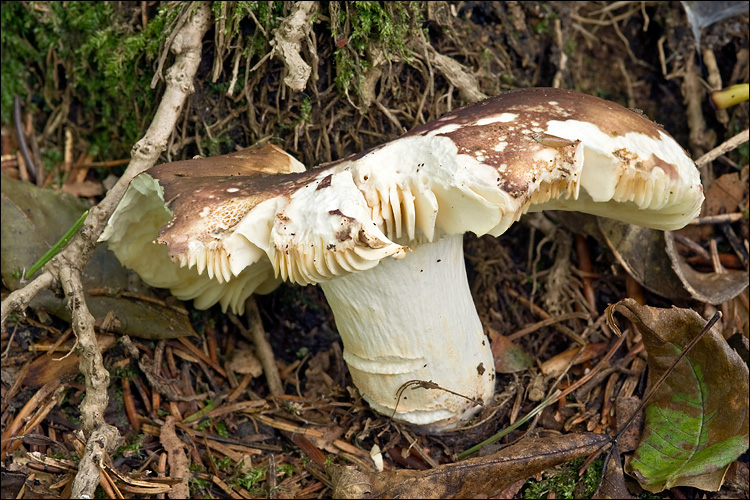
Almond brittlegill
Russula integra
★★★★★
Excellent edible mushroom
See the species features above and always compare several characteristics.
Read more about Almond brittlegill ›Preparation
Clean and fry thoroughly. Suitable for butter-fried mushroom dishes and stews.
Recipe suggestions
Fry with butter and onion, add cream and parsley, and serve with boiled potatoes.
Images – study the mushroom from several angles
Click an image to display it as the main image.
⚠ Important safety information
Eat only brittlegills that have been reliably identified. Avoid tasting unknown species.
Eat only brittlegills that have been reliably identified. Avoid tasting unknown species.
Facts and sources
Sources
Svampguiden; SLU Artdatabanken/Artfakta. Fact text compiled for Svampboken.
Svampguiden; SLU Artdatabanken/Artfakta. Fact text compiled for Svampboken.
Checked batch 05 – fact text compiled against