



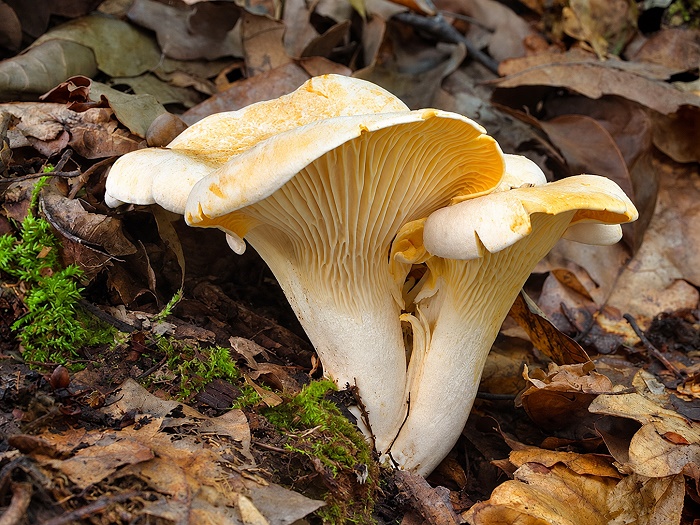
Pale chanterelle
Cantharellus pallens
Edible
★★★★★
Taste rating: 5 out of 5
How to identify it
Cap
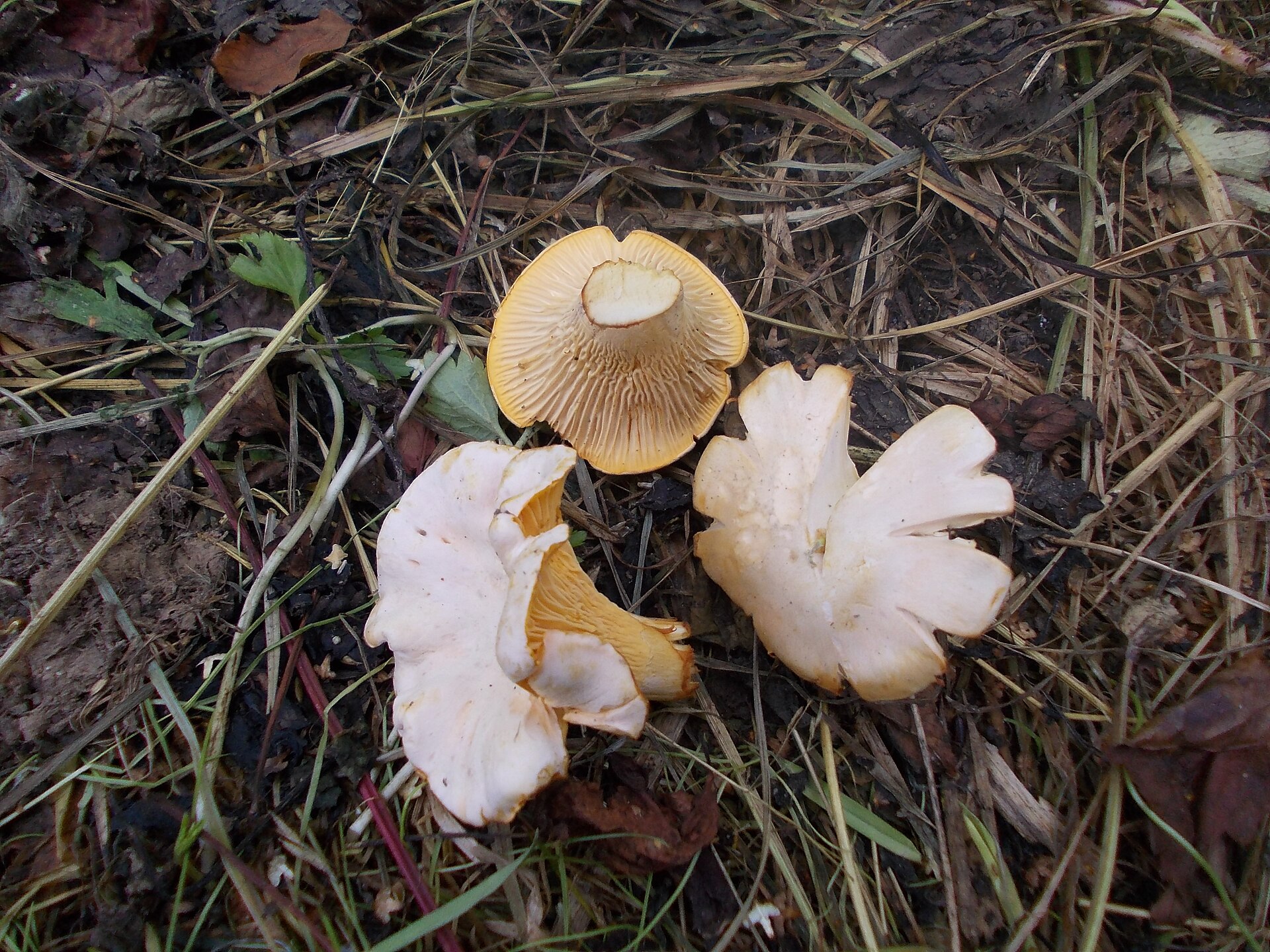
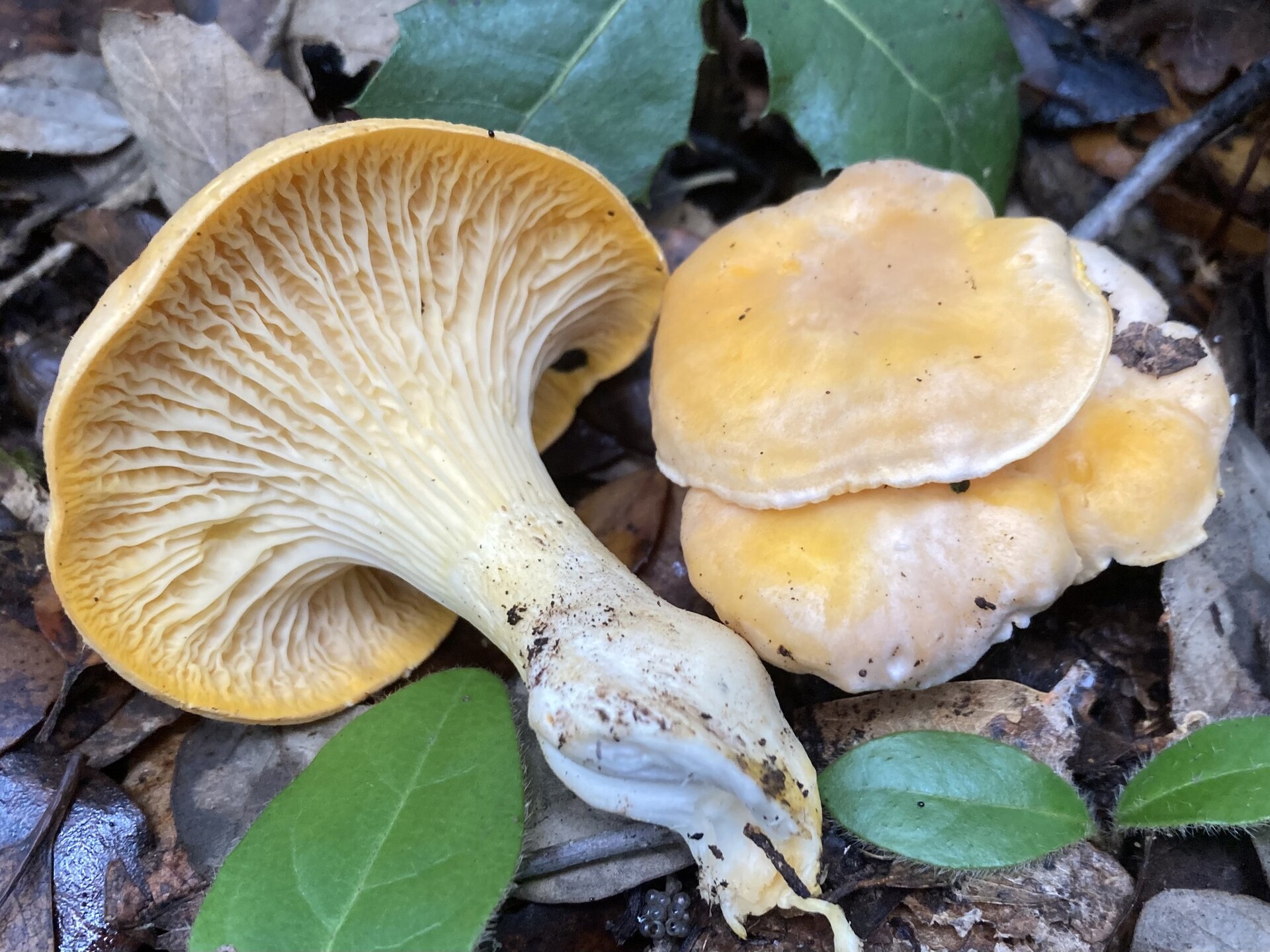
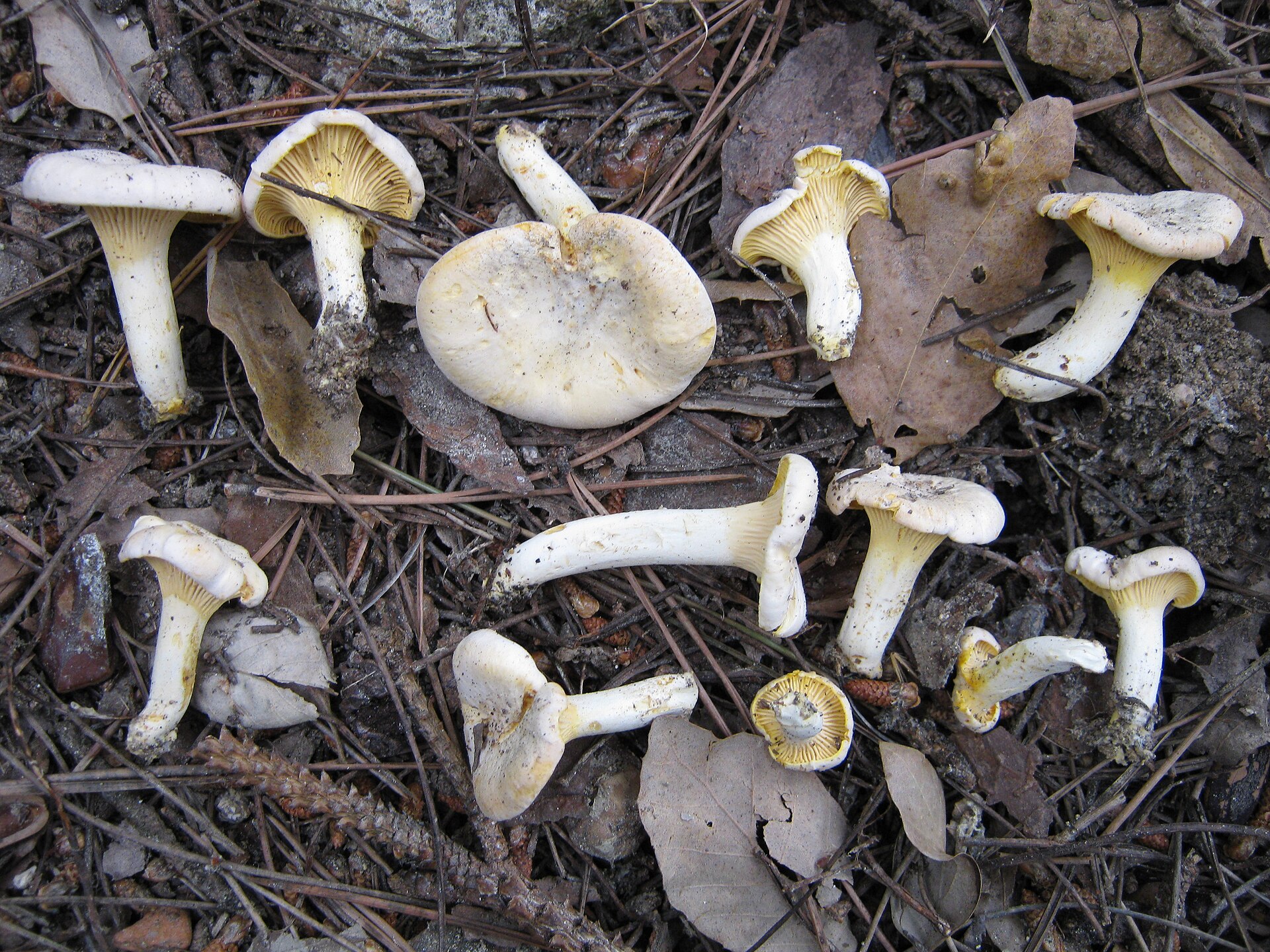
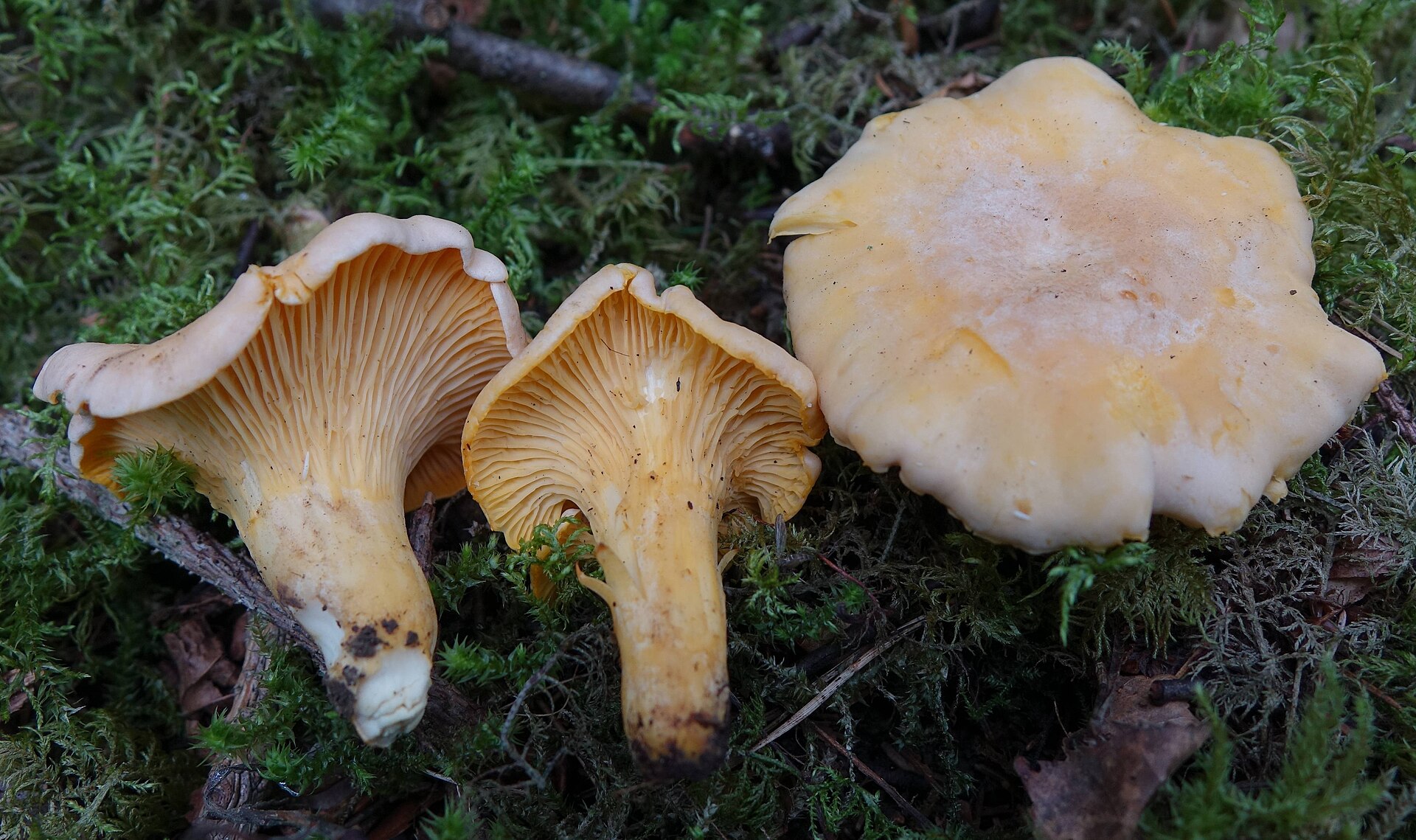
Cap pale yellow to yellow-white, often irregularly wavy and becoming funnel-shaped.
Underside
Underside has distinct decurrent ridges that are thicker and more branched than ordinary gills.
Stem
Stem pale yellow, stout and continuous with the cap, without a distinct ring.
Smell
Fruity, mild and pleasant smell.
Occurrence and habitat
Grows in deciduous and mixed woodland, often on nutrient-rich soil and in areas with beech or oak.
Look-alike species
These mushrooms can resemble Pale chanterelle. Look closely at features, habitat and images to see the differences.
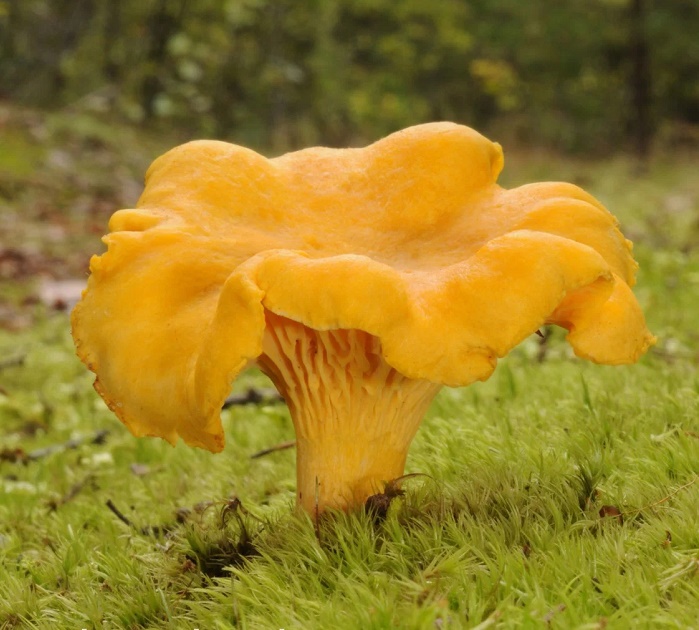
Chanterelle
Cantharellus cibarius
★★★★★
Excellent edible mushroom
Compare several characteristics and always verify the identification.
Read more about Chanterelle ›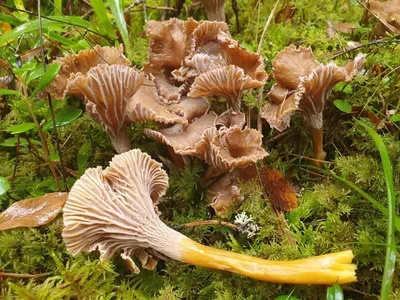
Trumpet chanterelle
Craterellus tubaeformis
★★★★★
Very good edible mushroom
Compare several characteristics and always verify the identification.
Read more about Trumpet chanterelle ›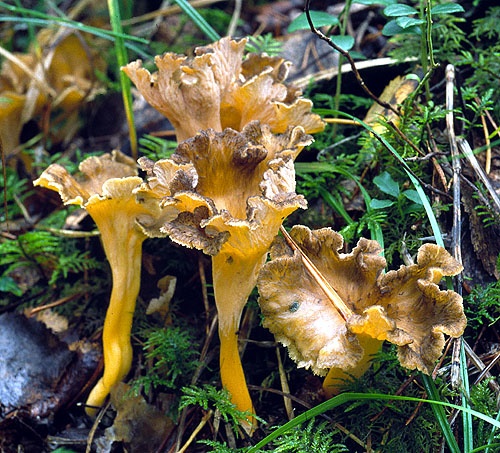
Red-yellow trumpet chanterelle
Craterellus lutescens
★★★★★
Excellent edible mushroom
Compare the cap, underside, stem, smell and habitat for reliable identification.
Read more about Red-yellow trumpet chanterelle ›Preparation
Brush clean and fry until the liquid has evaporated. Also suitable for sauce, stew and soup.
Recipe suggestions
Pale chanterelle in cream sauce with shallots, served with toast or pasta.
Images – study the mushroom from several angles
Click an image to display it as the main image.
⚠ Important safety information
Do not confuse it with small orange-yellow species without checking the appearance of the ridges and the whole mushroom.
Do not confuse it with small orange-yellow species without checking the appearance of the ridges and the whole mushroom.
Facts and sources
Sources
Svampguiden; SLU Artdatabanken/Artfakta
Svampguiden; SLU Artdatabanken/Artfakta
Checked batch 09 – fact text compiled against