



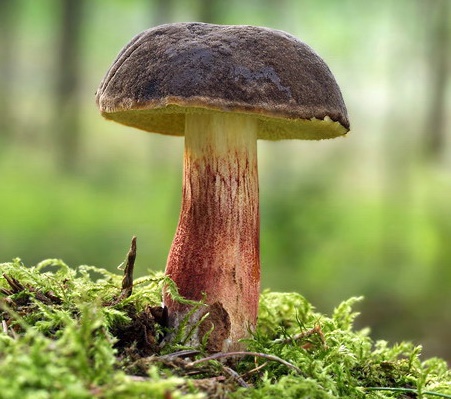
Cracked Bolete
Xerocomellus chrysenteron
Edible
★★☆☆☆
Taste rating: 2 out of 5
How to identify it
Cap
The cap is brown to olive-brown and often cracks with age, revealing reddish flesh or tissue beneath.
Underside
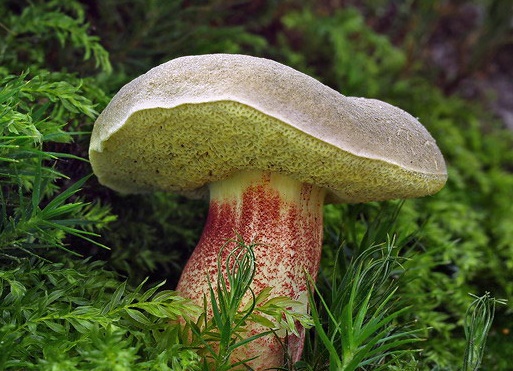
The pores are yellow to olive-yellow and may turn slightly blue when pressed.
Stem
The stem is yellowish to brownish, often with reddish tones near the base and without a net pattern.
Smell
Mild mushroom smell.
Occurrence and habitat
Grows on the ground in deciduous and coniferous woodland, often in mossy forest ground.
Look-alike species
These mushrooms can resemble Cracked Bolete. Look closely at features, habitat and images to see the differences.
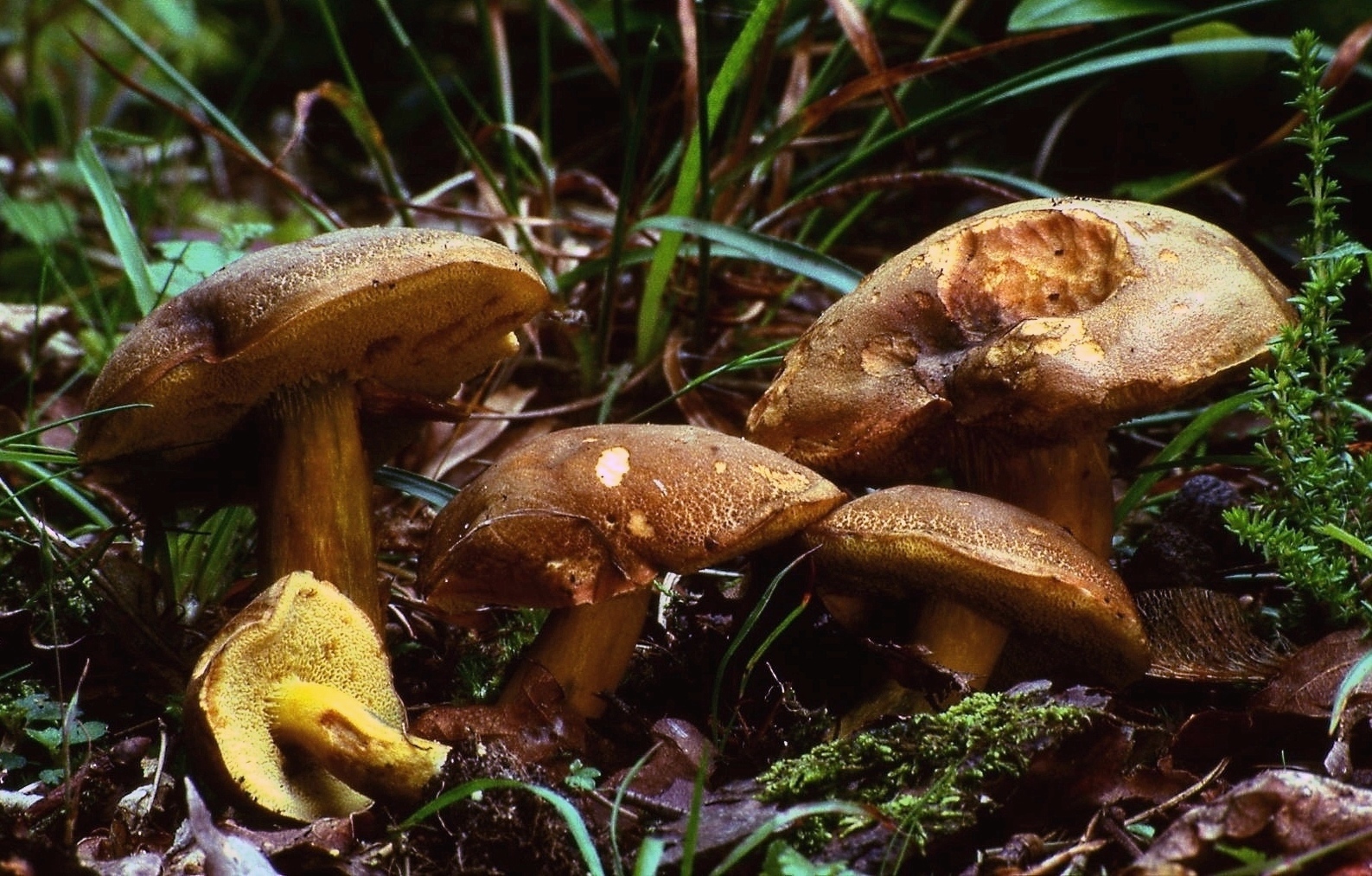
False rooting bolete
Xerocomellus porosporus
★★★★★
Weak flavor
The false rooting bolete is very similar. Cap cracking, stem, pores and other details need to be compared.
Read more about False rooting bolete ›Preparation
Clean, cut away the stem base and fry thoroughly. Young specimens are best.
Recipe suggestions
Cracked Bolete in creamy mushroom sauce: fry sliced mushrooms with onion, add cream and season with salt, pepper and parsley.
Images – study the mushroom from several angles
Click an image to display it as the main image.
⚠ Important safety information
The Xerocomellus group can be taxonomically and visually difficult. Identify using several characteristics, not just a brown cap.
The Xerocomellus group can be taxonomically and visually difficult. Identify using several characteristics, not just a brown cap.
Facts and sources
Sources
Svampguiden; SLU Artdatabanken/Artfakta.
Svampguiden; SLU Artdatabanken/Artfakta.
Batch 12 supplemented – should be finally checked against current