



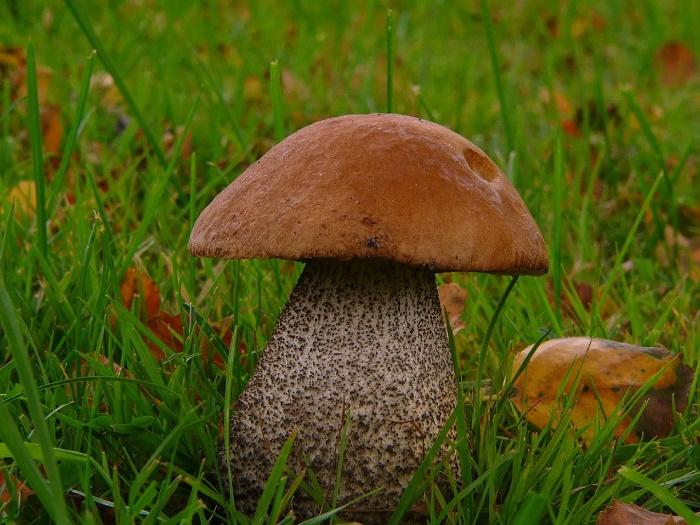
Scots pine scaber
How to identify it
Occurrence and habitat
Forms mycorrhiza with pine and therefore grows mainly in pine forest, on sandy or nutrient-poor soils and other pine-dominated habitats.
Look-alike species
These mushrooms can resemble Scots pine scaber. Look closely at features, habitat and images to see the differences.
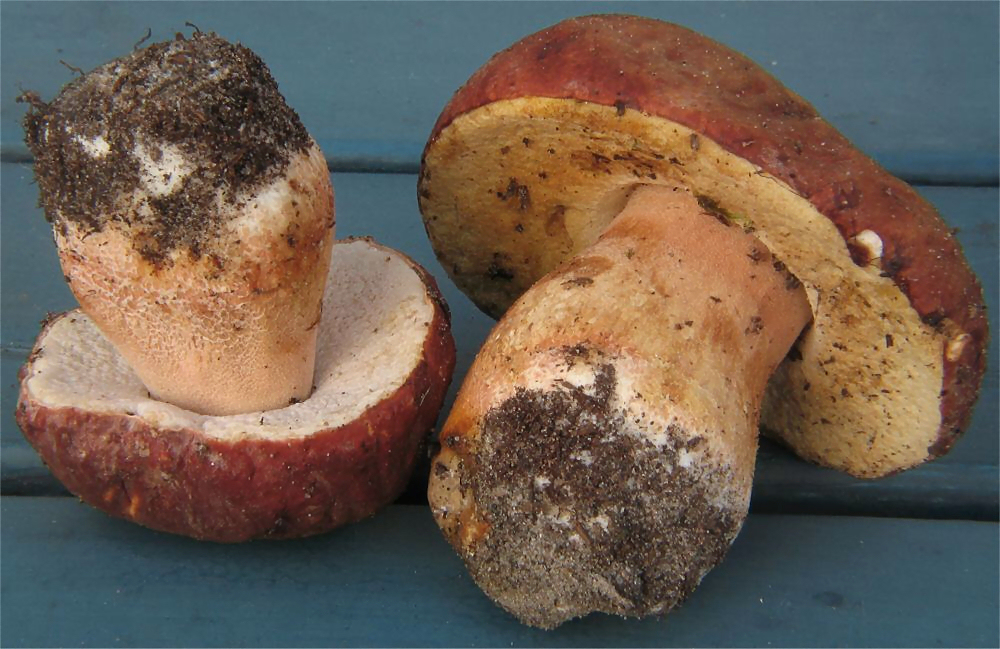
The red-brown cep has a net-patterned stem and belongs to the cep group, while the pine bolete has dark scales on the stem and is associated with pine.
Read more about Red-brown cep ›Preparation
Remove soil and forest debris. Cut off the lowest part of the stem. Dice and fry until the mushroom is thoroughly cooked and the liquid has evaporated. Scaber mushrooms should always be cooked thoroughly.
Recipe suggestions
Pine scaber on butter-fried toast: fry finely chopped pine scaber until the liquid has evaporated, add butter, salt, pepper and parsley. Place on toasted bread and top with a little sour cream.
Images – study the mushroom from several angles
Click an image to display it as the main image.
Tallsopp tillhör strävsopparna. Säker artbestämning är viktig och svampen ska genomhettas ordentligt före förtäring.
Facts and sources
Svampguiden; SLU Artdatabanken/Artfakta.