



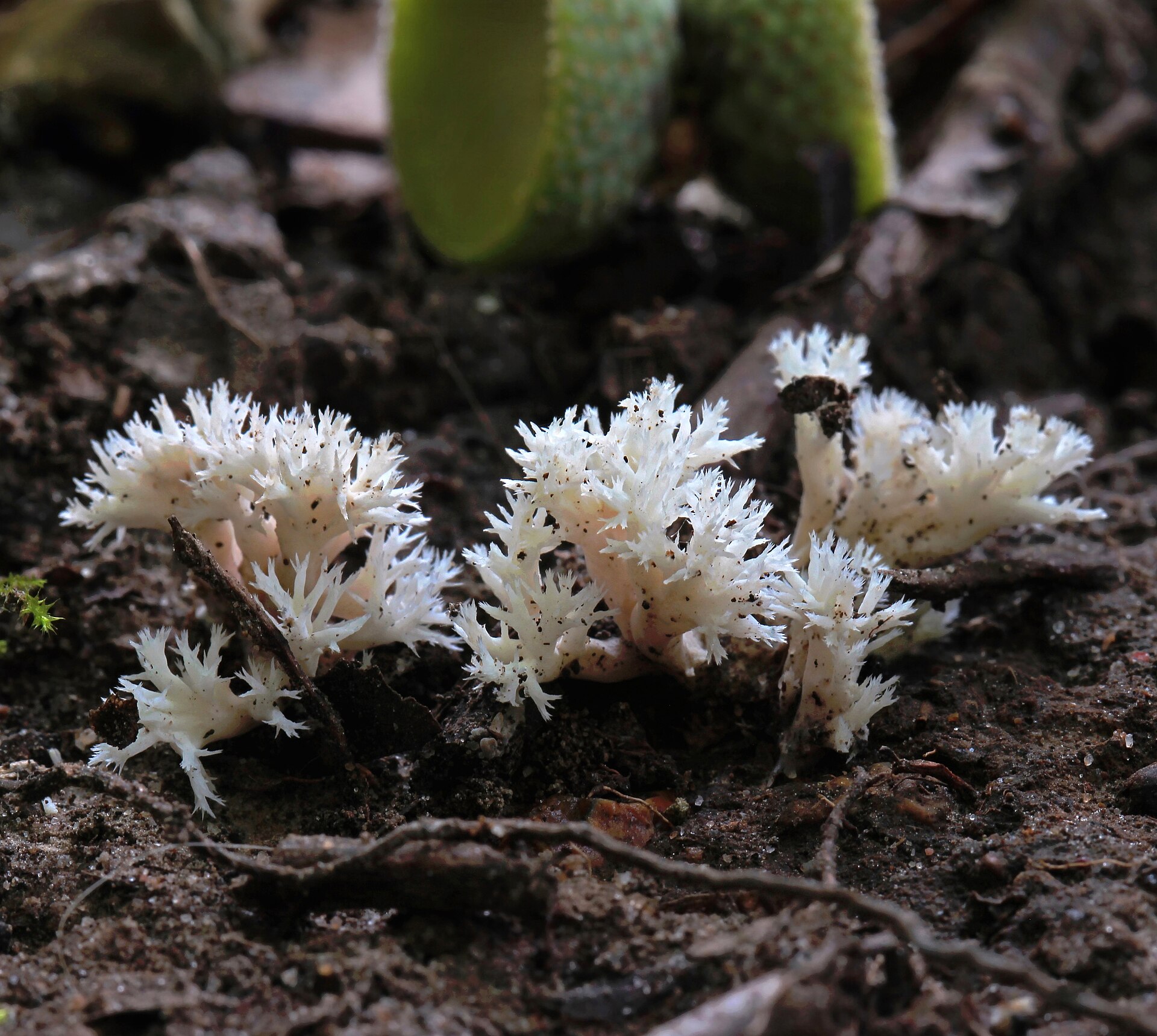
Comb Coral Mushroom
Clavulina cristata
Edible
★★★☆☆
Taste rating: 3 out of 5
How to identify it
Cap
It consists of branched, white to grey-white finger-like branches forming a bush-like fruiting body.
Underside
There are no gills or tubes. The branched tips are thin and often comb- or tooth-like.
Stem
A short common base develops into the branched structure.
Smell
Mild.
Occurrence and habitat
It grows on the ground in deciduous and coniferous woodland, often on mossy and damp ground.
Look-alike species
These mushrooms can resemble Comb Coral Mushroom. Look closely at features, habitat and images to see the differences.
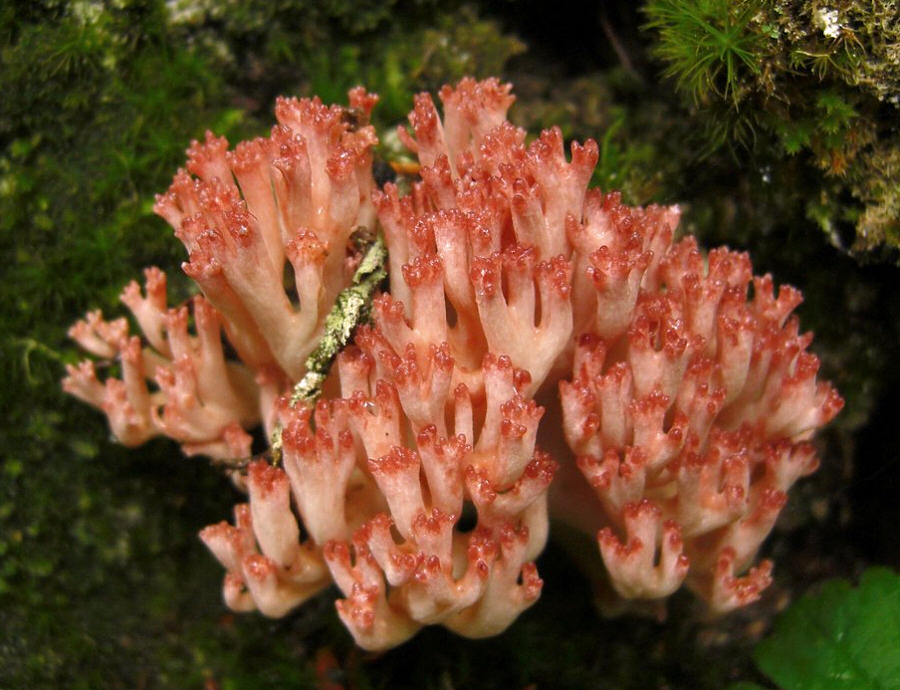
Grape coral
Ramaria botrytis
★★★★★
Very good edible mushroom
Compare several characteristics and always verify the identification.
Read more about Grape coral ›Preparation
Clean carefully of needles and soil and cook thoroughly. Use fresh specimens.
Recipe suggestions
Fry gently in butter with shallot and parsley. Serve as a side dish with potatoes or game.
Images – study the mushroom from several angles
Click an image to display it as the main image.
⚠ Important safety information
Coral mushrooms are a difficult group and several species are inedible or poisonous. Eat only when the species has been safely identified.
Coral mushrooms are a difficult group and several species are inedible or poisonous. Eat only when the species has been safely identified.
Facts and sources
Sources
Svampguiden; SLU Artdatabanken/Artfakta. Factual text compiled for Svampboken.
Svampguiden; SLU Artdatabanken/Artfakta. Factual text compiled for Svampboken.
Checked batch 06 – factual text compiled against