



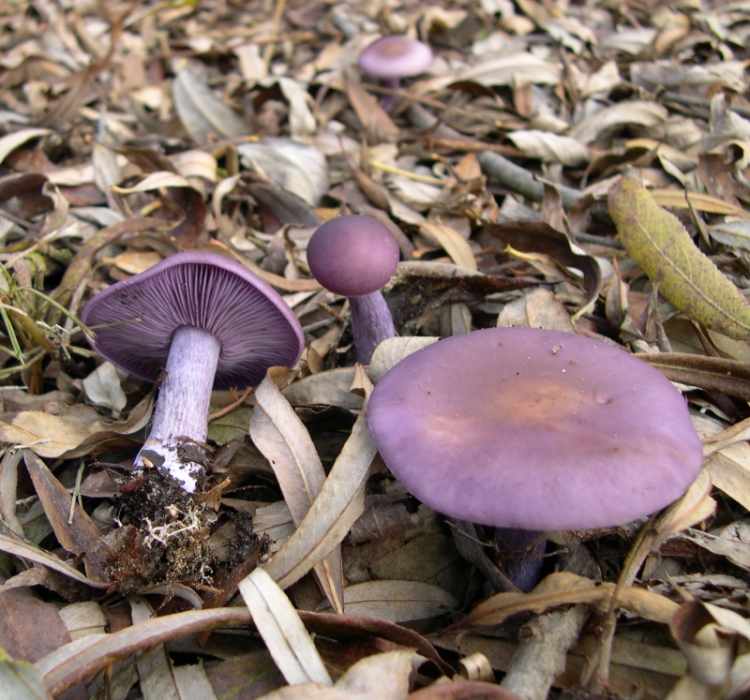
Wood blewit
Lepista nuda
Edible
★★★☆☆
Taste rating: 3 out of 5
How to identify it
Cap
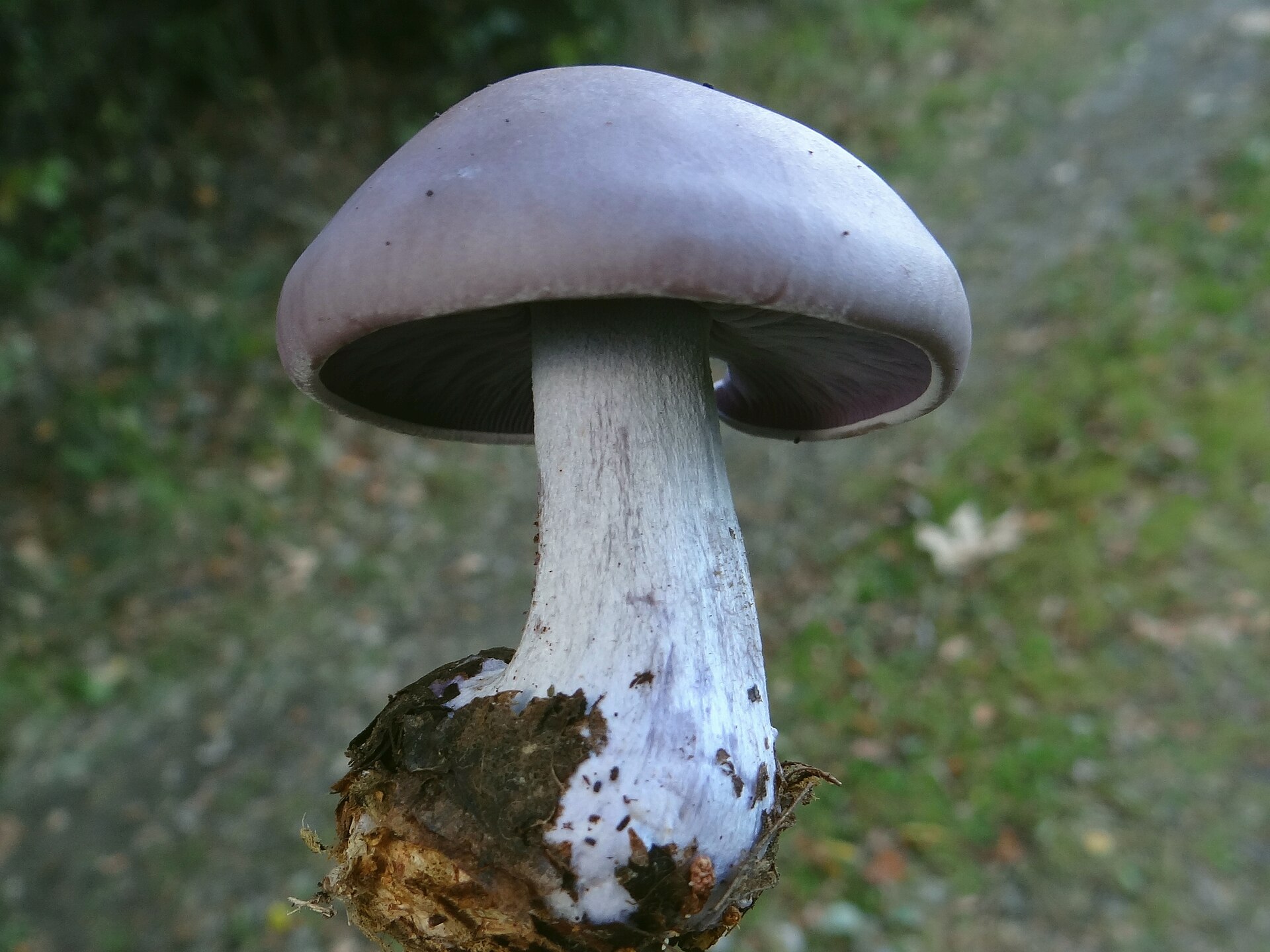
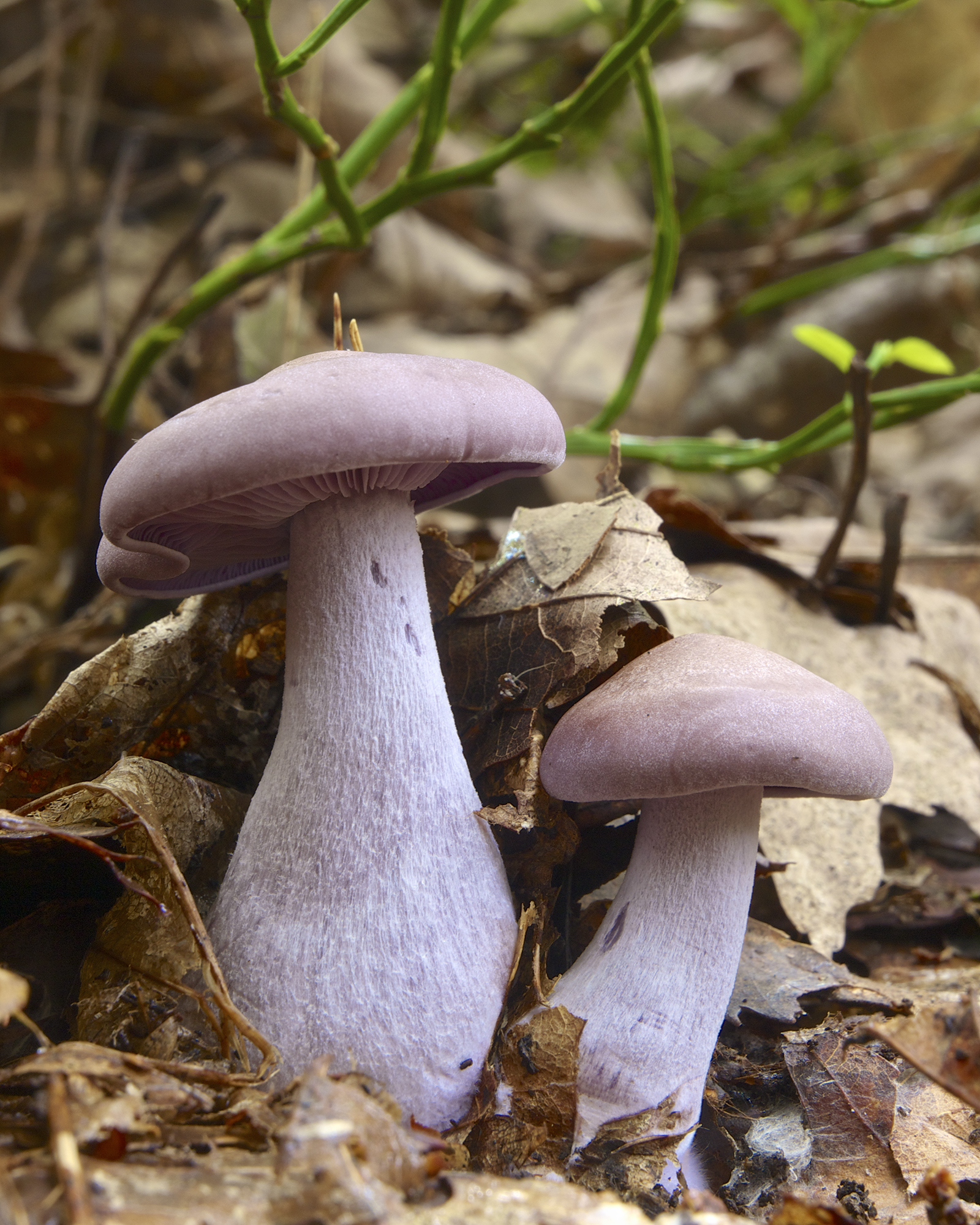
Cap 5–15 cm, first convex and later expanded. Blue-violet to brown-violet, fading with age.
Underside
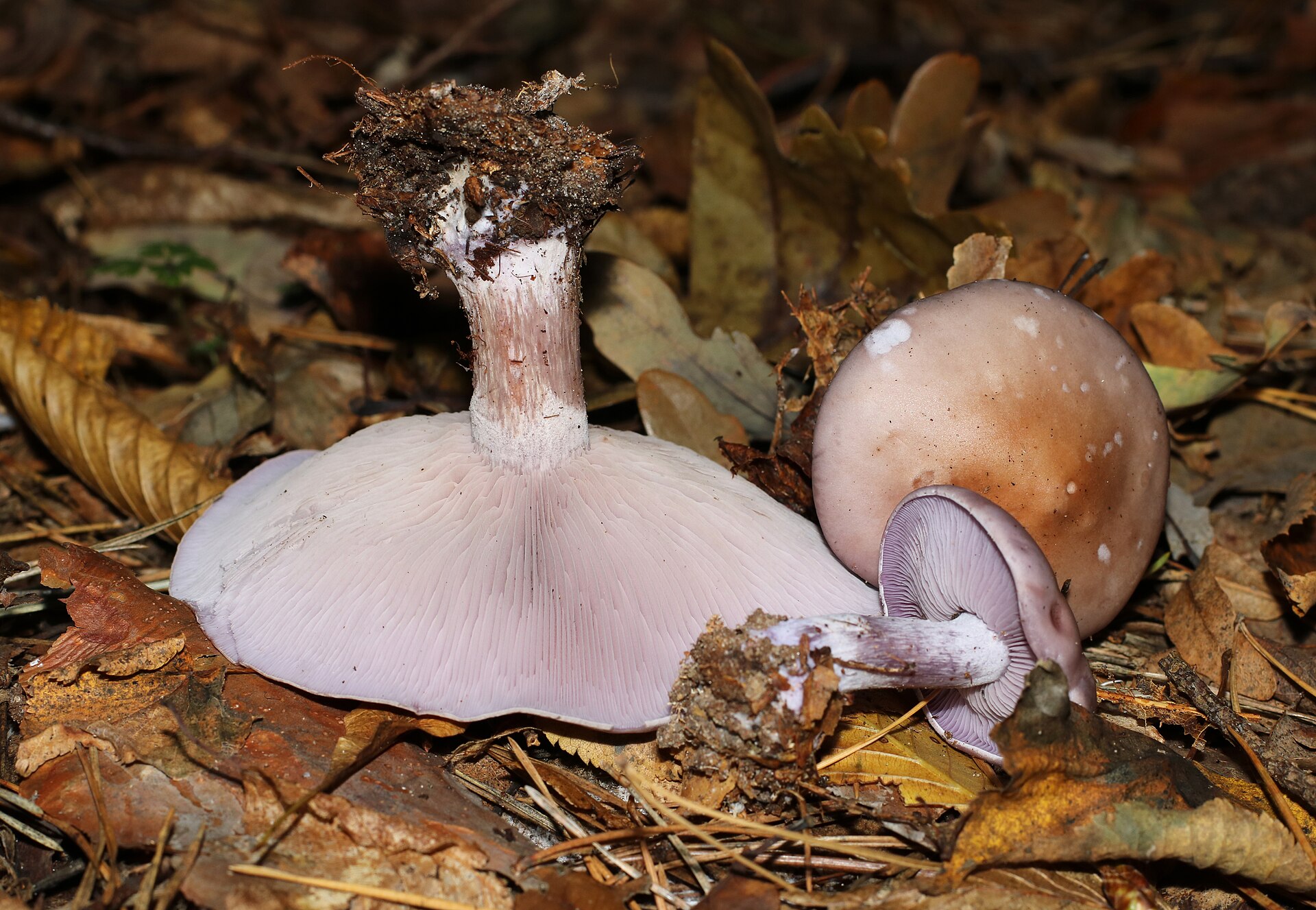
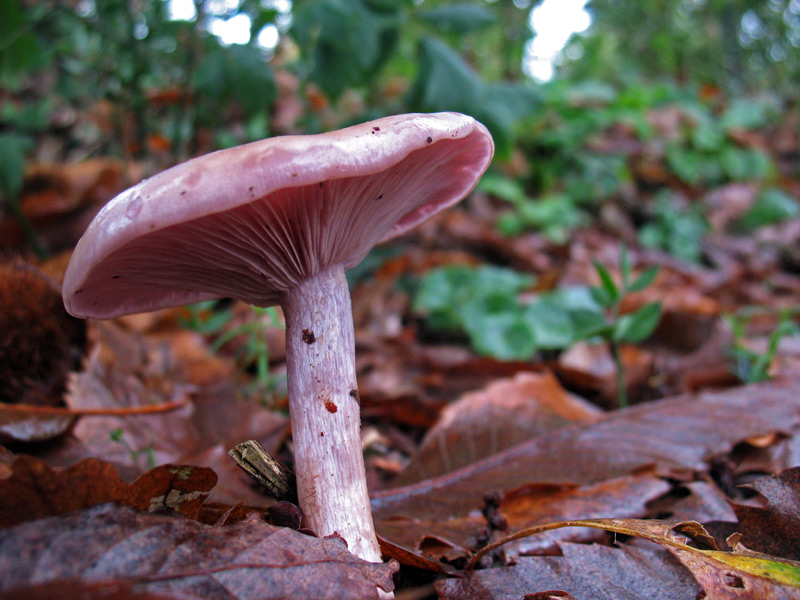
Gills crowded, violet when young and later brown-violet. Adnate to notched.
Stem
Stem stout, fibrous and violet to lighter lilac, often with a whitish base.
Smell
Distinct fruity or perfumed smell, especially in fresh specimens.
Occurrence and habitat
Grows in deciduous and coniferous woodland, often in leaf litter, and also in gardens and parks. Occurs across large parts of the Nordic countries.
Preparation
Clean carefully and cook thoroughly. Suitable for frying, stewing and soups.
Recipe suggestions
Fried wood blewit: cut the mushrooms into pieces, fry off the liquid, then add butter, onion, salt and black pepper. Finish with parsley and serve on toast or with potatoes.
Images – study the mushroom from several angles
Click an image to display it as the main image.
⚠ Important safety information
Only eat safely identified specimens. Wood blewit should not be eaten raw and must be cooked thoroughly.
Only eat safely identified specimens. Wood blewit should not be eaten raw and must be cooked thoroughly.
Facts and sources
Sources
Svampguiden – Blåmusseron; SLU Artdatabanken/Artfakta.
Svampguiden – Blåmusseron; SLU Artdatabanken/Artfakta.
Checked batch 04 – fact text compiled against