



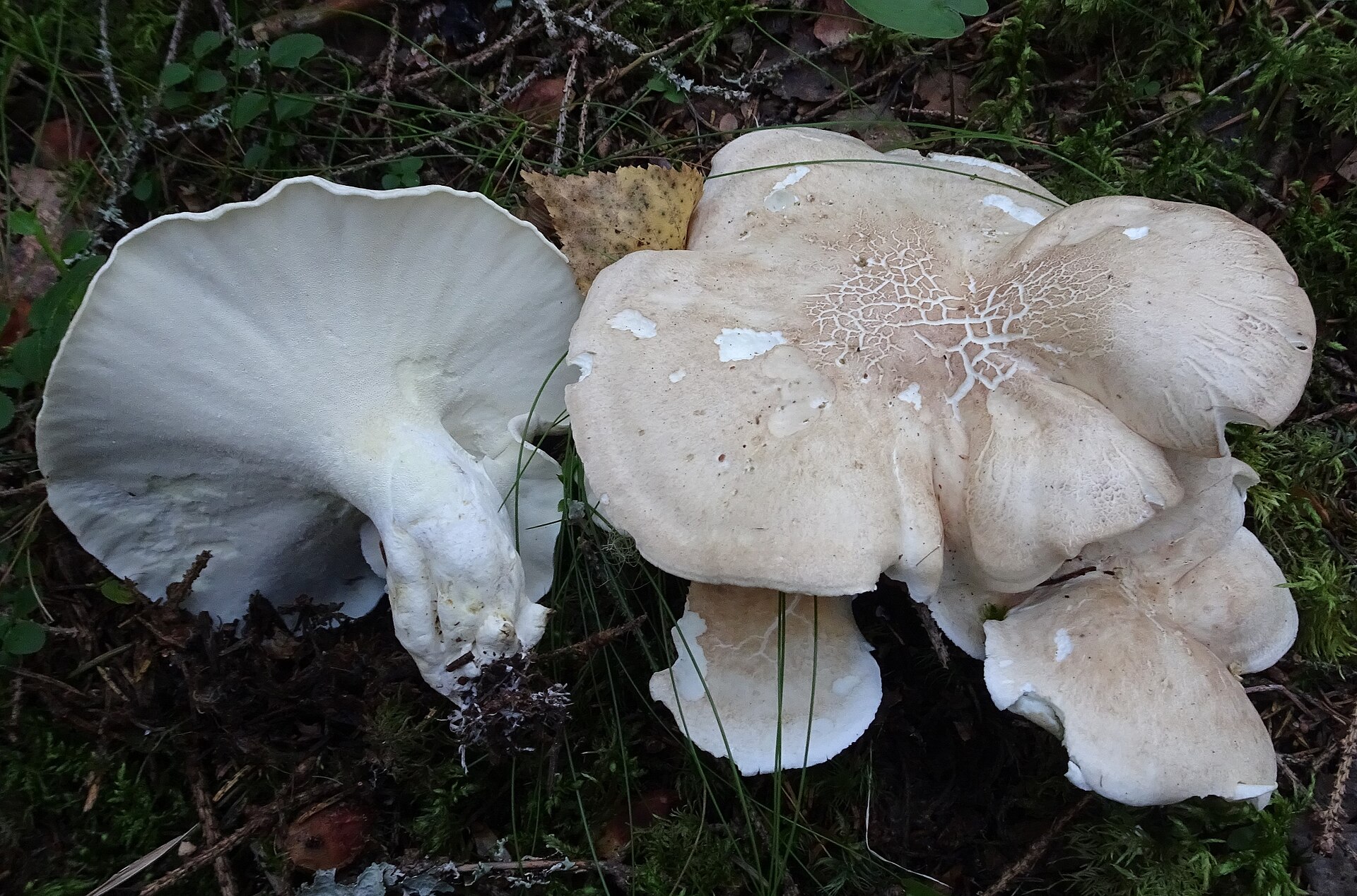
Lamb Polypore
How to identify it
Occurrence and habitat
It grows on the ground in coniferous woodland, especially under spruce and pine. It forms mycorrhiza and occurs mainly in older woodland and mossy forest habitats.
Look-alike species
These mushrooms can resemble Lamb Polypore. Look closely at features, habitat and images to see the differences.
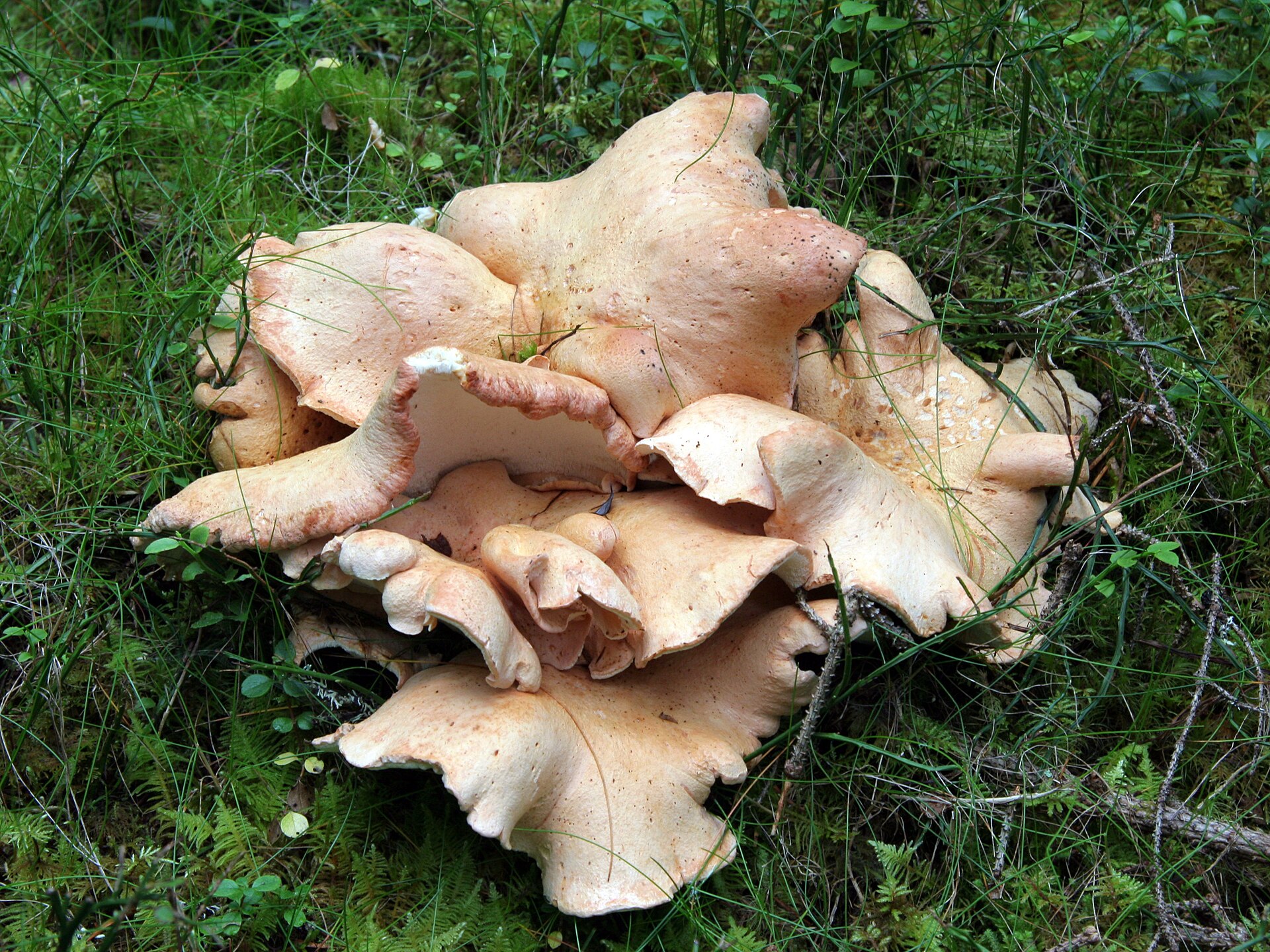
Sheep polypore has small pores and its fruiting body is usually white to grey-white. Bread polypore is also a whitish polypore but differs in shape, structure and ecological details.
Read more about Bread polypore ›Preparation
Use young, firm specimens. Clean thoroughly, cut away hard or old parts and cook by frying or other thorough heating. Older specimens can become tough.
Recipe suggestions
Fried Lamb Polypore with butter: cut young specimens into pieces, fry dry first so the liquid evaporates, then add butter, salt and pepper. Finish with parsley and a little garlic.
Images – study the mushroom from several angles
Click an image to display it as the main image.
Eat only specimens that have been safely identified. Confusion with other white polypores is possible. Do not use old, tough or infested specimens.
Facts and sources
Svampguiden; SLU Artdatabanken/Artfakta. Fact-checking should be made against current taxonomy and species description before final publication.