



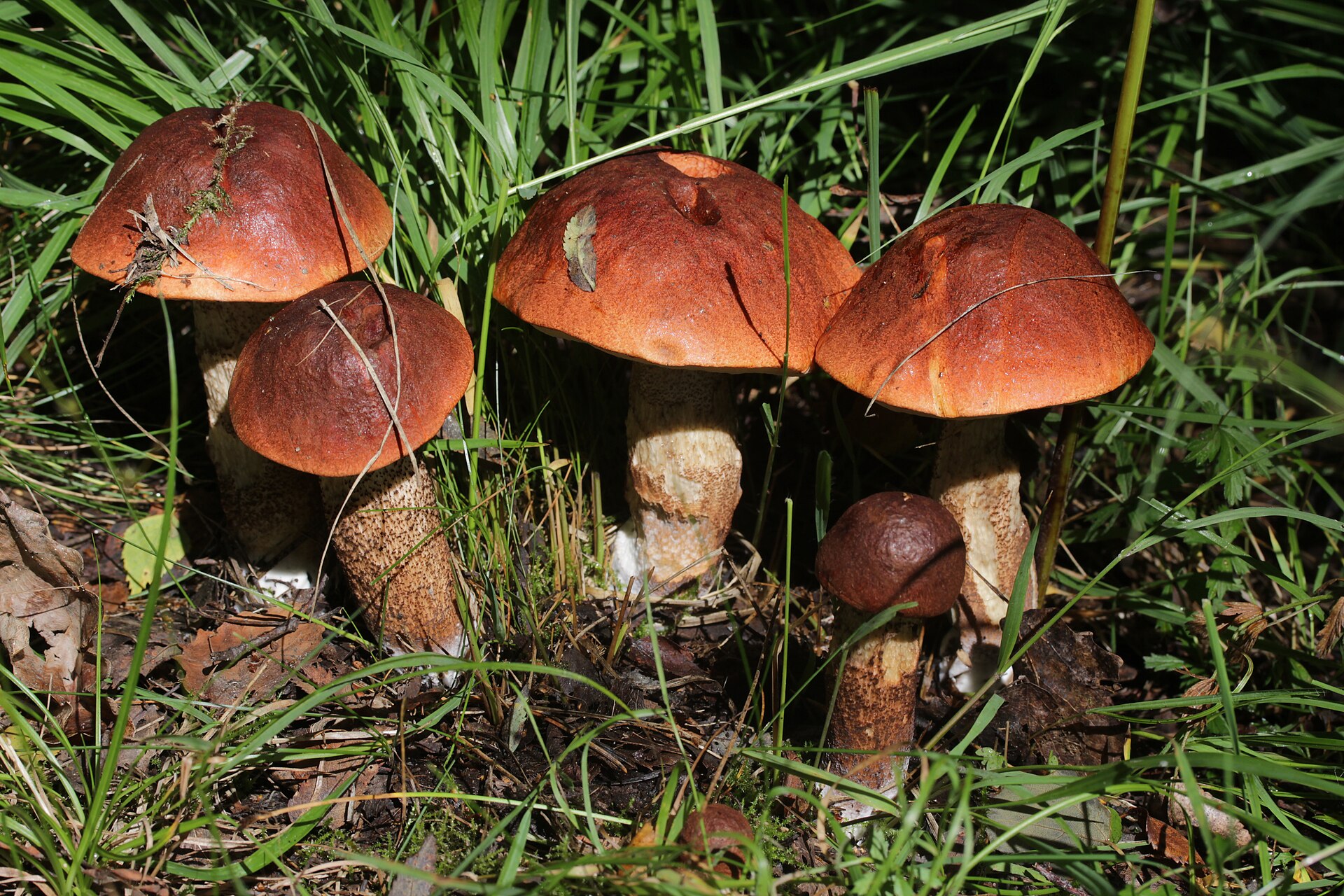
Asp bolete
Leccinum aurantiacum
Edible
★★★☆☆
Taste rating: 3 out of 5
How to identify it
Cap
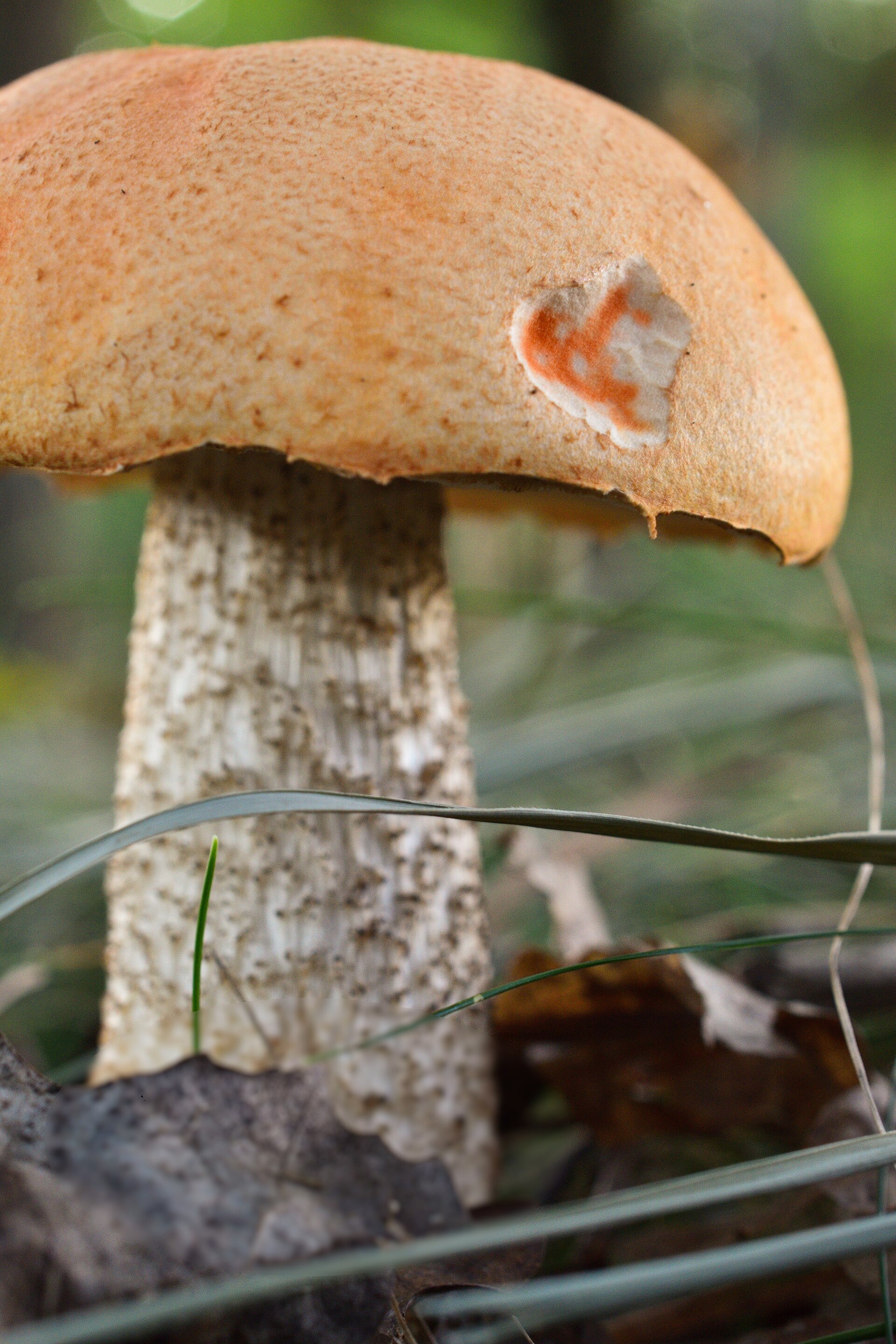
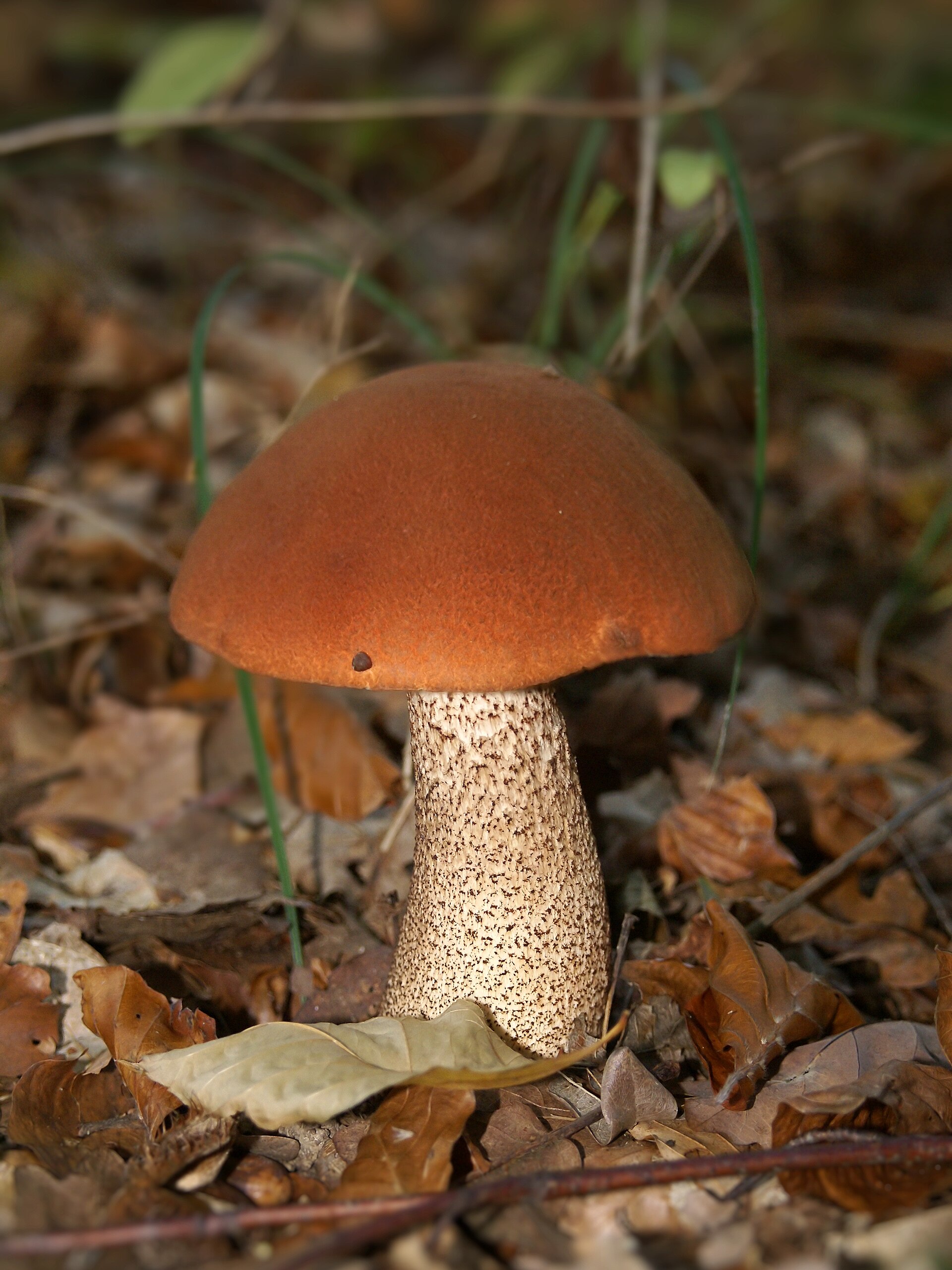
Convex cap, orange-red to brown-red and dull. The cap skin often extends slightly beyond the cap edge.
Underside
Tubes are dirty white and densely packed beneath the cap.
Stem
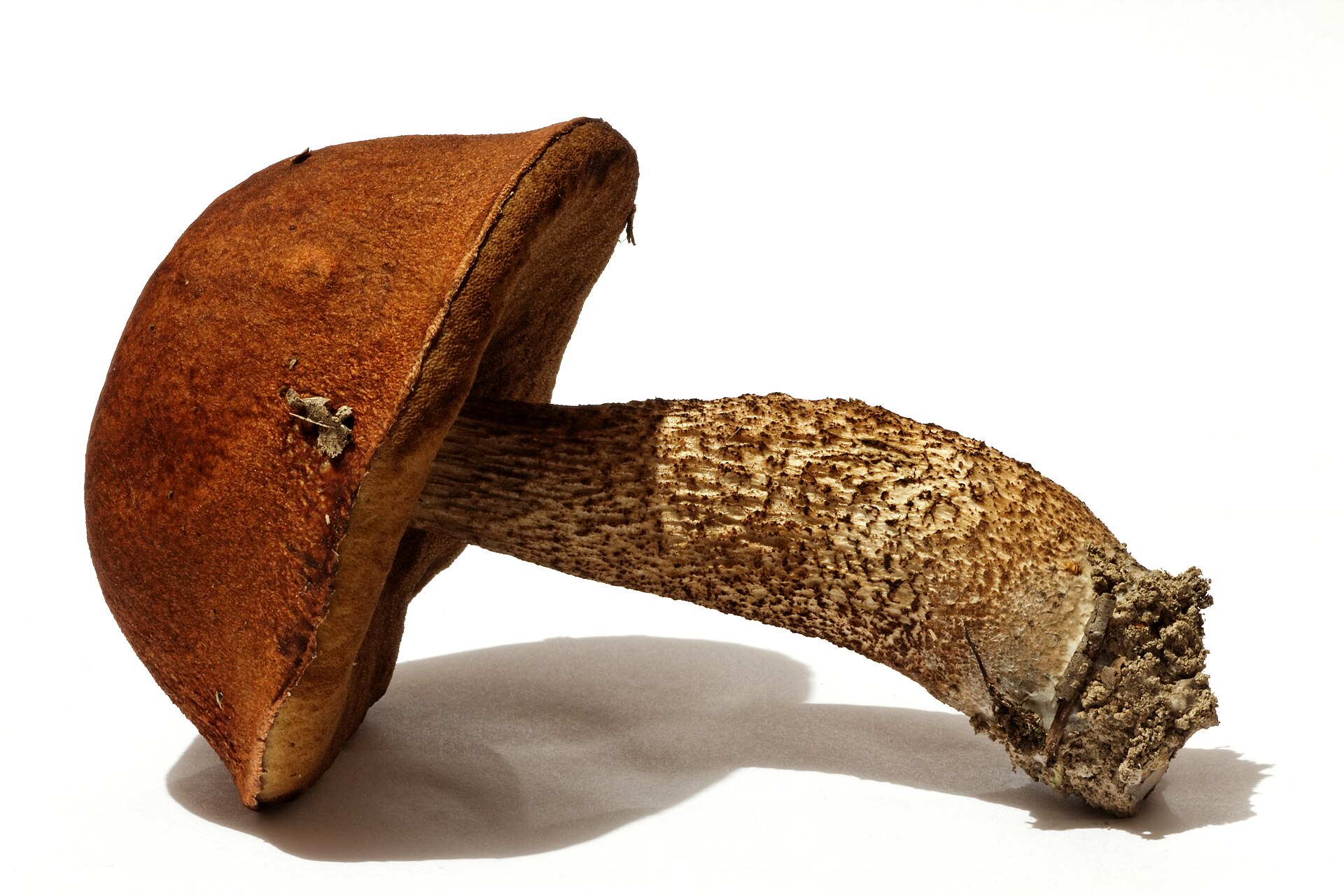
White stem with reddish-brown to dark tufts/scales. Usually stout.
Smell
Mild, typical mushroom smell.
Occurrence and habitat
Forms mycorrhiza with aspen and can also occur with oak. Grows in deciduous and coniferous woodland and occurs across large parts of Sweden.
Preparation
Use firm specimens. Remove damaged parts and cook thoroughly. Very suitable for frying, stewing or use in casseroles and sauces.
Recipe suggestions
Fried aspen bolete with onion: slice the mushroom, fry dry first until the liquid evaporates, then add butter and finely chopped yellow onion. Season with salt and pepper and finish with parsley.
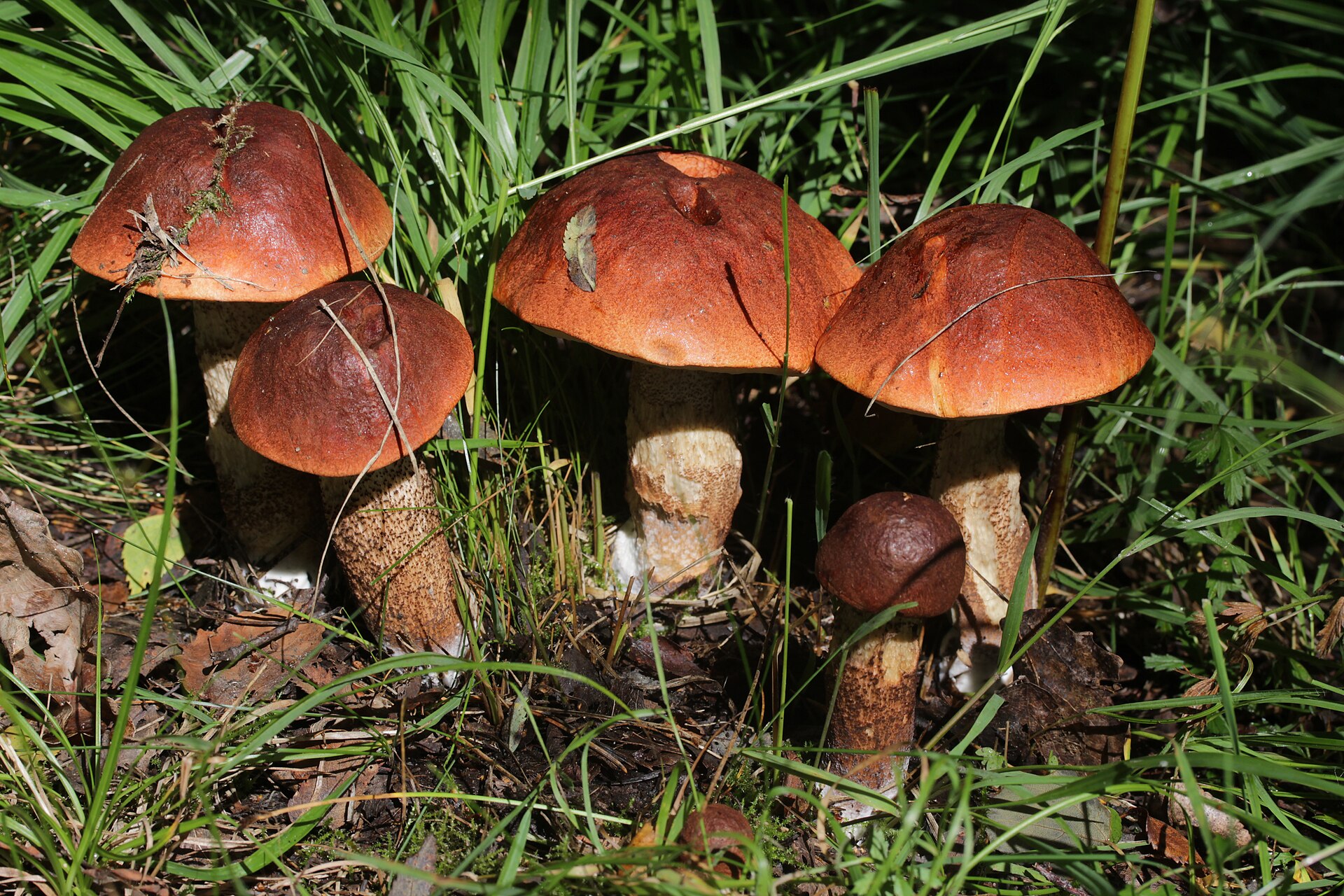
Images – study the mushroom from several angles
Click an image to display it as the main image.
⚠ Important safety information
Rough-stemmed boletes can be difficult to distinguish. The species belongs to a complex of closely related species, but the relevant species in this group are edible when cooked. Safe identification is required.
Rough-stemmed boletes can be difficult to distinguish. The species belongs to a complex of closely related species, but the relevant species in this group are edible when cooked. Safe identification is required.
Facts and sources
Sources
Svampguiden; SLU Artdatabanken/Artfakta.
Svampguiden; SLU Artdatabanken/Artfakta.
Checked batch 01 – fact text compiled against