



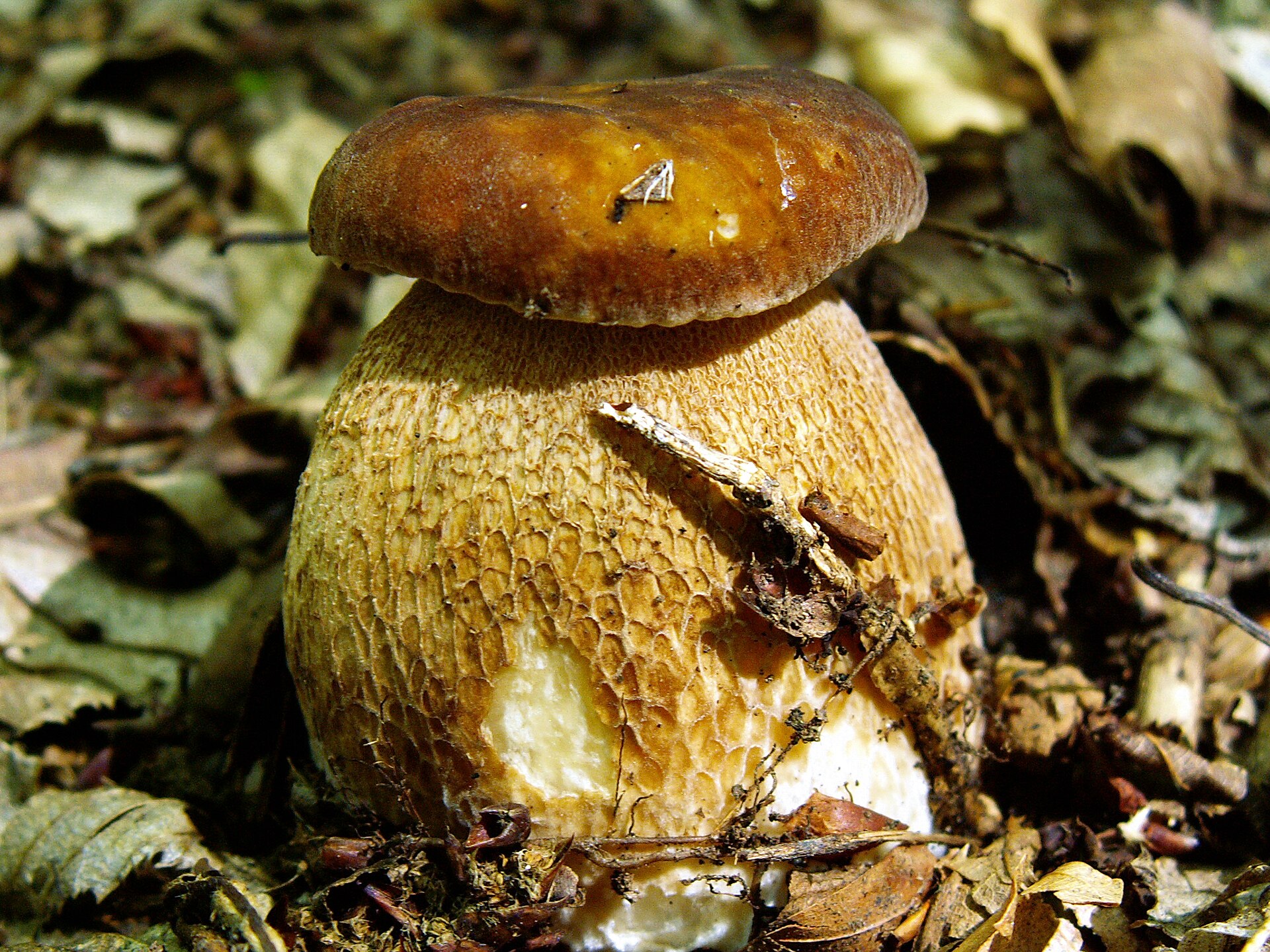
Velvety porcini
Boletus reticulatus
Edible
★★★★★
Taste rating: 5 out of 5
How to identify it
Cap
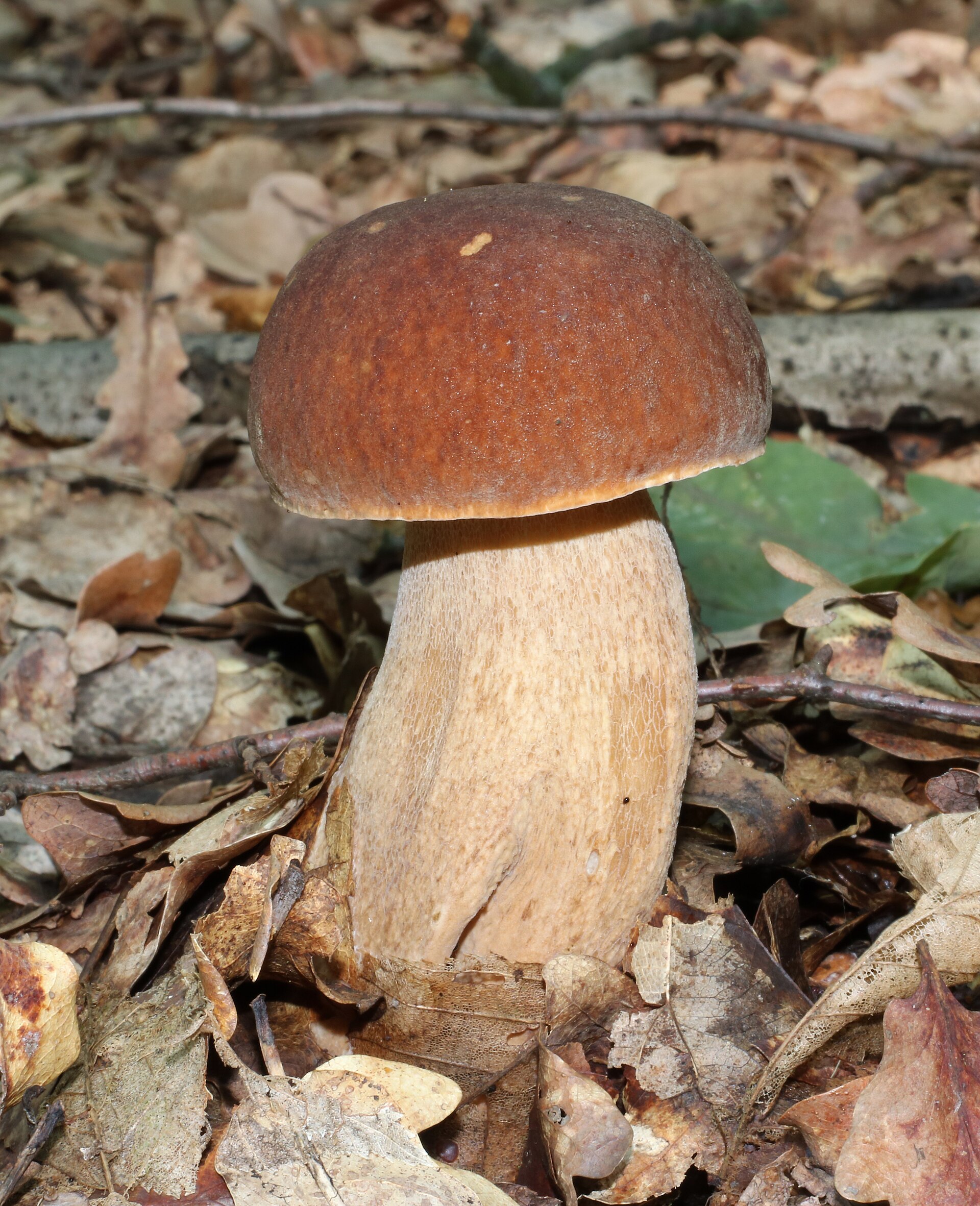
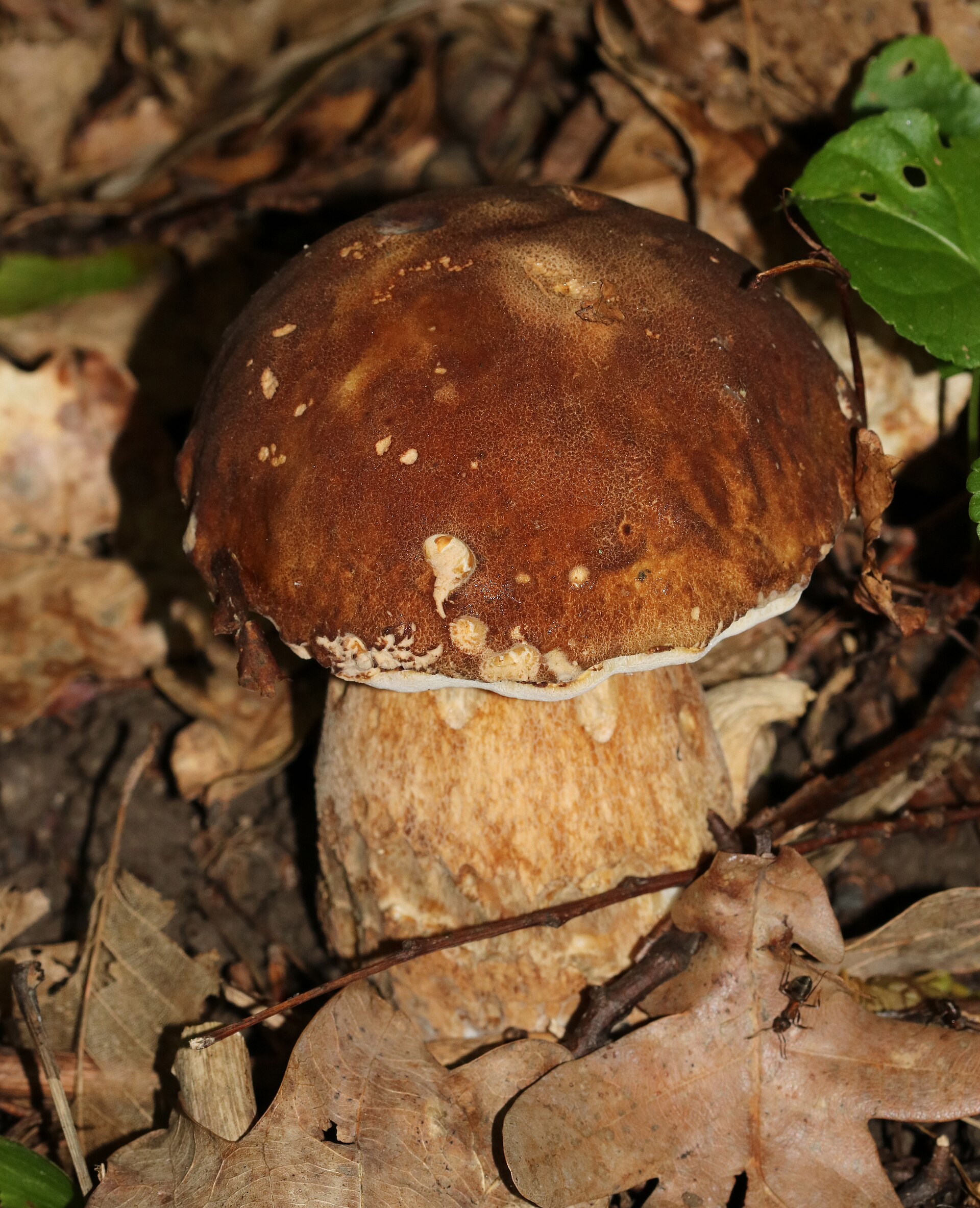
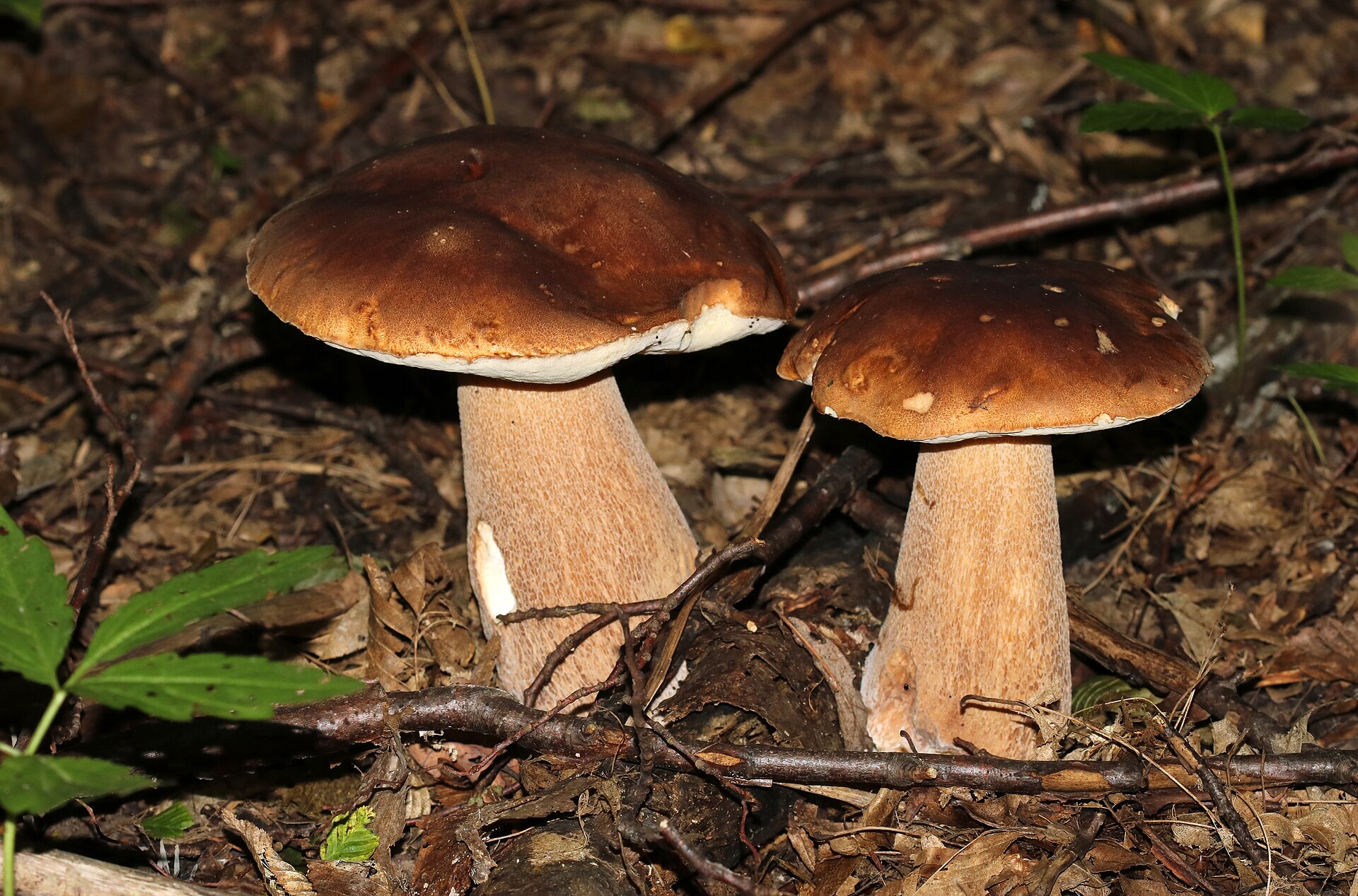
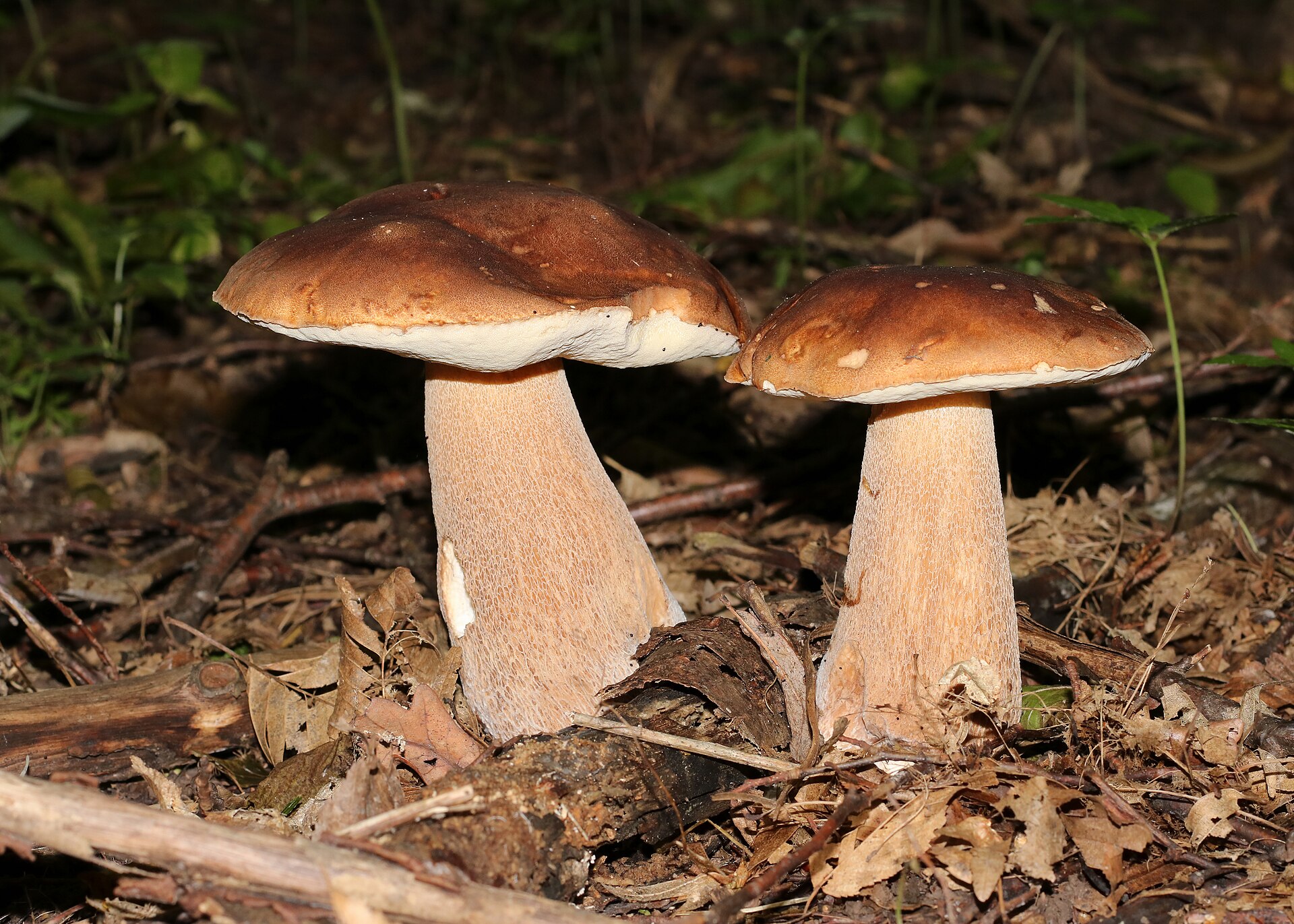
Cap light brown to nut-brown and distinctly velvety or finely felted. Often becomes smoother with age.
Underside
Pores first white to grey-white and later yellow-green. Normally do not turn distinctly blue when pressed.
Stem
Stem stout, light brown to beige with a distinct white to brown network, especially on the upper part.
Smell
Mild, distinct and pleasant mushroom smell.
Occurrence and habitat
Grows mainly in deciduous and mixed woodland, often with oak and beech on warmer, nutrient-rich sites.
Look-alike species
These mushrooms can resemble Velvety porcini. Look closely at features, habitat and images to see the differences.
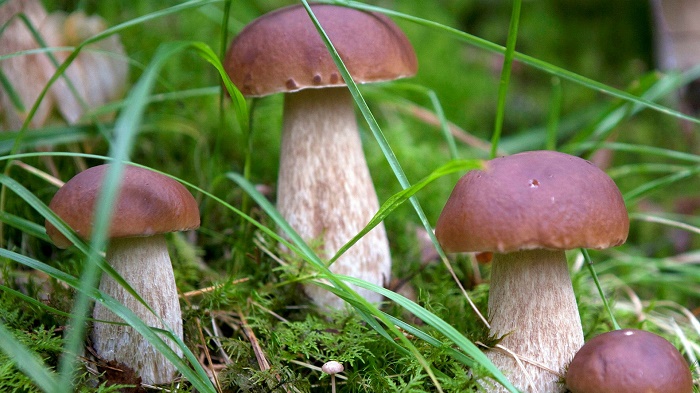
Cep / Penny Bun
Boletus edulis
★★★★★
Excellent edible mushroom
Compare several characteristics and always verify the identification.
Read more about Cep / Penny Bun ›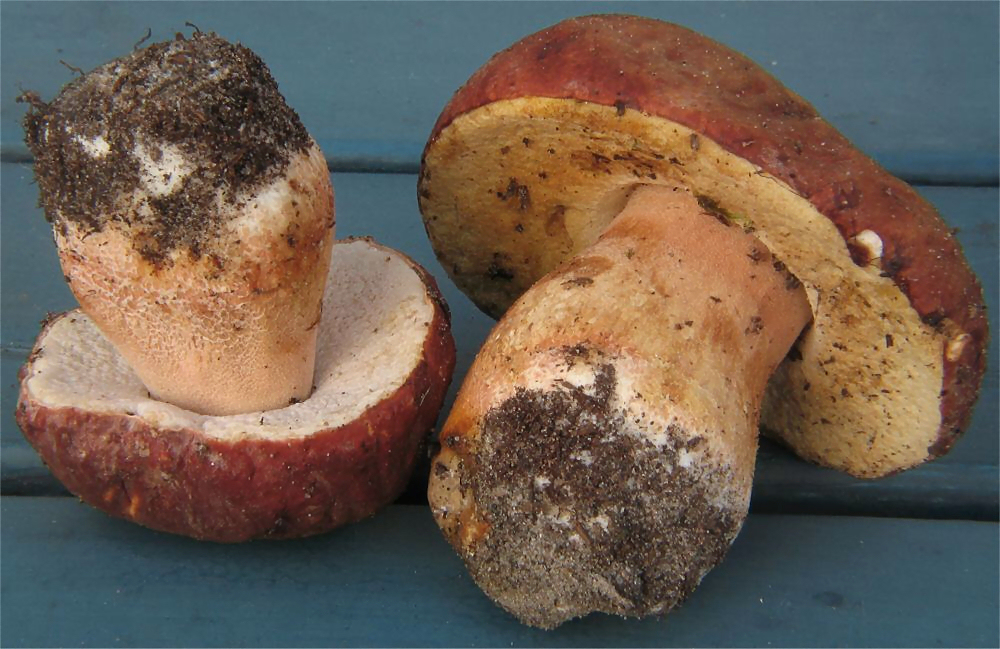
Red-brown cep
Boletus pinophilus
★★★★★
Excellent edible mushroom
Compare several characteristics and always verify the identification.
Read more about Red-brown cep ›Preparation
Brush clean and remove damaged parts. Fry or use in sauce and stew. Can also be dried.
Recipe suggestions
Finely velvety porcini fried in butter with garlic and parsley.
Images – study the mushroom from several angles
Click an image to display it as the main image.
⚠ Important safety information
Pay particular attention to the cap’s velvety surface and the network on the stem. Eat only safely identified boletes.
Pay particular attention to the cap’s velvety surface and the network on the stem. Eat only safely identified boletes.
Facts and sources
Sources
Svampguiden; SLU Artdatabanken/Artfakta
Svampguiden; SLU Artdatabanken/Artfakta
Checked batch 10 – fact text compiled against