



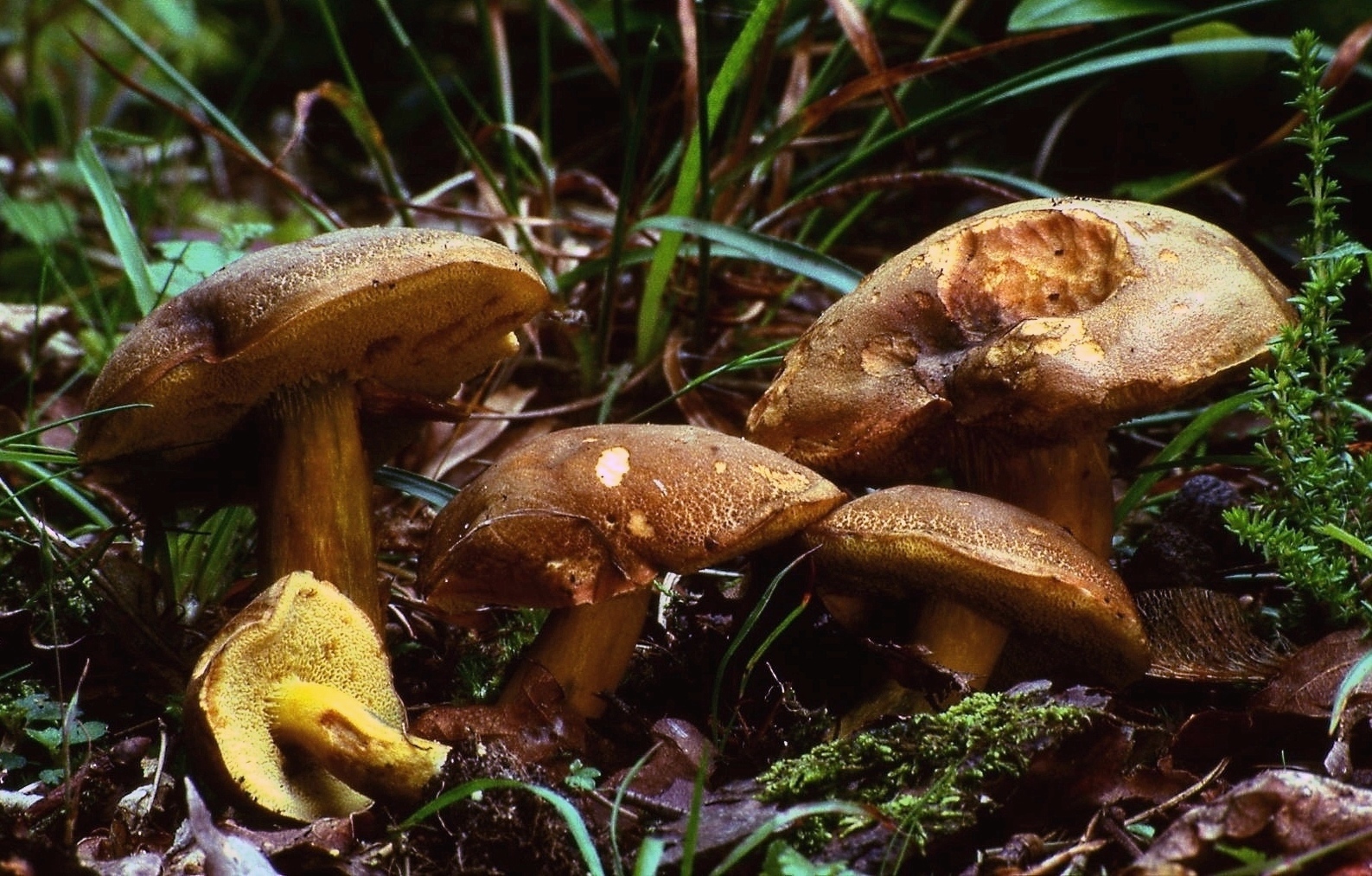
False rut bolete
Xerocomellus porosporus
Edible
★☆☆☆☆
Taste rating: 1 out of 5
How to identify it
Cap
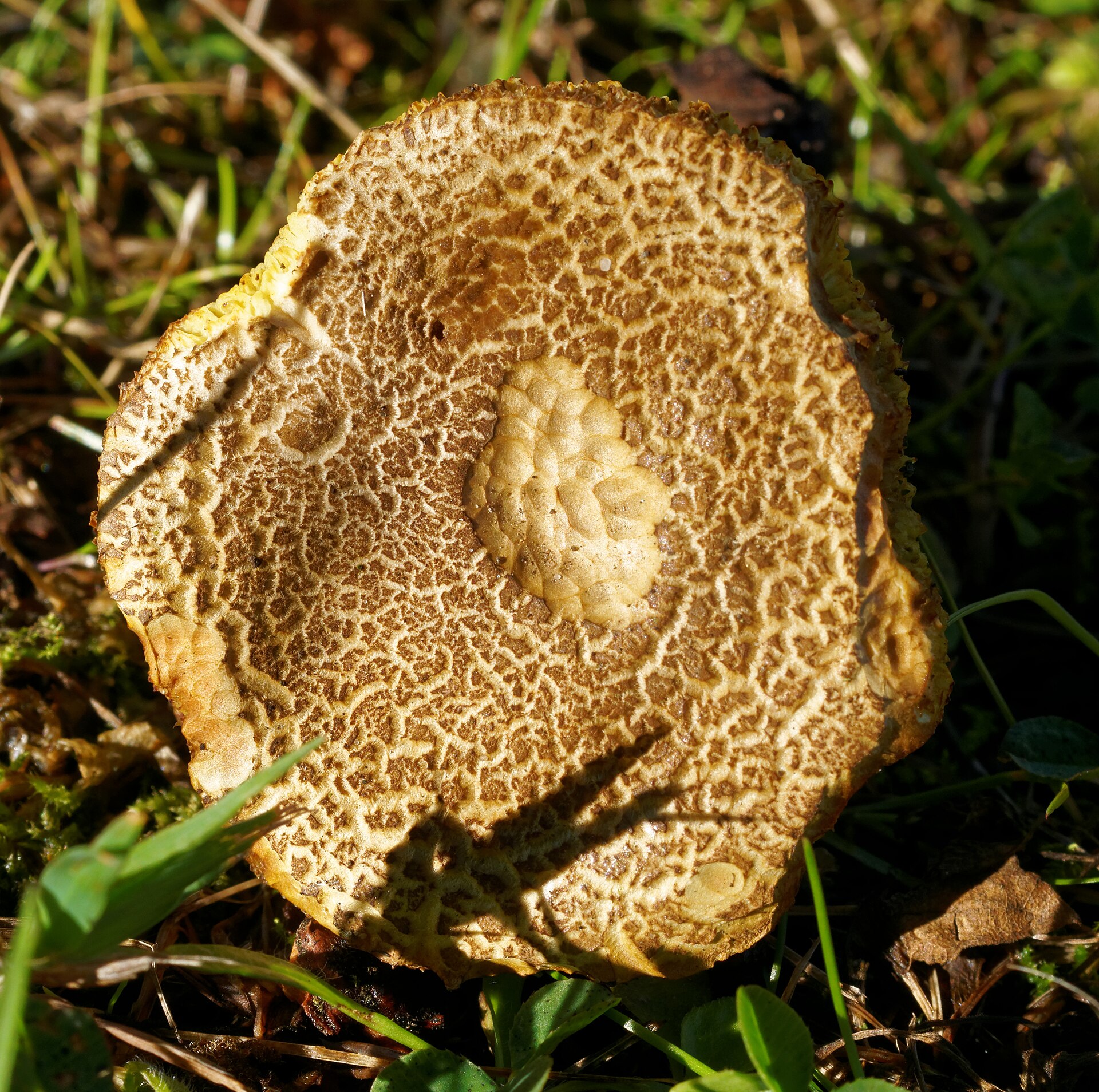
Cap convex to expanded and velvety, dull grey-brown to olive-brown. With age the cap skin cracks.
Underside
Tubes yellow when young, later dull yellow-green. Tube mouths angular and turn blue when pressed.
Stem
Stem dull yellow-brown to grey-brown, sometimes with weak red tones.
Smell
Flesh pale yellow and can be slightly reddish close to the cap skin.
Occurrence and habitat
Grows with oak in broadleaf woodland, pastures and parks in southern and central Sweden.
Look-alike species
These mushrooms can resemble False rut bolete. Look closely at features, habitat and images to see the differences.
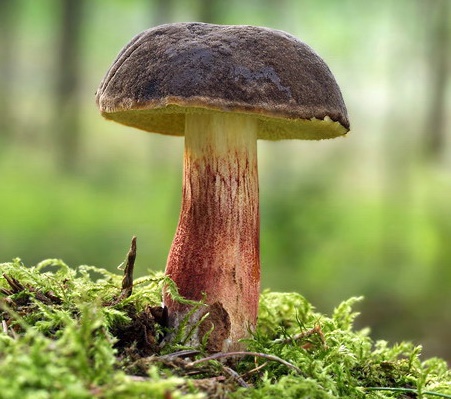
Rooting bolete
Xerocomellus chrysenteron
★★★★★
Fair edible mushroom
A similar species; the rooting bolete can often show reddish colour in the cap flesh and in the cap cracks.
Read more about Rooting bolete ›Preparation
Edible, but the stem easily becomes woody and should therefore not be used. Use the softer cap parts.
Recipe suggestions
Fry young caps in butter with garlic and parsley. Serve as a side dish or on toast.
Images – study the mushroom from several angles
Click an image to display it as the main image.


⚠ Important safety information
Several similar species occur in the genus. Safe identification is important before eating.
Several similar species occur in the genus. Safe identification is important before eating.
Facts and sources
Sources
Svampguiden – Falsk rutsopp; SLU Artdatabanken/Artfakta.
Svampguiden – Falsk rutsopp; SLU Artdatabanken/Artfakta.
Checked batch 03 – fact text compiled against