



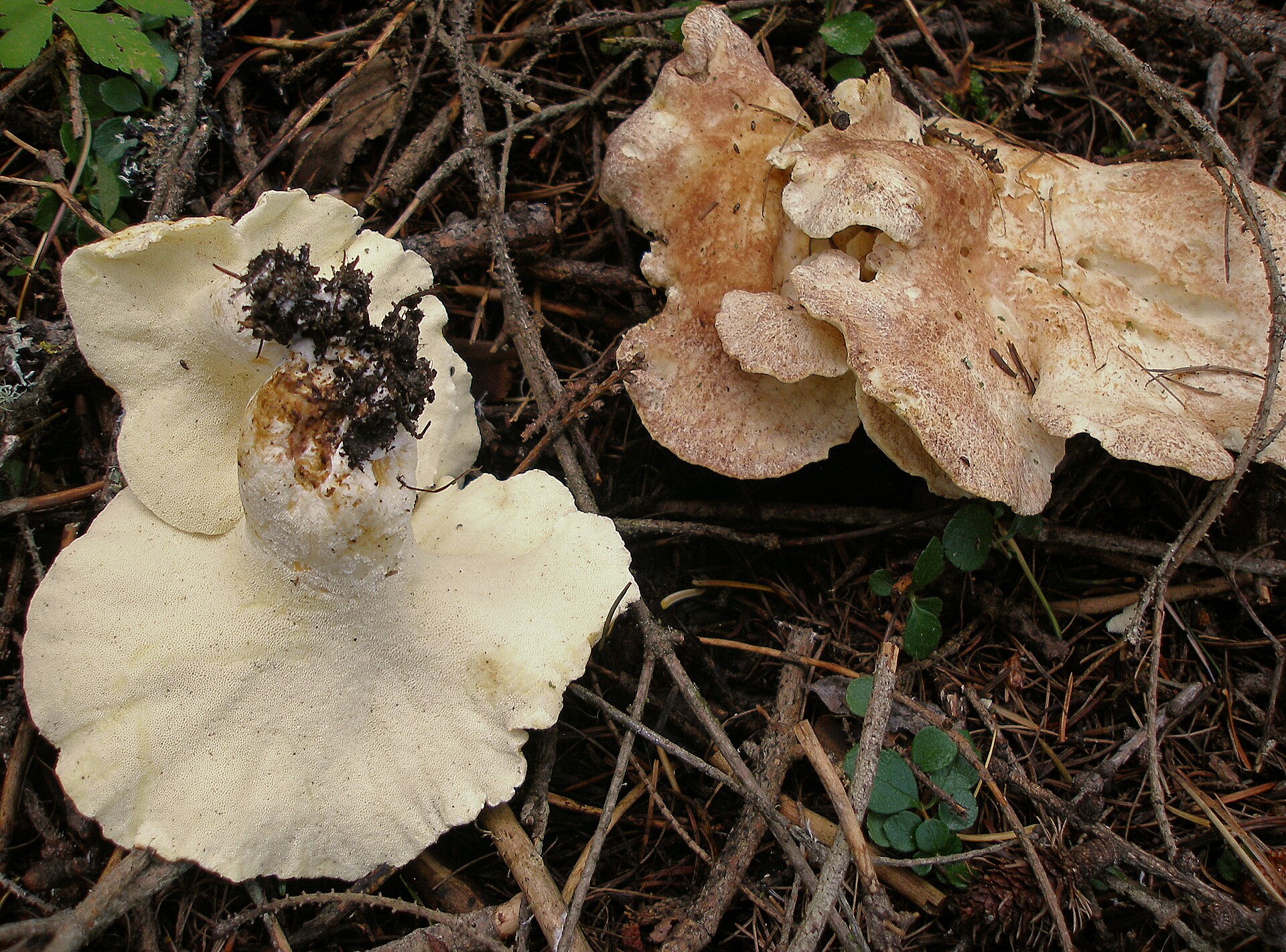
Sheep polypore
Albatrellus ovinus
Edible
★★★☆☆
Taste rating: 3 out of 5
How to identify it
Cap
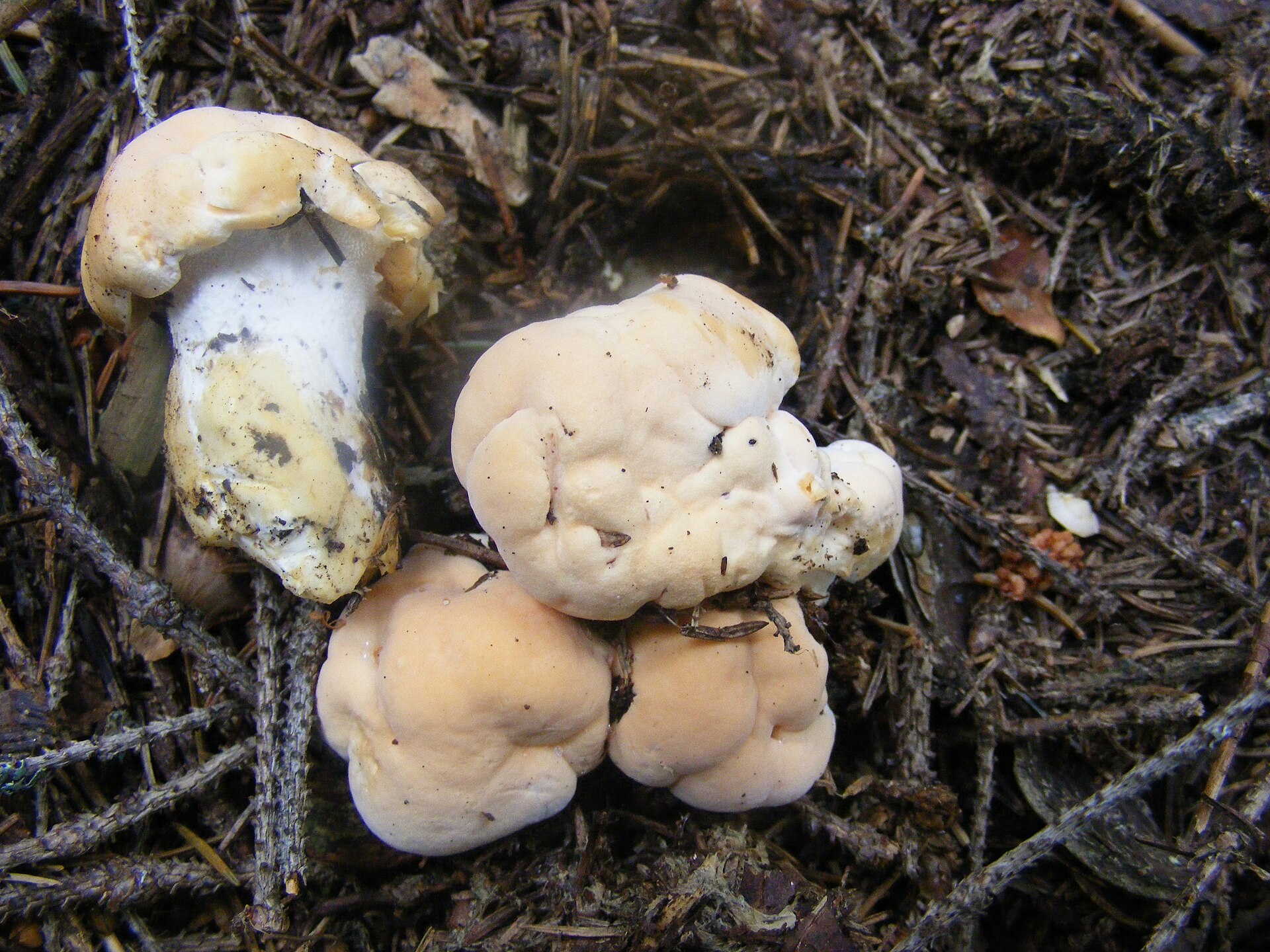
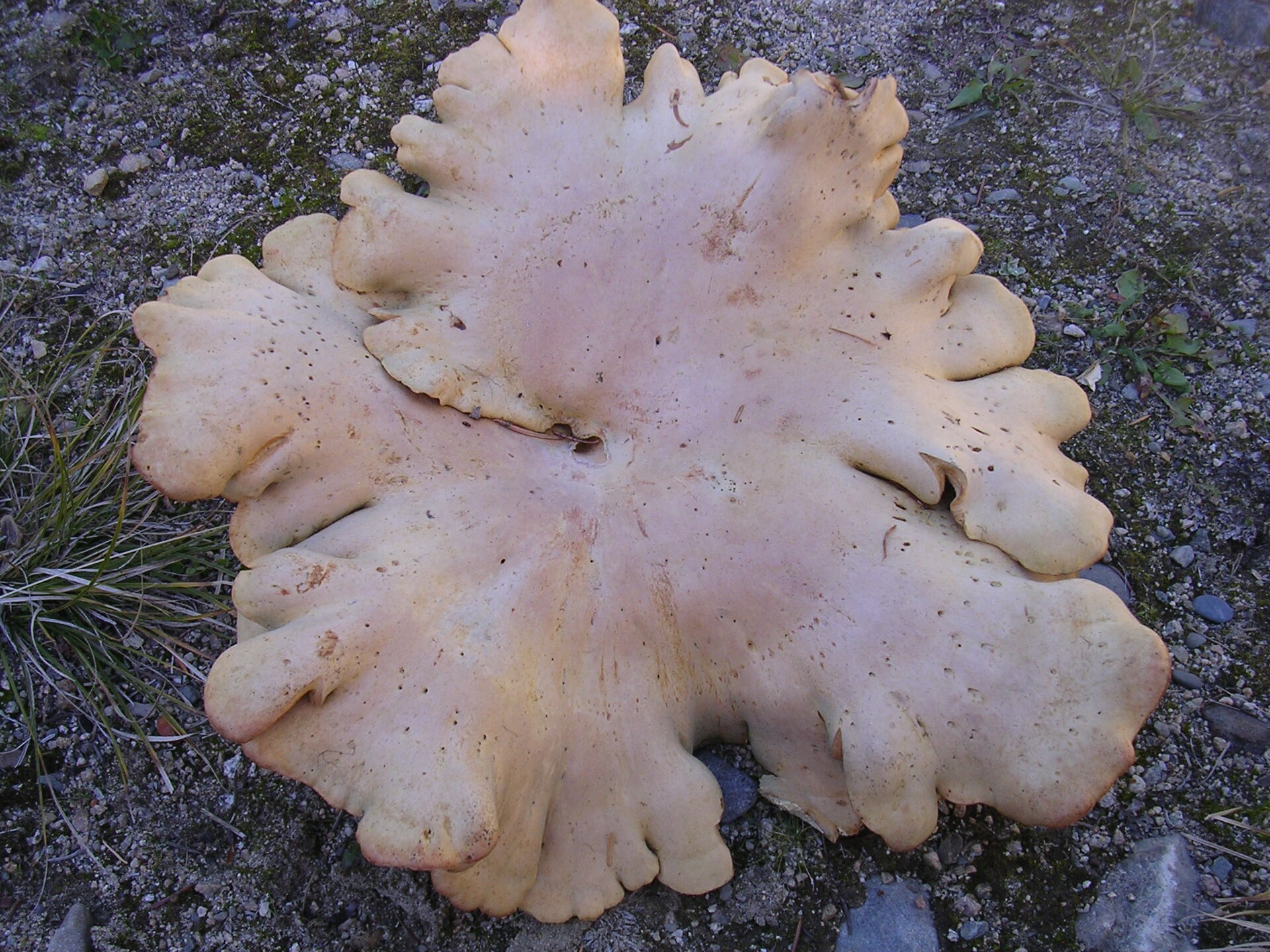
Cap white to grey-white or yellow-white, often irregularly rounded and several centimetres wide. Older specimens may develop yellow-brown spots.
Underside
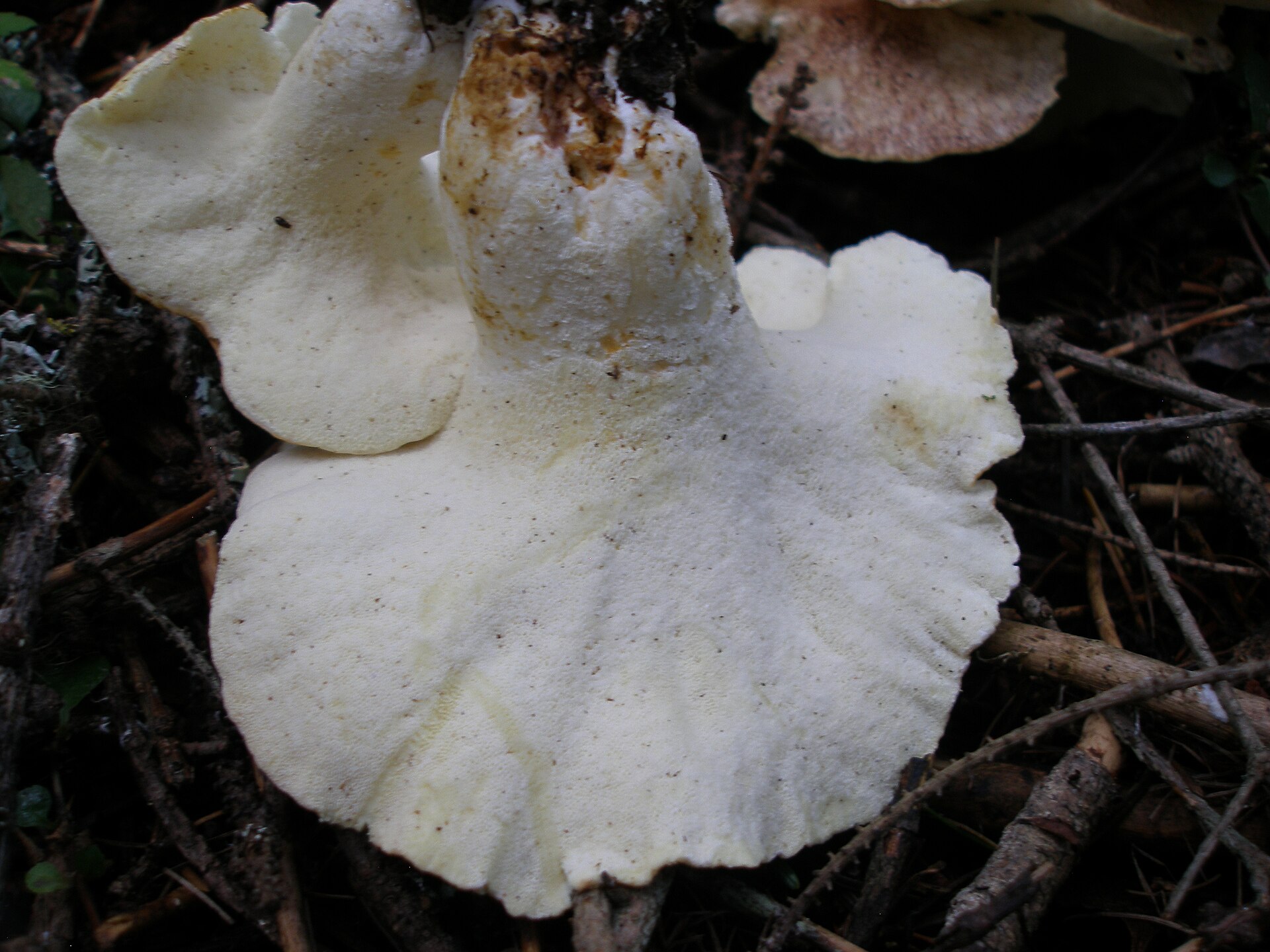
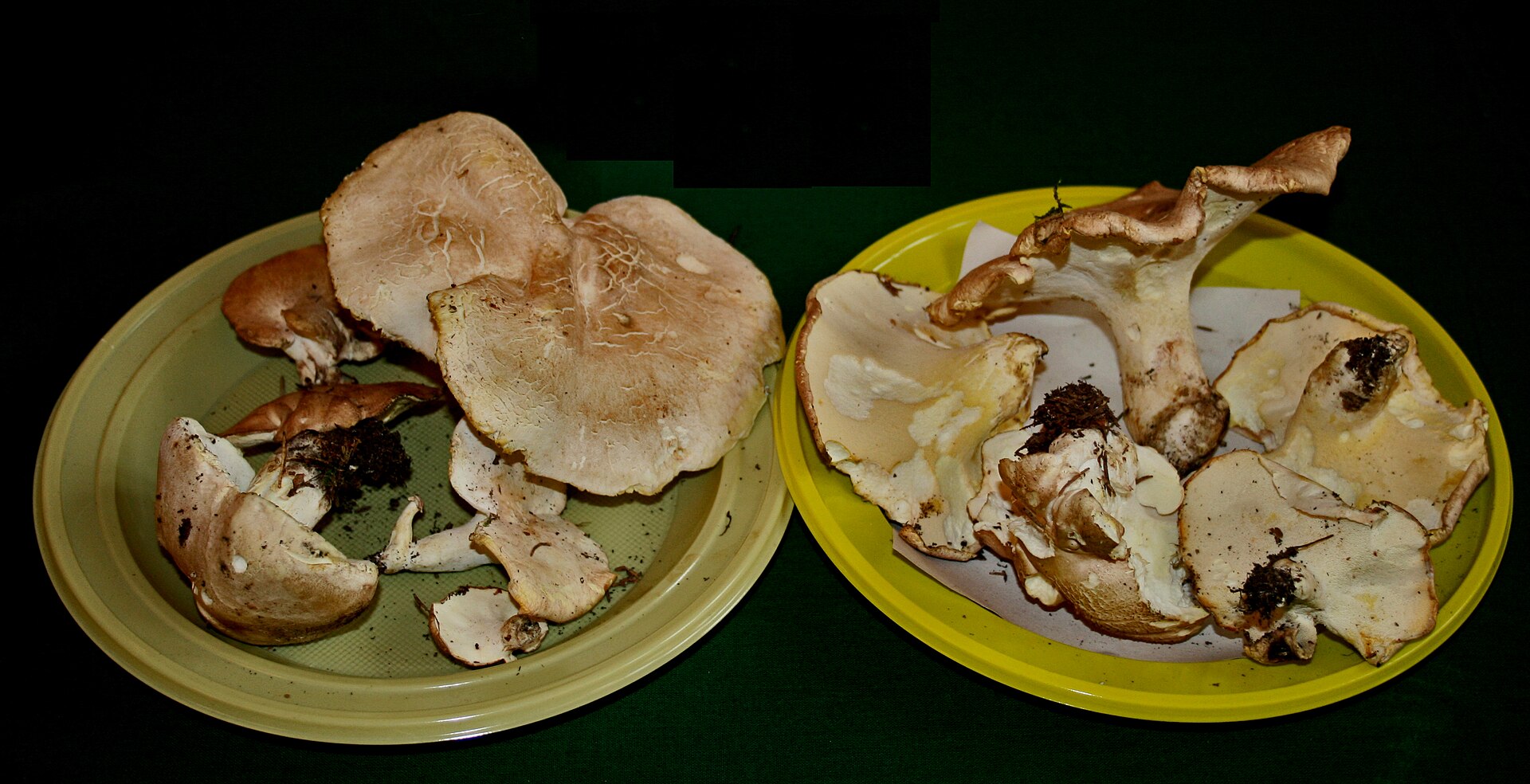
Underside consists of very small white to yellow-white pores that run slightly down the stem. Pores become yellower with age.
Stem
Stem whitish to yellow-white, stout and often slightly off-centre.
Smell
Mild, pleasant mushroom smell.
Occurrence and habitat
Grows mainly in coniferous woodland, often on mossy ground and in older spruce and pine forests.
Look-alike species
These mushrooms can resemble Sheep polypore. Look closely at features, habitat and images to see the differences.
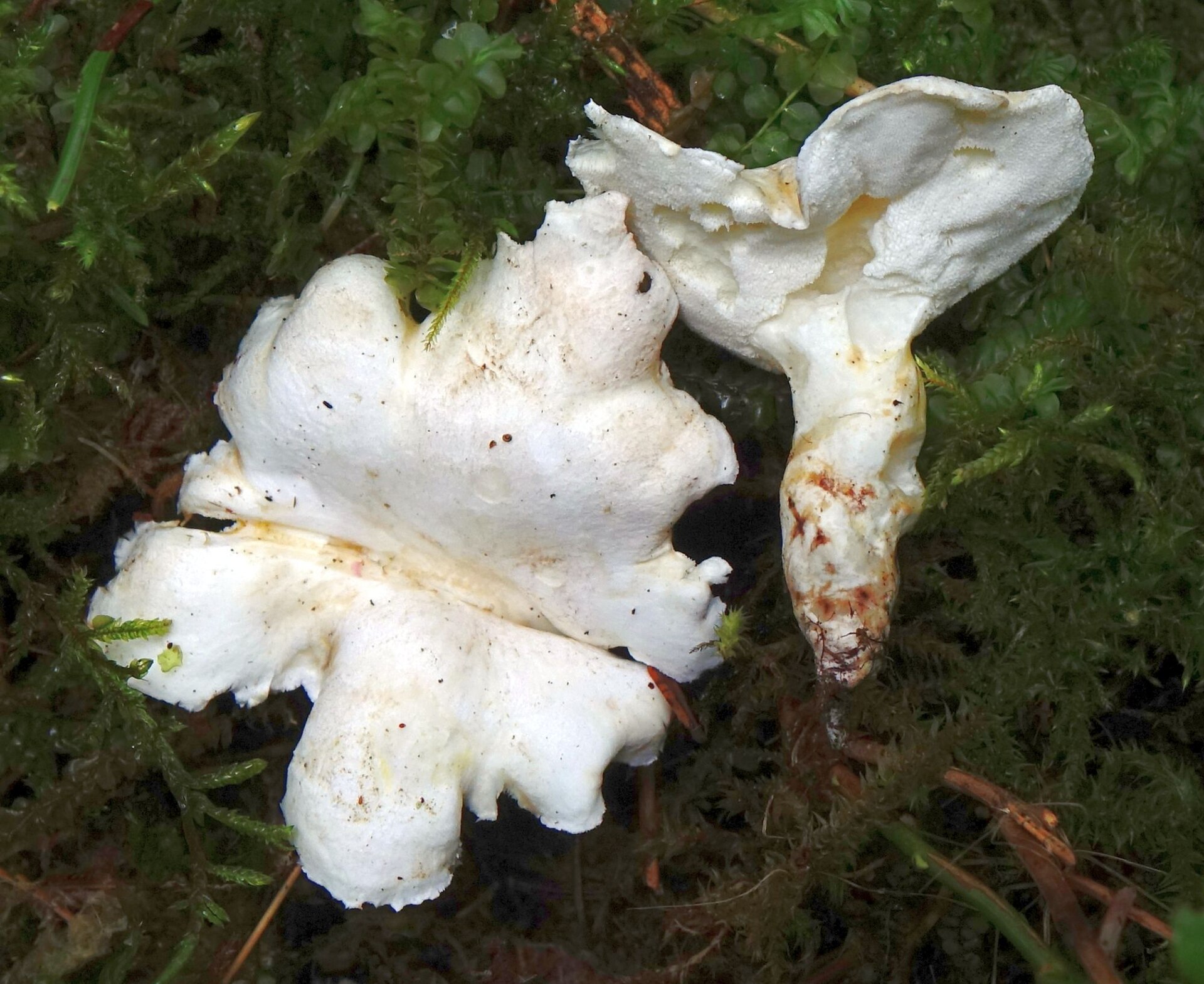
Yellow sheep polypore
Albatrellus citrinus
★★★★★
Weak flavor
A closely related species that grows with spruce and develops lemon-yellow colour changes when damaged.
Read more about Yellow sheep polypore ›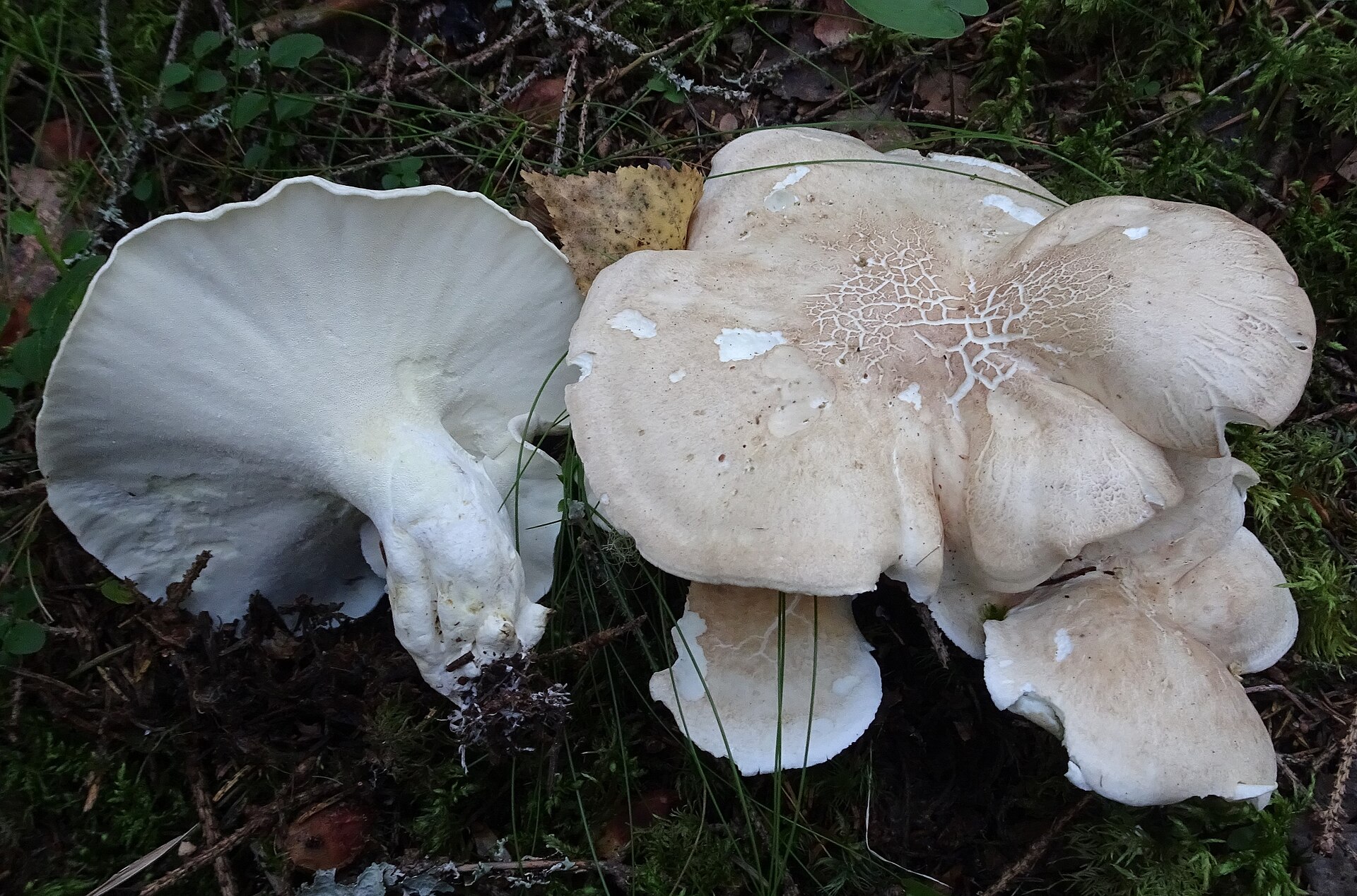
Sheep polypore
Albatrellus ovinus
★★★★★
Good edible mushroom
Compare the cap, underside, stem, smell and habitat for reliable identification.
Read more about Sheep polypore ›Preparation
Clean carefully and cut away hard parts. Fry, stew or use in soup. Young specimens have the best texture.
Recipe suggestions
Pan-fried sheep polypore with onion, cream and thyme, served with potatoes.
Images – study the mushroom from several angles
Click an image to display it as the main image.
⚠ Important safety information
Use firm, fresh specimens. Older sheep polypores can become tough. Safe identification is important because several polypores occur in the same habitat.
Use firm, fresh specimens. Older sheep polypores can become tough. Safe identification is important because several polypores occur in the same habitat.
Facts and sources
Sources
Svampguiden; SLU Artdatabanken/Artfakta
Svampguiden; SLU Artdatabanken/Artfakta
Checked batch 10 – fact text compiled against