



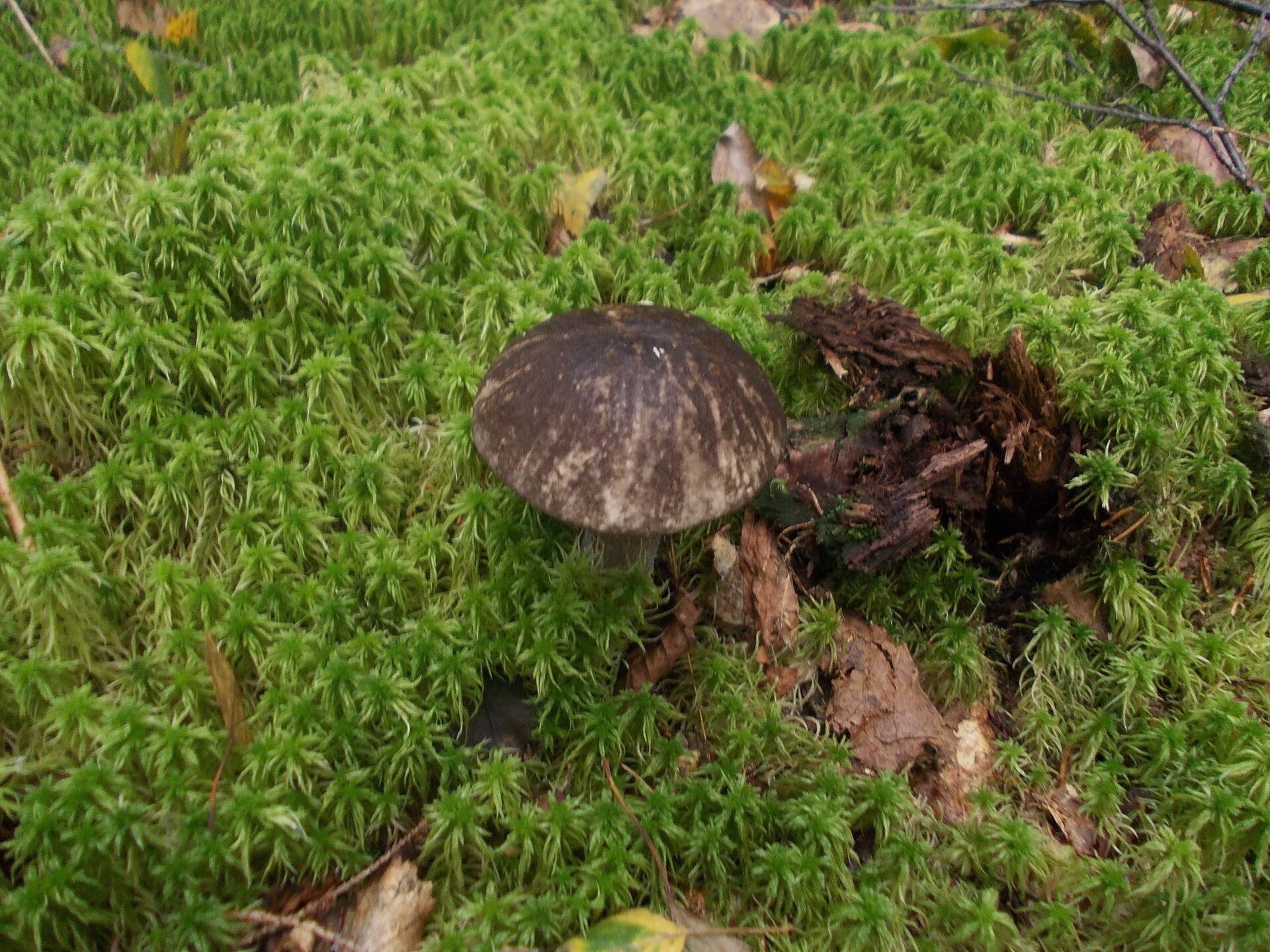
Mottled Bolete
Leccinum variicolor
Edible
★★★☆☆
Taste rating: 3 out of 5
How to identify it
Cap
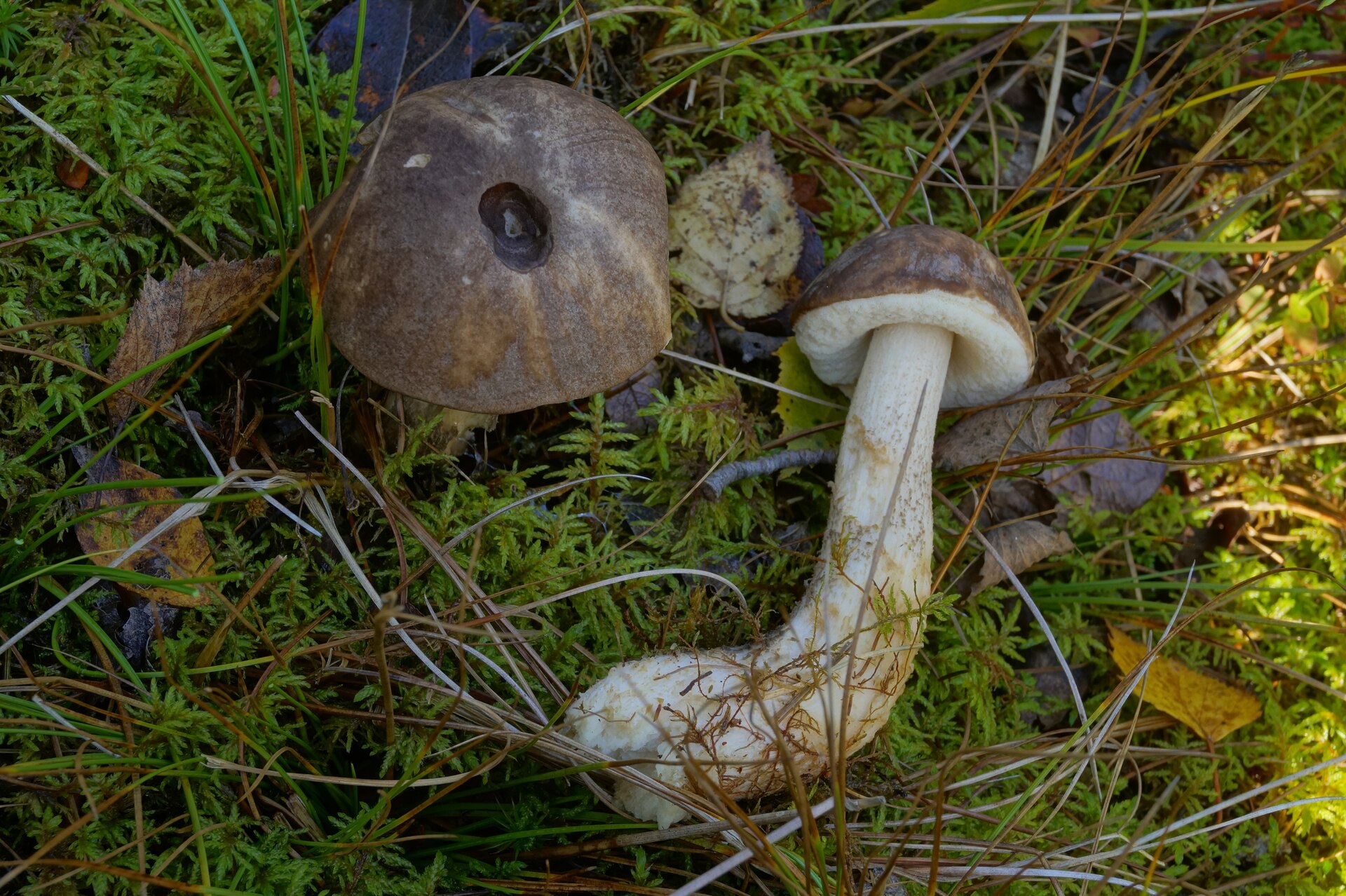
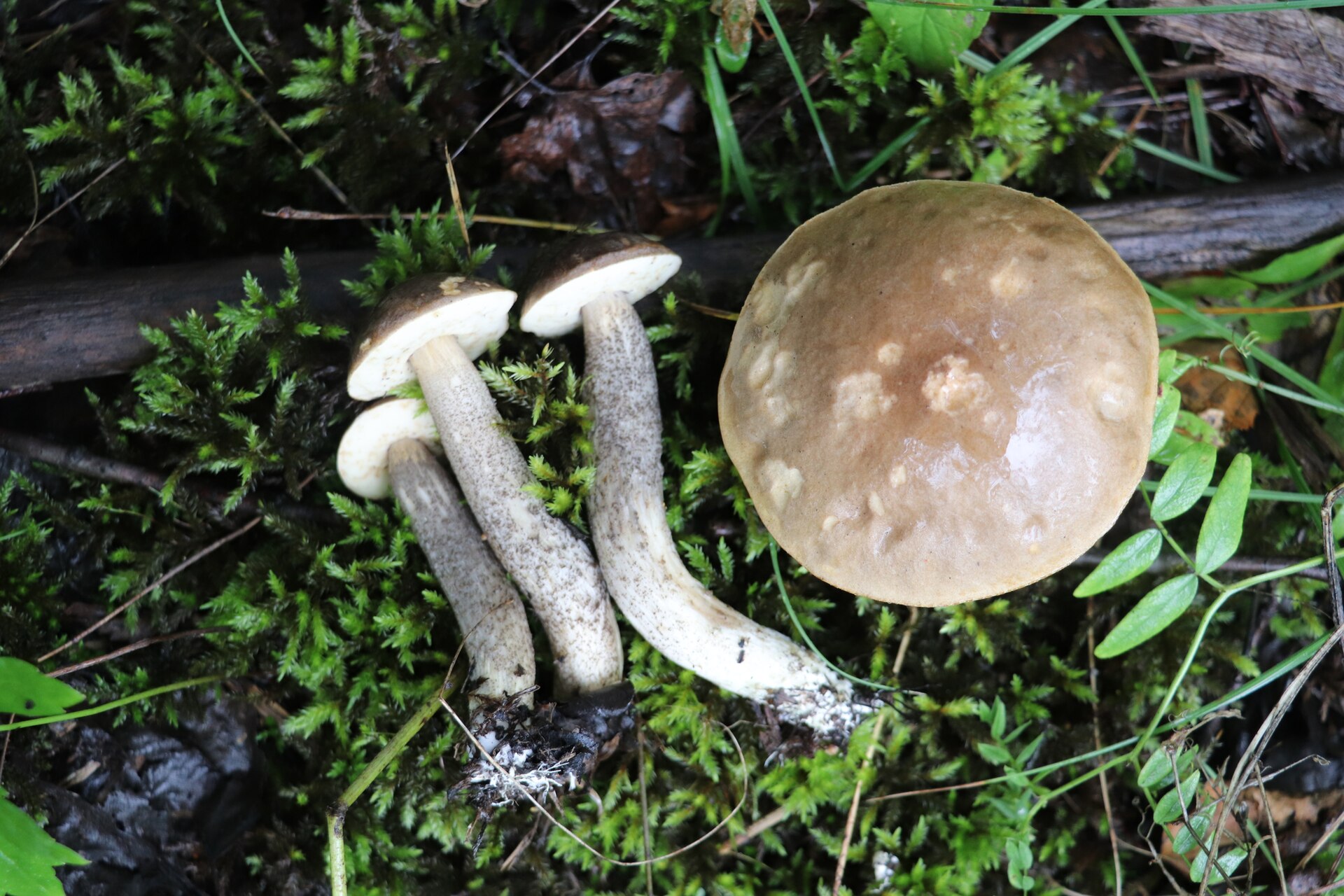
The cap is grey-brown to dark brown and often marbled or mottled in different brown-grey shades.
Underside
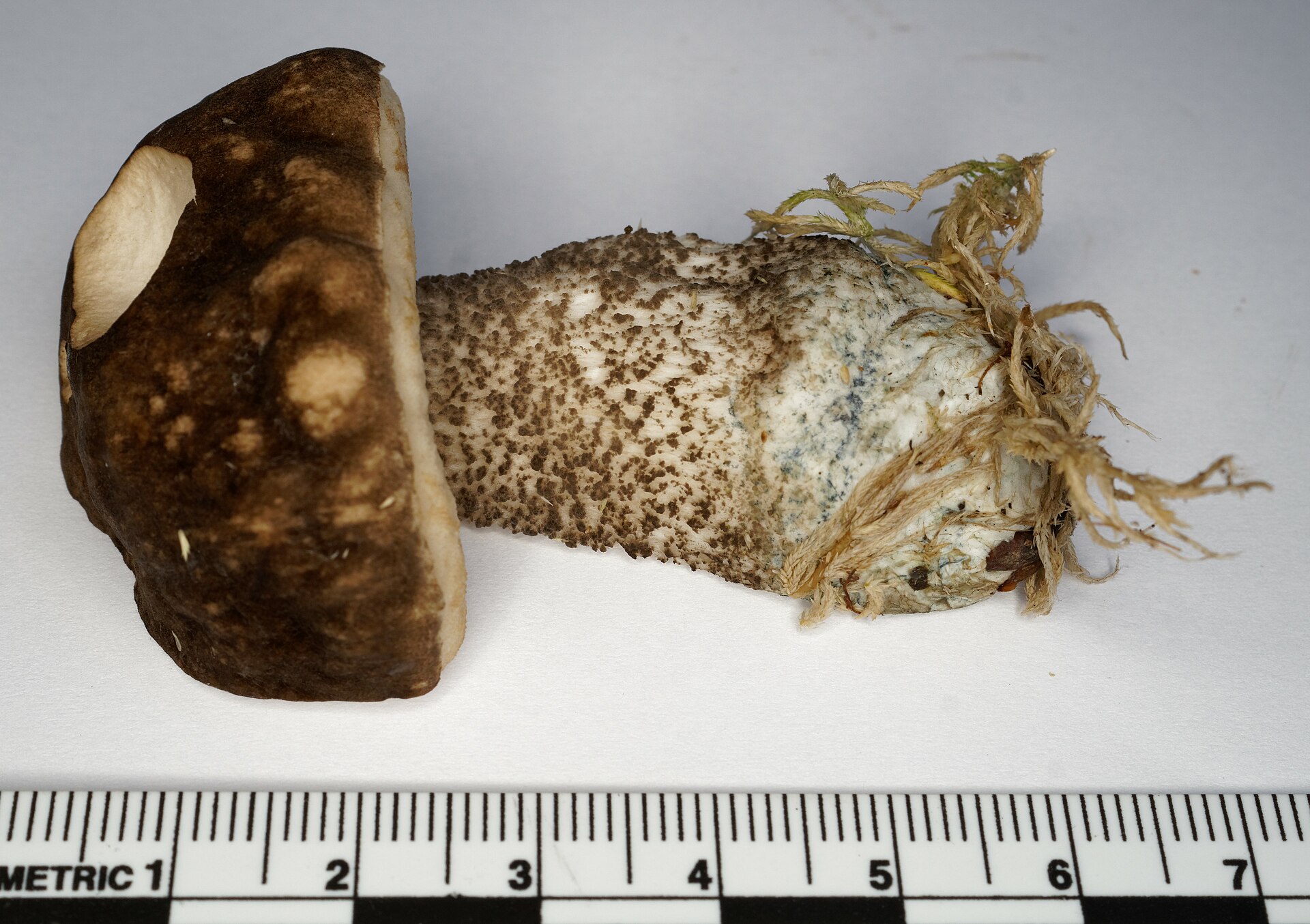
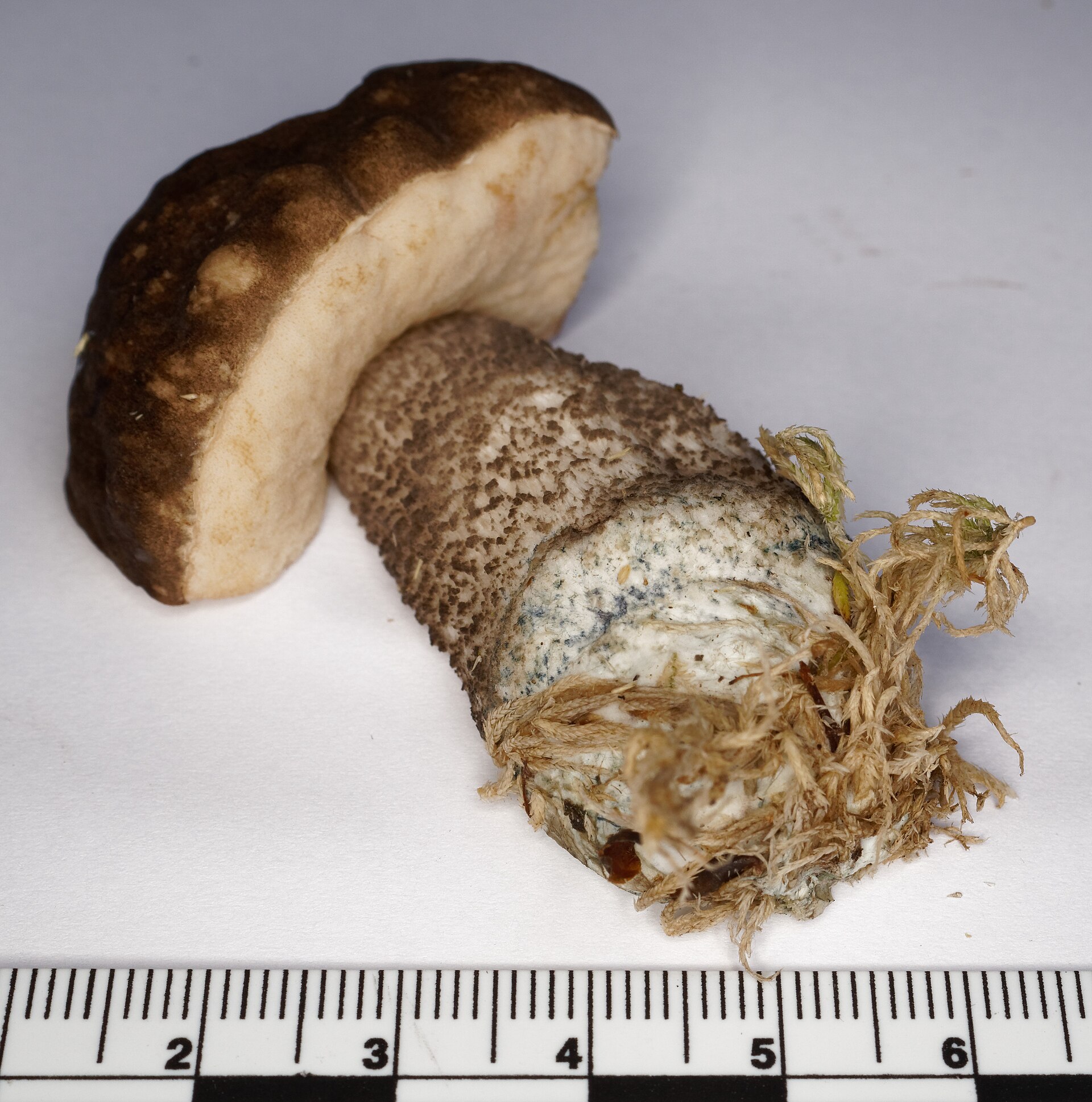
The pores are white to grey-white at first and become greyer with age.
Stem
The stem is whitish and covered with dark scales, often with distinct blue-green to blackish areas at the base.
Smell
Mild, earthy mushroom smell.
Occurrence and habitat
It grows mainly with birch, often in damp birch woodland and on mossy ground.
Look-alike species
These mushrooms can resemble Mottled Bolete. Look closely at features, habitat and images to see the differences.
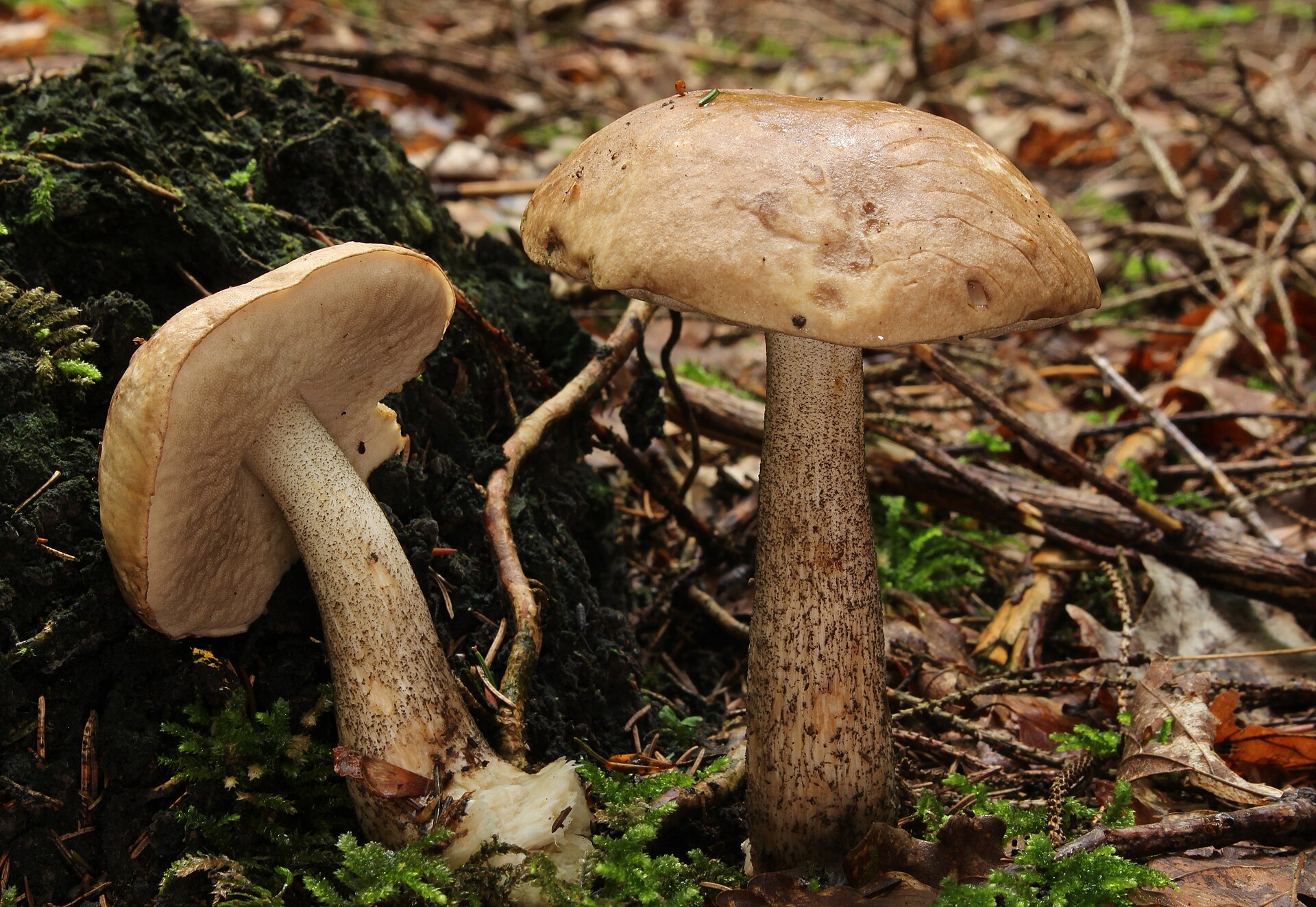
Birch bolete
Leccinum scabrum
★★★★★
Good edible mushroom
Compare several characteristics and always verify the identification.
Read more about Birch bolete ›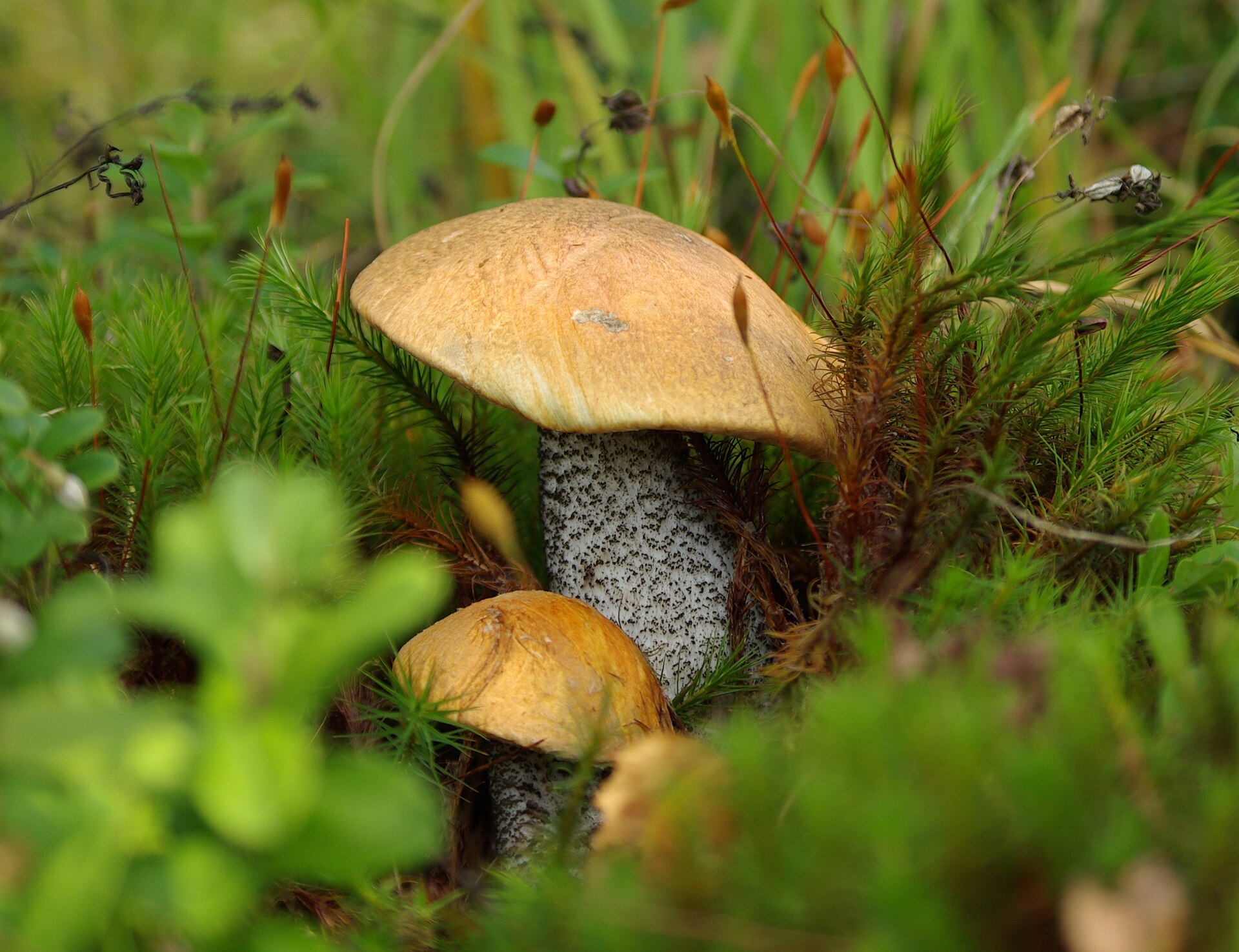
Brick-red bolete
Leccinum versipelle
★★★★★
Good edible mushroom
Compare several characteristics and always verify the identification.
Read more about Brick-red bolete ›Preparation
Cook thoroughly by frying or boiling. Young, firm specimens give the best result.
Recipe suggestions
Fried Mottled Bolete with butter and onion, served with boiled potatoes.
Images – study the mushroom from several angles
Click an image to display it as the main image.
⚠ Important safety information
Leccinum species can be difficult to distinguish. Check the host tree, cap colour and stem scales.
Leccinum species can be difficult to distinguish. Check the host tree, cap colour and stem scales.
Facts and sources
Sources
Svampguiden; SLU Artdatabanken/Artfakta
Svampguiden; SLU Artdatabanken/Artfakta
Checked batch 10 – factual text compiled against