



Sand Bolete
Suillus variegatus
Edible
★★★☆☆
Taste rating: 3 out of 5
How to identify it
Cap
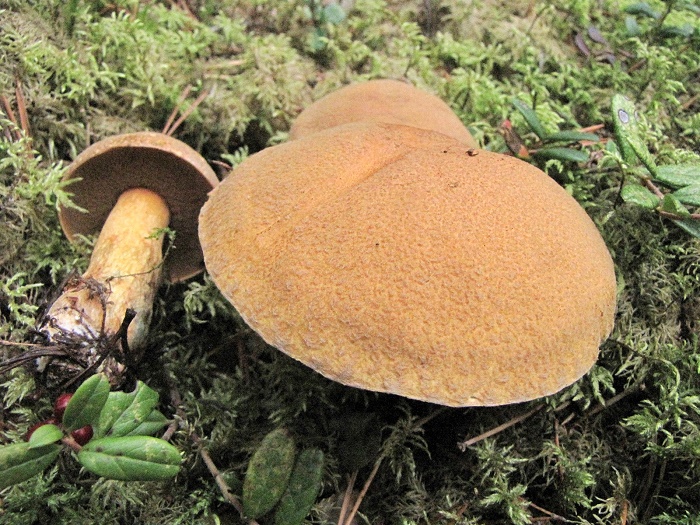
The cap is yellow-brown to olive-brown, dry and velvety rather than slimy. It is convex at first and later more expanded.
Underside
The tubes are yellowish to olive-yellow. The pores are relatively small and may become darker with age.
Stem
The stem is yellowish to brownish, solid and usually without a ring. It may have small brownish colour changes.
Smell
Mild, sometimes slightly sour mushroom smell.
Occurrence and habitat
Common in pine woodland and on sandy, poor soils. Forms mycorrhiza with pine.
Look-alike species
These mushrooms can resemble Sand Bolete. Look closely at features, habitat and images to see the differences.
Ear bolete
Suillus bovinus
★★★★★
Fair edible mushroom
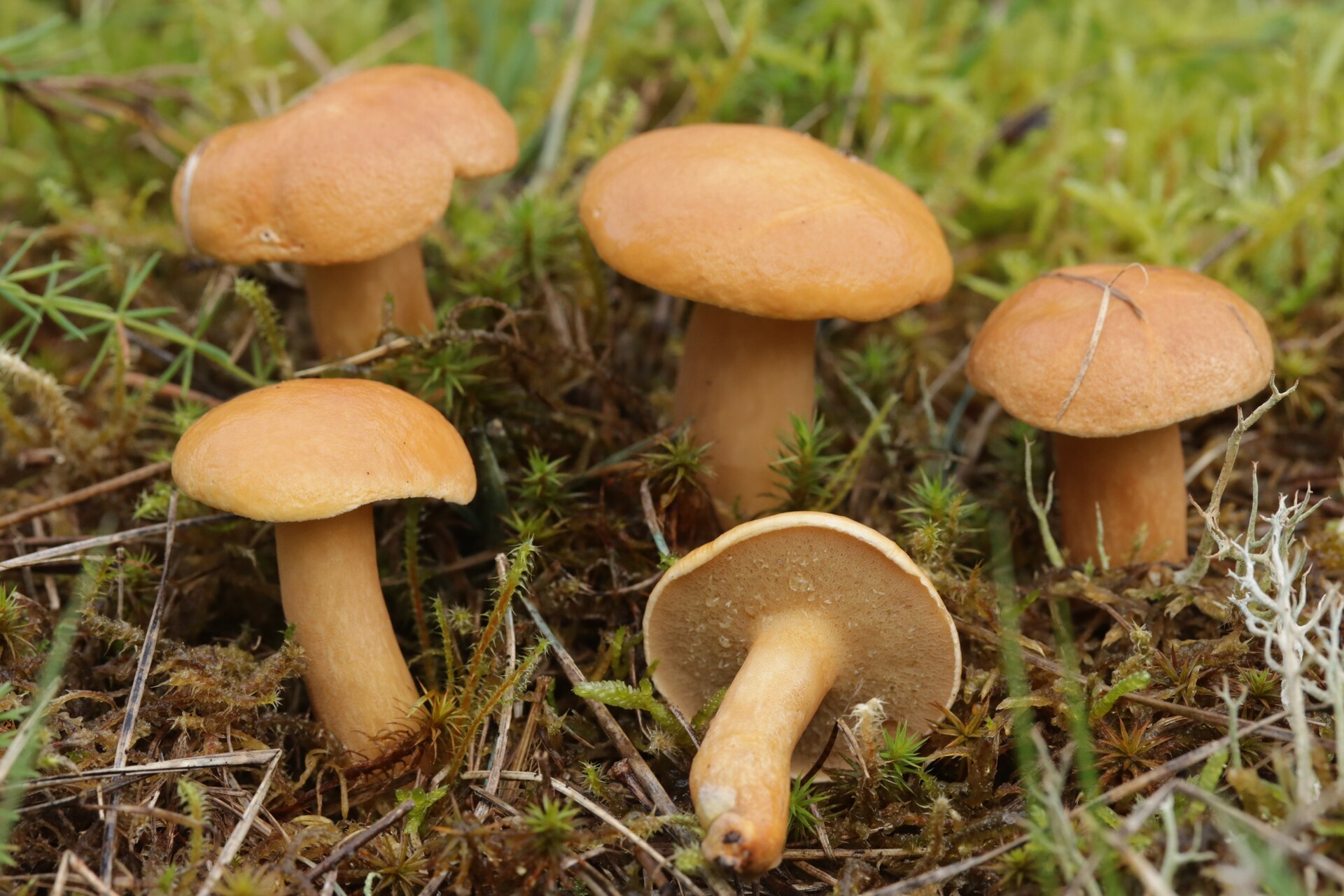
The ear bolete is another pine-associated bolete and can resemble the sand bolete. Cap structure and colour, as well as the appearance of the pores, are important for identification.
Read more about Ear bolete ›Preparation
Clean and cut away the stem base. Cut into pieces and fry until the liquid has evaporated. Suitable for stews, sauces and soups.
Recipe suggestions
Sand Bolete soup: fry chopped Sand Boletes and onion in butter. Add stock and potatoes, cook until soft and partly blend. Finish with cream, salt and pepper.
Images – study the mushroom from several angles
Click an image to display it as the main image.
⚠ Important safety information
Sand Bolete is recognisable by its dry, velvety cap and pine habitat, but reliable identification should always be made before eating.
Sand Bolete is recognisable by its dry, velvety cap and pine habitat, but reliable identification should always be made before eating.
Facts and sources
Sources
Svampguiden; SLU Artdatabanken/Artfakta.
Svampguiden; SLU Artdatabanken/Artfakta.
Batch 11 supplemented – should be finally checked against current