



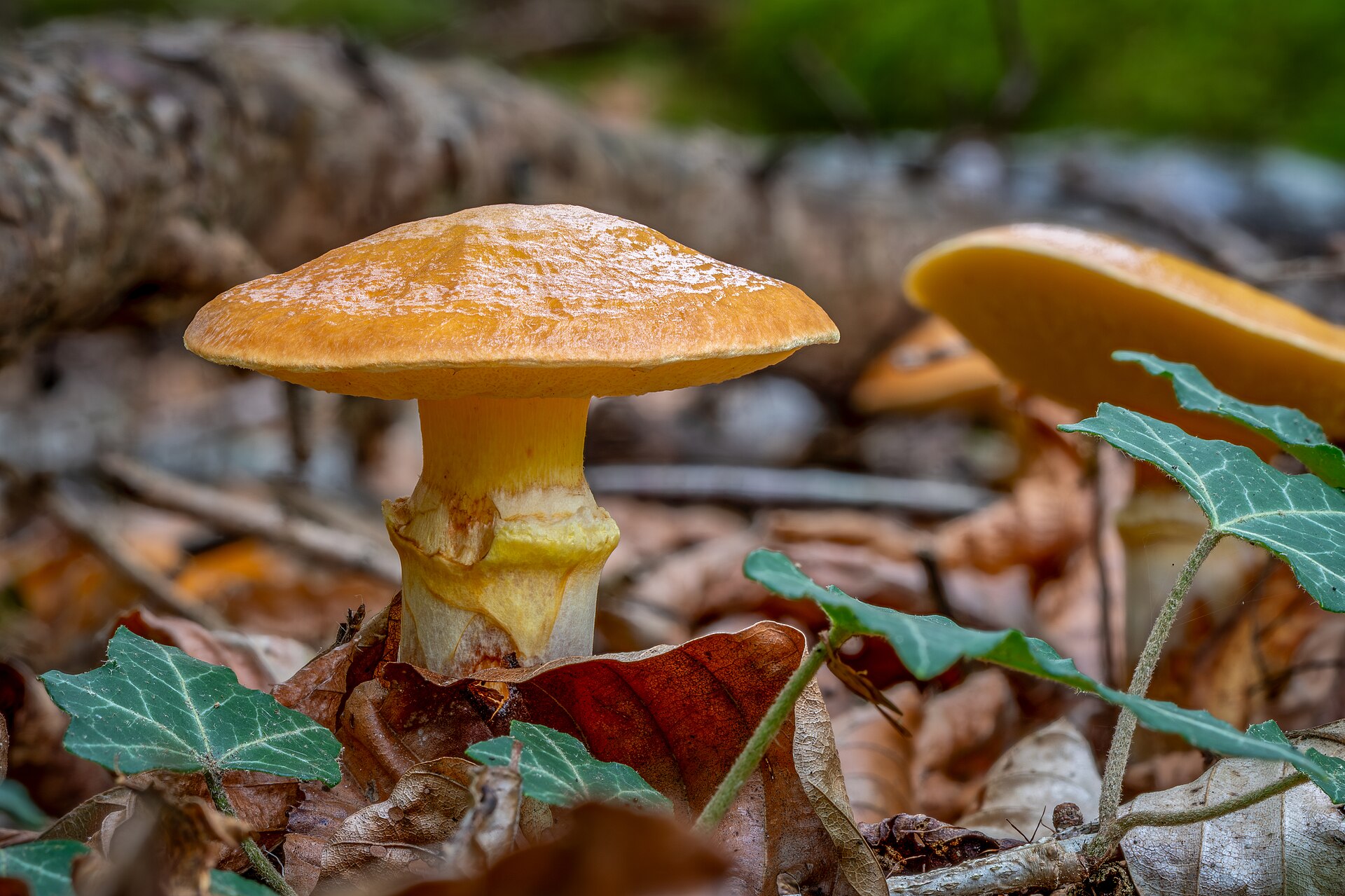
Larch Bolete
Suillus grevillei
Edible
★★☆☆☆
Taste rating: 2 out of 5
How to identify it
Cap
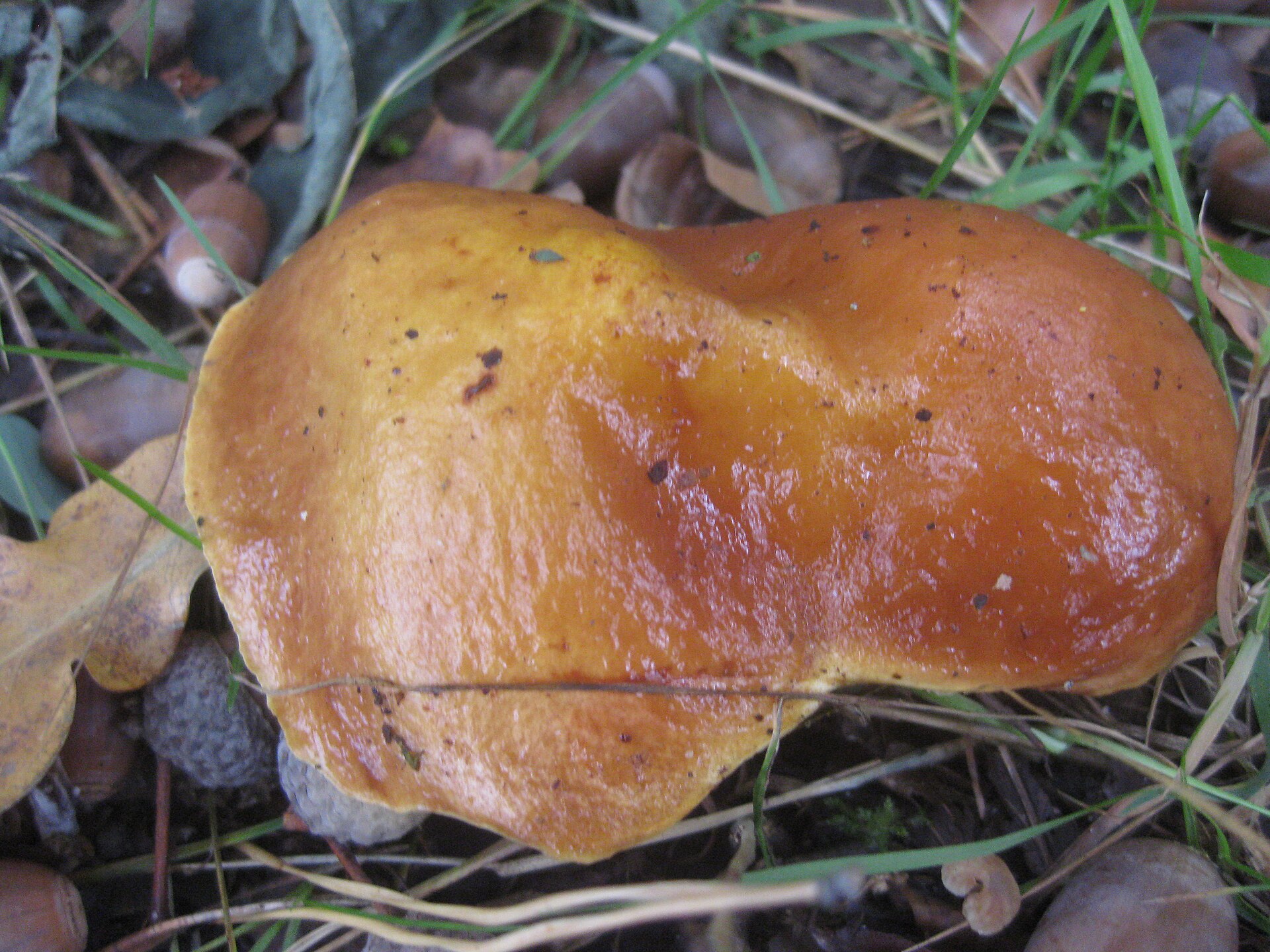
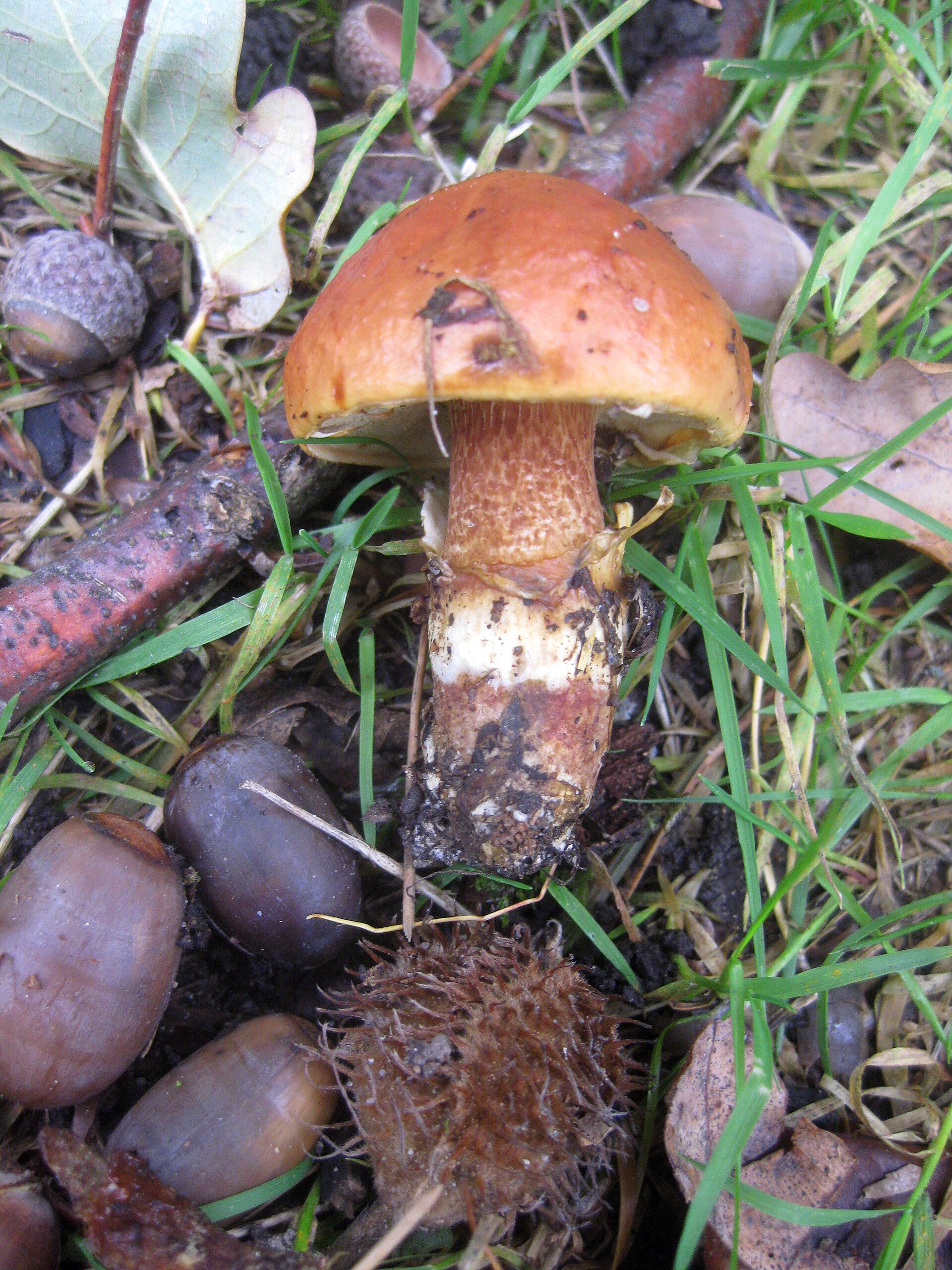
Convex, golden-yellow to reddish-brown and slimy in wet weather.
Underside
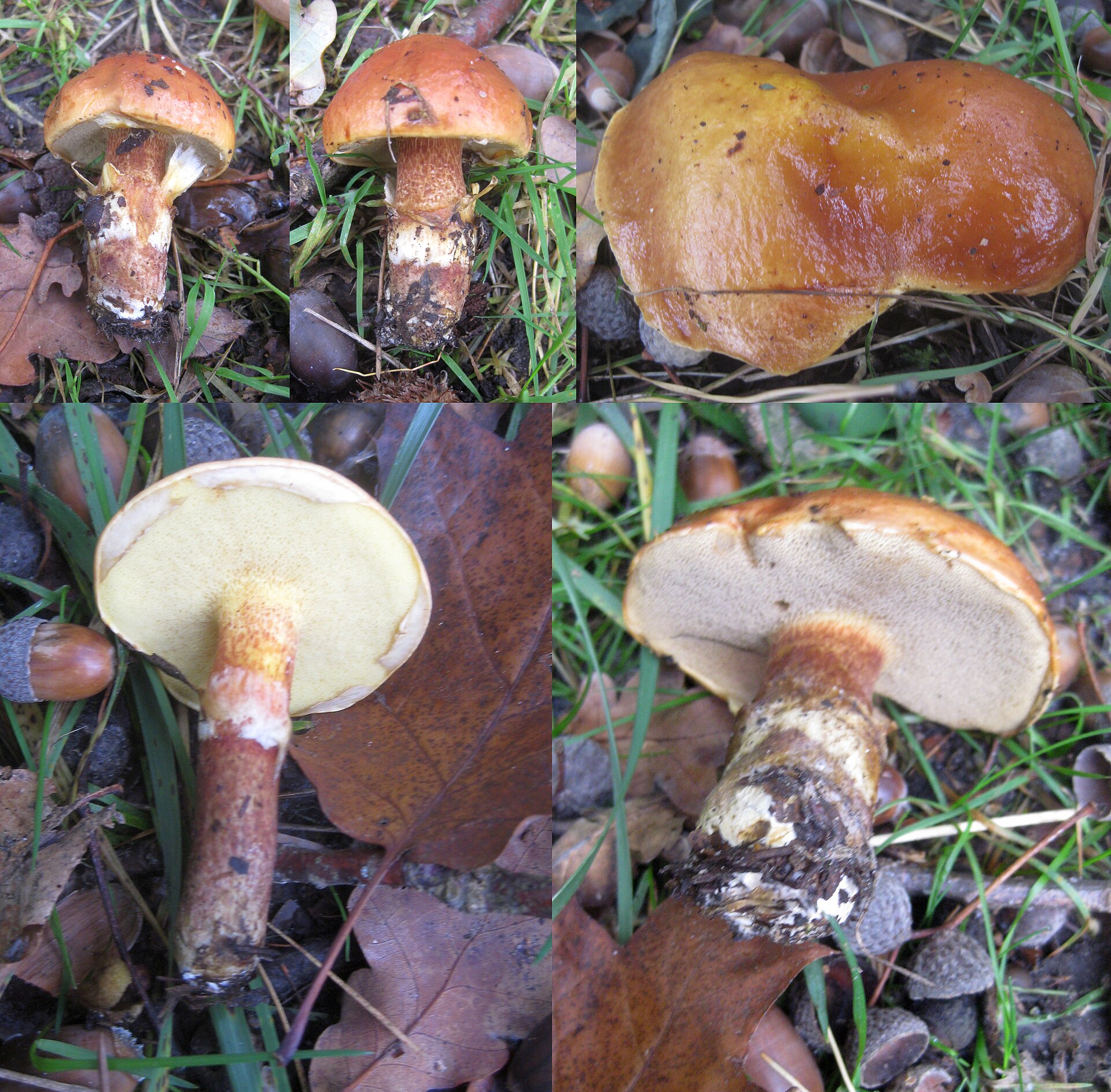
Yellow tubes that turn brownish when touched; young tubes are covered by a yellowish veil.
Stem
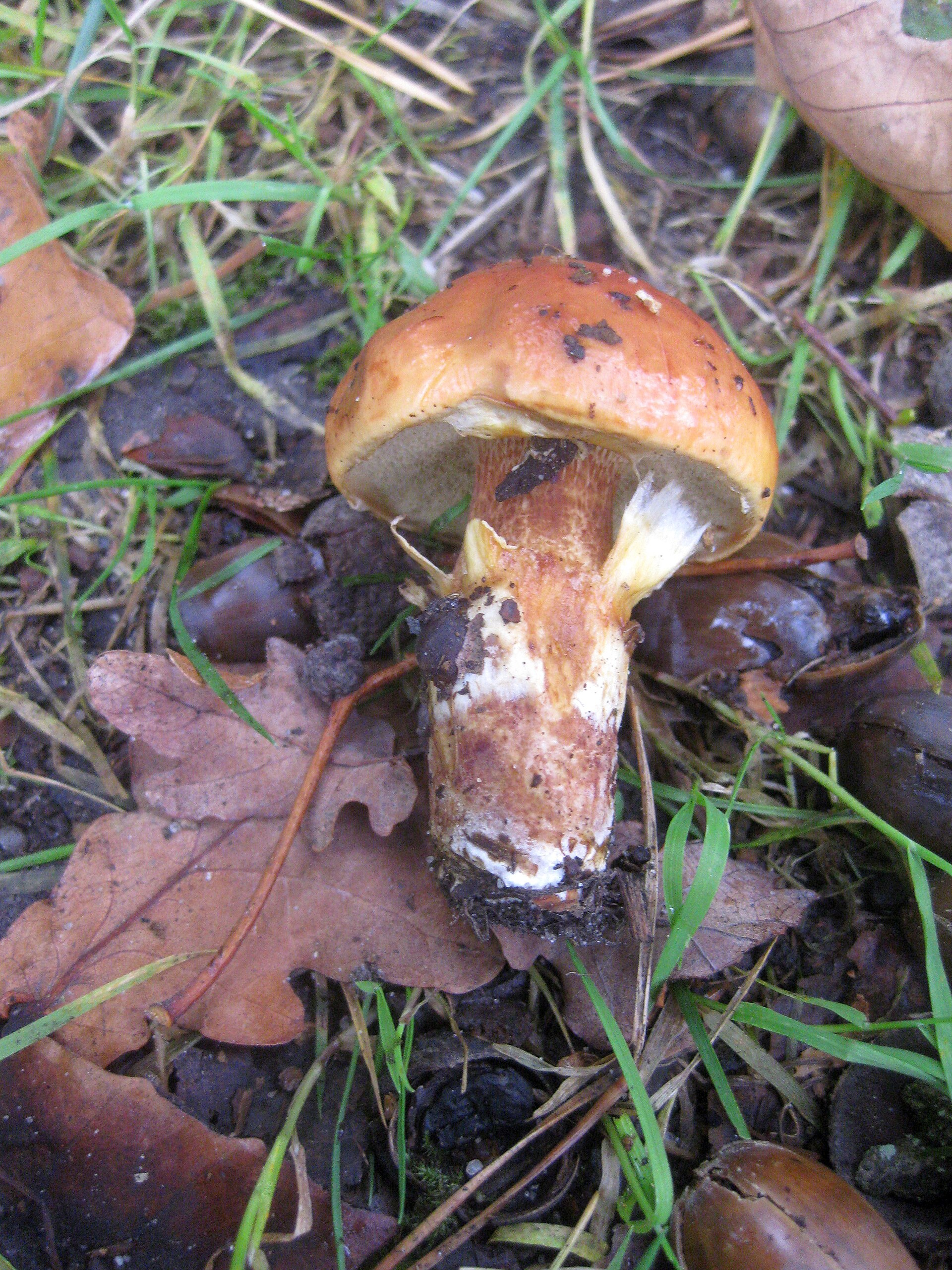
Yellow to reddish-brown, often approximately the same colour as the cap. Has a ring.
Smell
Mild.
Occurrence and habitat
It grows with larch and occurs in parks and woodland with larch trees throughout the Nordic region.
Preparation
Remove debris and cut away the dirty stem base. Firm specimens can be fried or used in sauces and stews. Cook thoroughly and preferably use young, firm fruiting bodies.
Recipe suggestions
Fried Larch Bolete with garlic and parsley
Clean the mushrooms and remove the outer cap skin if necessary. Cut into pieces and fry in butter until the liquid has evaporated and the mushrooms have browned. Add garlic and parsley towards the end. Good as a side dish with potatoes, pasta and game.
Images – study the mushroom from several angles
Click an image to display it as the main image.
⚠ Important safety information
Mainly confused with other slippery boletes. Always check the host tree and the slimy cap.
Mainly confused with other slippery boletes. Always check the host tree and the slimy cap.
Facts and sources
Sources
Svampguiden; SLU Artdatabanken / Artfakta as an ongoing reference source
Svampguiden; SLU Artdatabanken / Artfakta as an ongoing reference source
Factual text compiled and checked 2026-09-27