



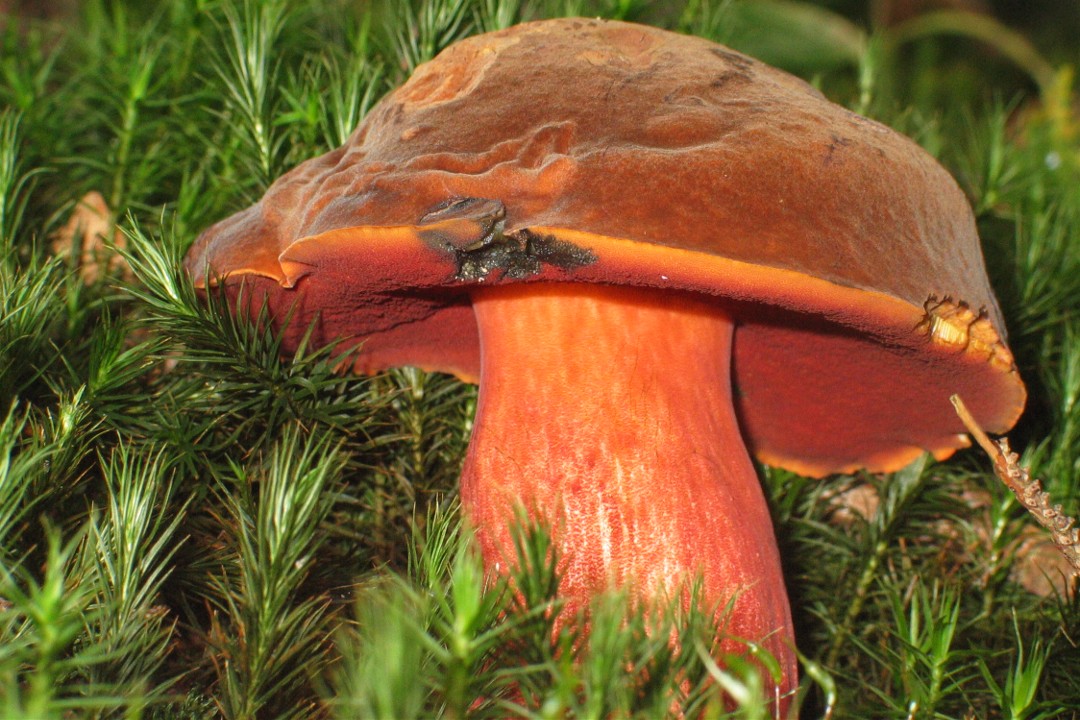
Blood bolete
Neoboletus luridiformis
Edible
★★★☆☆
Taste rating: 3 out of 5
How to identify it
Cap
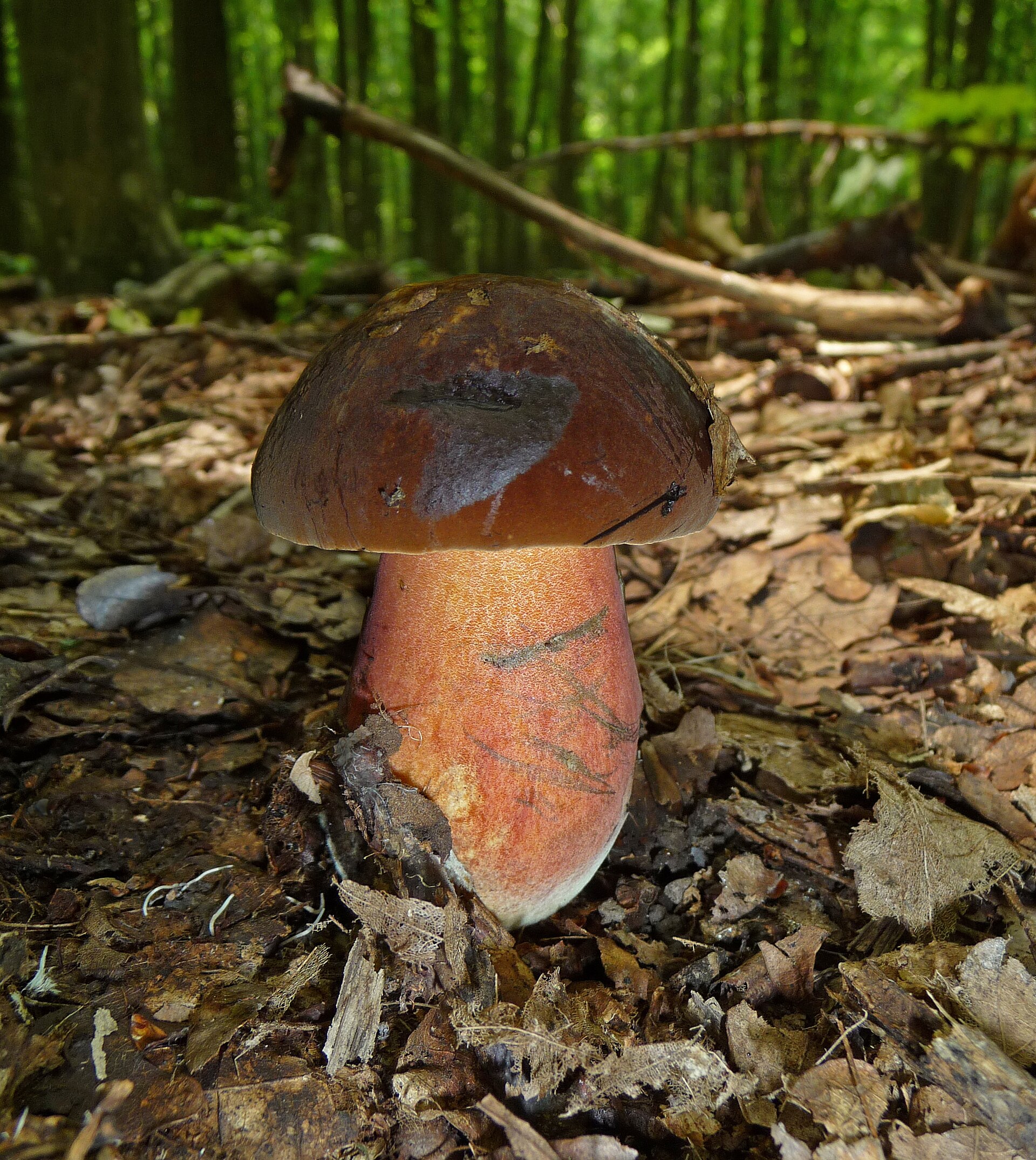
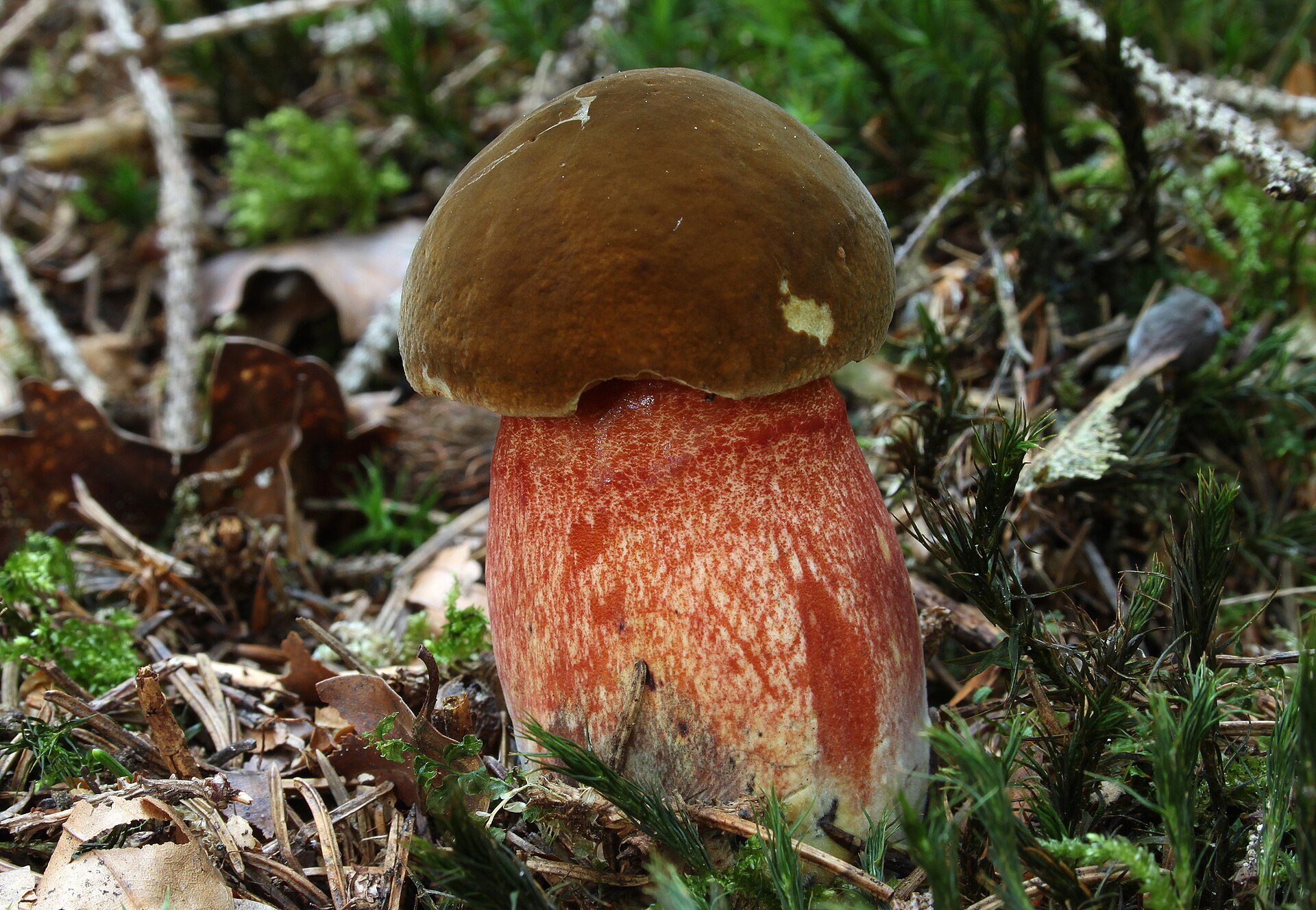
Cap dark brown to black-brown, dry and often velvety.
Underside
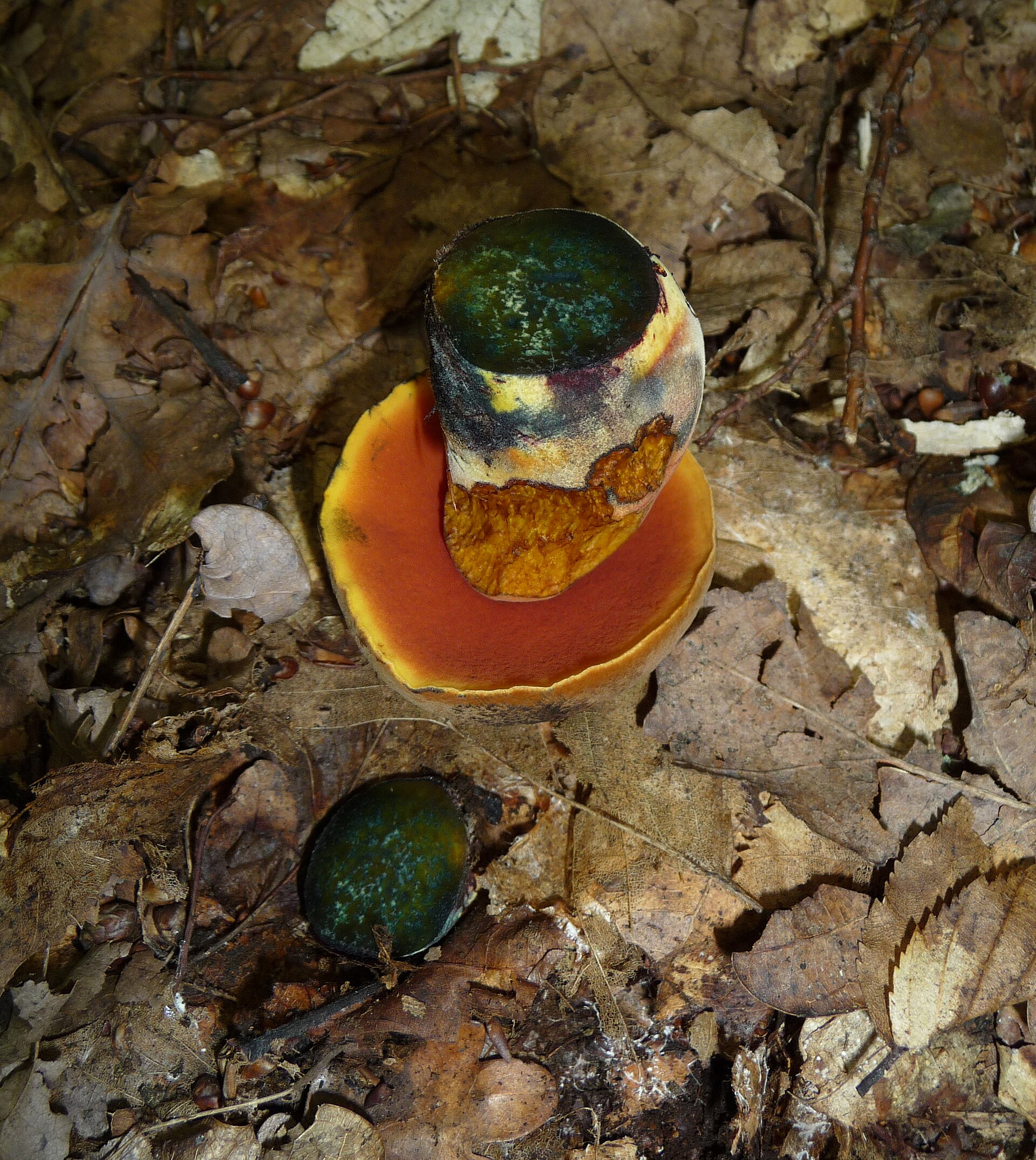
Pores first yellow but quickly orange to reddish. Surface turns blue when pressed.
Stem
Stem yellowish to reddish and covered with dark or red small scales/dots.
Smell
Mild mushroom smell.
Occurrence and habitat
Grows mainly in coniferous and mixed woodland, often on more acidic soil.
Look-alike species
These mushrooms can resemble Blood bolete. Look closely at features, habitat and images to see the differences.
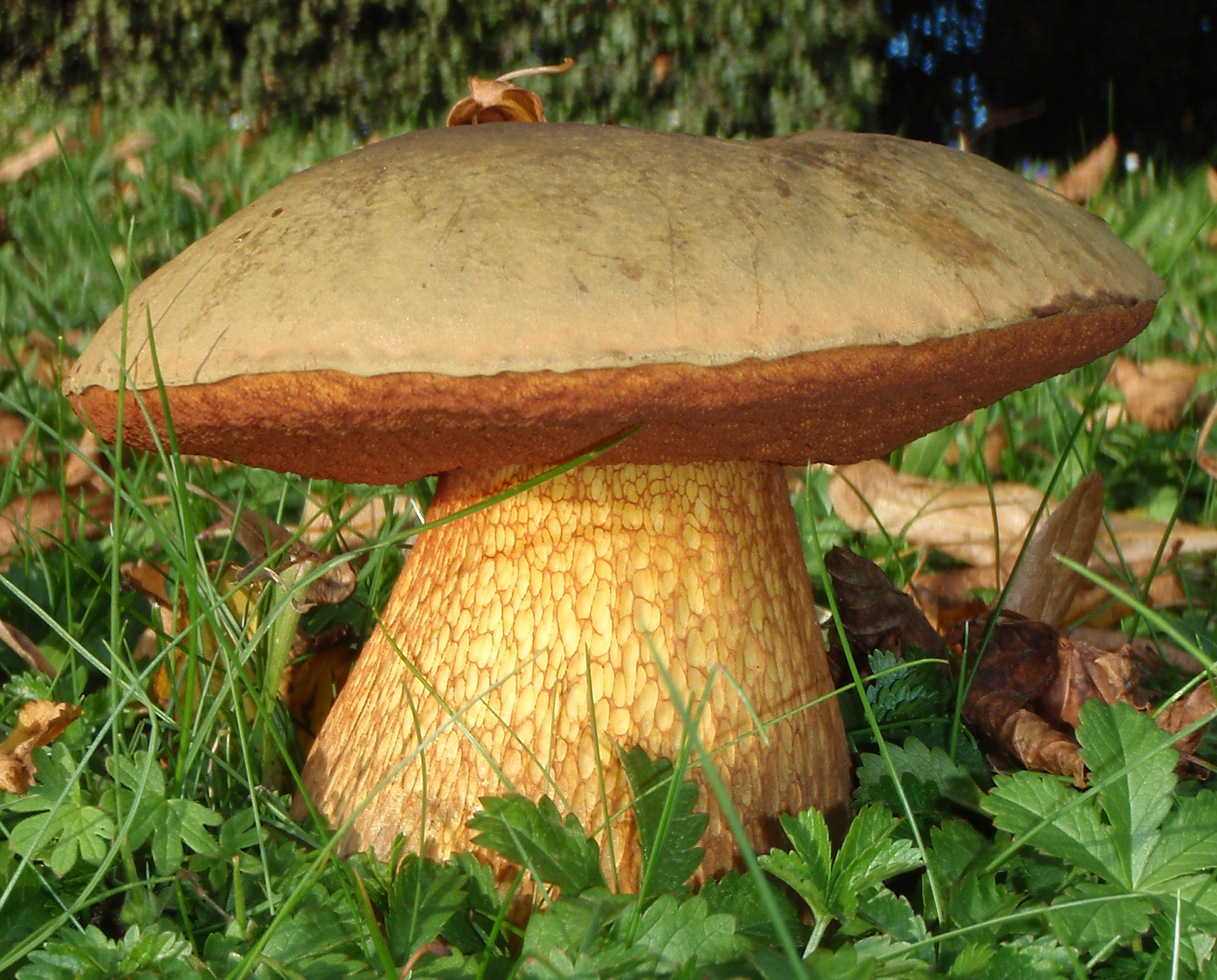
Fire bolete
Suillellus luridus
★★★★★
Good edible mushroom
Compare several characteristics and always verify the identification.
Read more about Fire bolete ›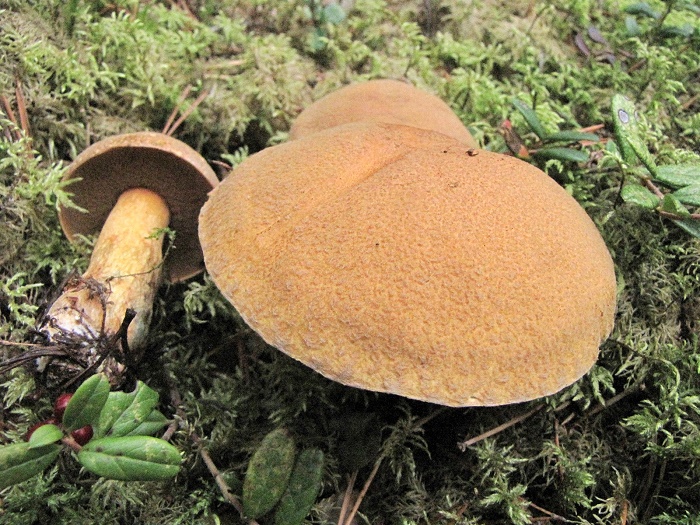
Sand bolete
Suillus variegatus
★★★★★
Good edible mushroom
Compare the cap, underside, stem, smell and habitat for reliable identification.
Read more about Sand bolete ›Preparation
Always cook thoroughly by frying or boiling. Do not eat raw.
Recipe suggestions
Sliced blood bolete fried hard in butter with garlic and parsley.
Images – study the mushroom from several angles
Click an image to display it as the main image.
⚠ Important safety information
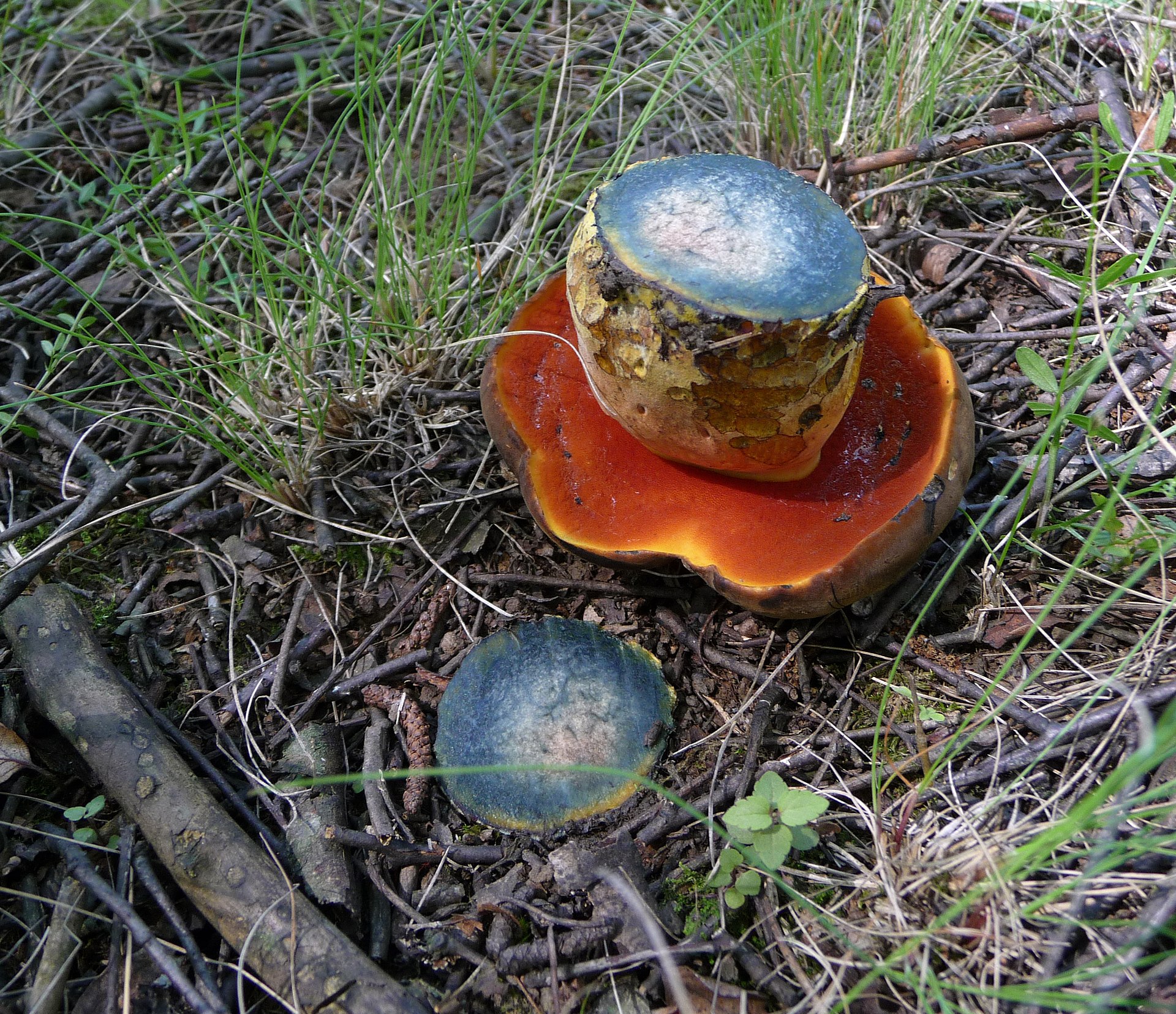
Blue staining of flesh does not by itself mean a bolete is poisonous, but safe identification is essential. Avoid raw consumption.
Blue staining of flesh does not by itself mean a bolete is poisonous, but safe identification is essential. Avoid raw consumption.
Facts and sources
Sources
Svampguiden; SLU Artdatabanken/Artfakta
Svampguiden; SLU Artdatabanken/Artfakta
Checked batch 09 – fact text compiled against