



Bagnoli truffle
Tuber mesentericum
Edible
★★☆☆☆
Taste rating: 2 out of 5
How to identify it
Cap
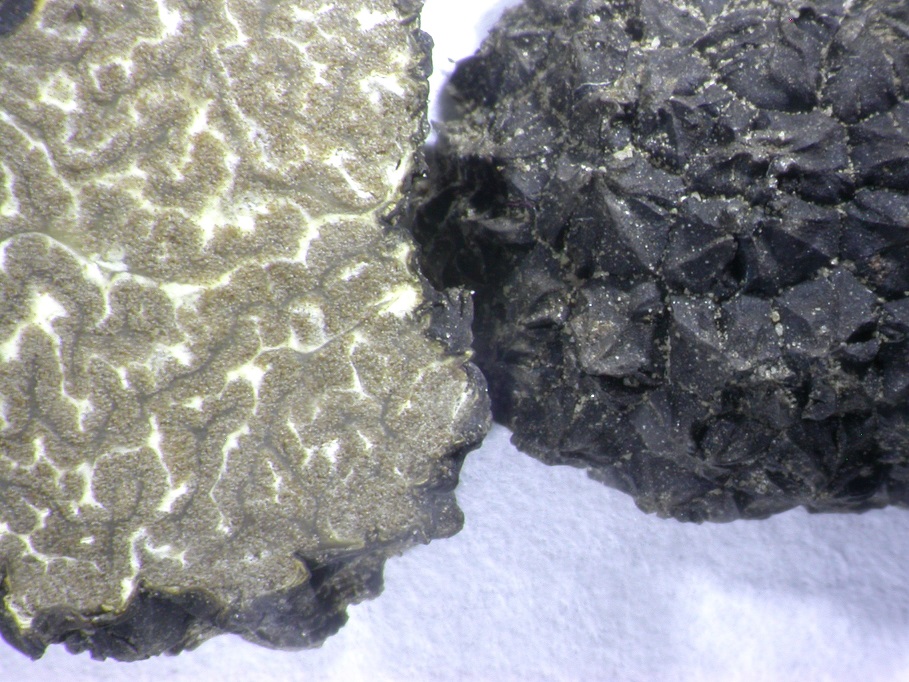
Fruit body round and compact, up to about 7 cm wide, with coarse angular pyramid-like warts.
Underside
Inside of the truffle is marbled, yellow-brown with whitish veins.
Stem
No true stem; the truffle is an underground tuber-like fruit body.
Smell
When mature, the smell can be chemical and reminiscent of naphthalene or insecticide.
Occurrence and habitat
Grows with oak and hazel on calcareous soil, mainly on Gotland and Öland. Rare in the southern parts of the Nordic countries.
Look-alike species
These mushrooms can resemble Bagnoli truffle. Look closely at features, habitat and images to see the differences.
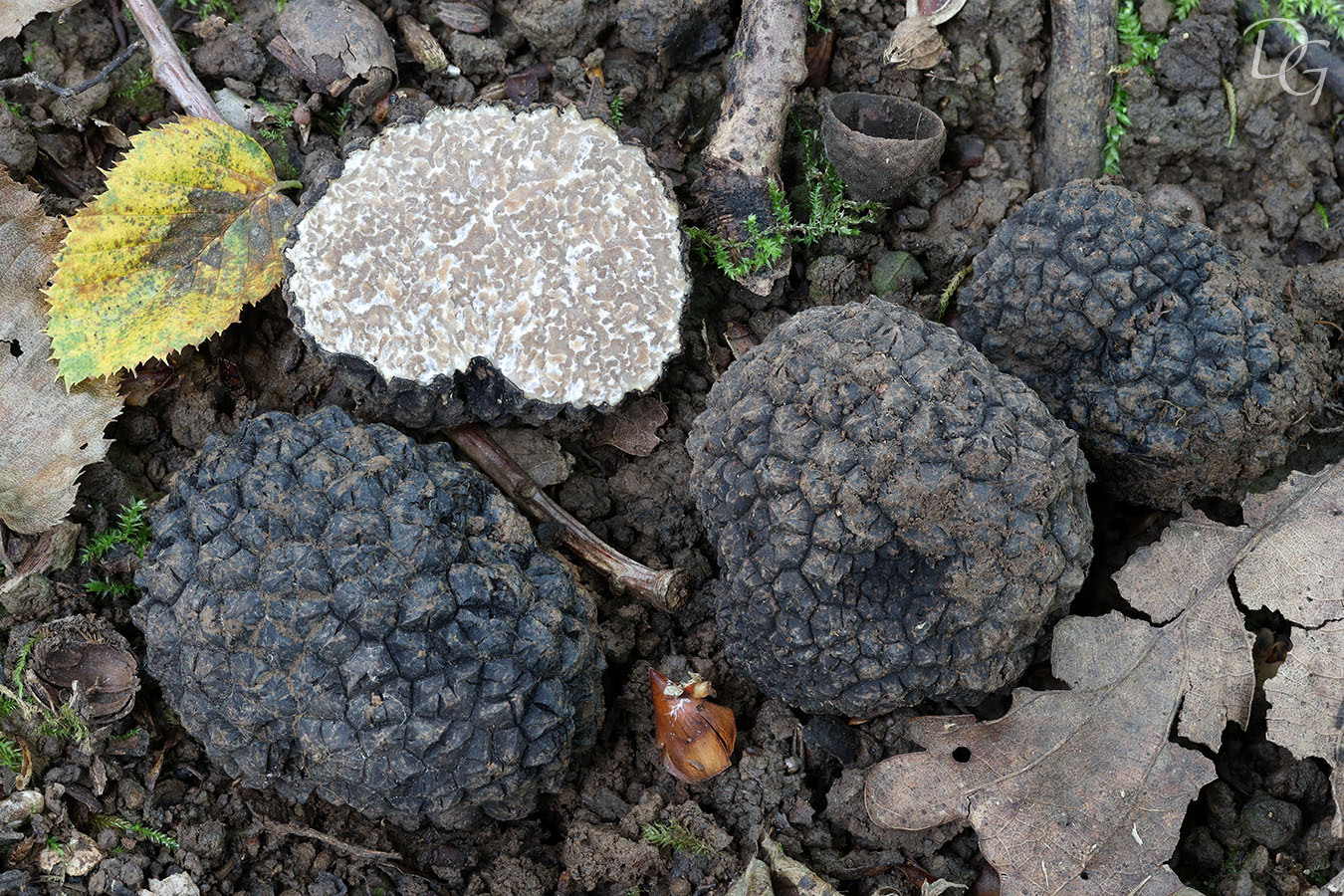
Summer truffle
Tuber aestivum
★★★★★
Very good edible mushroom
A similar underground truffle; mature summer truffle usually has a sweeter and more pleasant aroma.
Read more about Summer truffle ›Preparation
Used as a flavouring in small quantities. Clean very thoroughly and shave or finely chop the truffle over hot food. Preparation should be adapted to the recipe and ingredient.
Recipe suggestions
Truffle risotto: shave very thin slices of thoroughly cleaned truffle over a finished creamy risotto with a little butter and Parmesan.
Images – study the mushroom from several angles
Click an image to display it as the main image.


⚠ Important safety information
Only eat truffles that have been safely identified. Bagnoli truffle can be confused with summer truffle. According to Svampguiden, searching for and digging up truffles requires the landowner’s permission.
Only eat truffles that have been safely identified. Bagnoli truffle can be confused with summer truffle. According to Svampguiden, searching for and digging up truffles requires the landowner’s permission.
Facts and sources
Sources
Svampguiden – Bagnolitryffel; SLU Artdatabanken/Artfakta for taxonomy and ecology.
Svampguiden – Bagnolitryffel; SLU Artdatabanken/Artfakta for taxonomy and ecology.
Checked batch 03 – fact text compiled against