



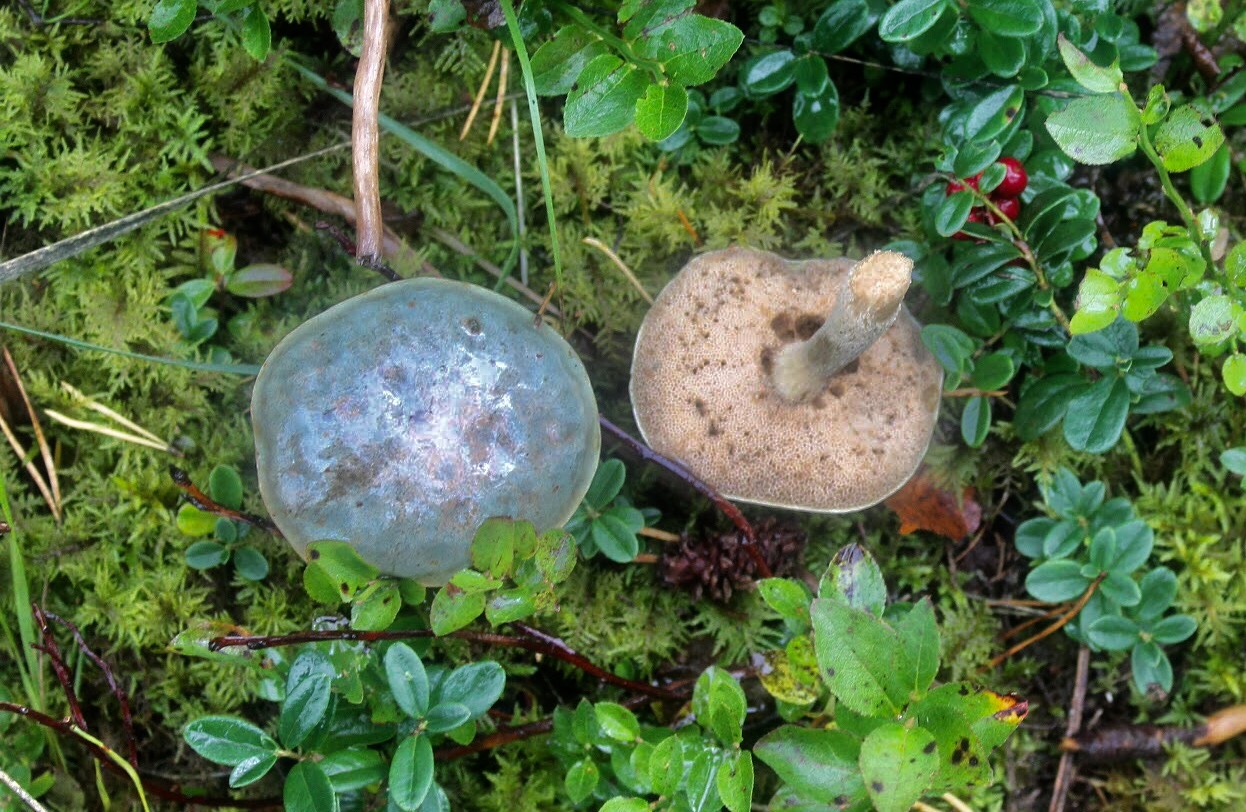
Marsh Bolete
Leccinum holopus
Edible
★★☆☆☆
Taste rating: 2 out of 5
How to identify it
Cap
The cap is very pale, whitish to pale grey-brown and often smooth. It becomes convex to expanded.
Underside
The tubes are whitish to greyish and the pores are small. The underside becomes darker with age.
Stem
The stem is whitish with small grey to blackish scales. It is often relatively slender.
Smell
Mild mushroom smell.
Occurrence and habitat
It occurs in damp environments, often bogs, marsh edges and other wet ground, usually associated with birch.
Look-alike species
These mushrooms can resemble Marsh Bolete. Look closely at features, habitat and images to see the differences.
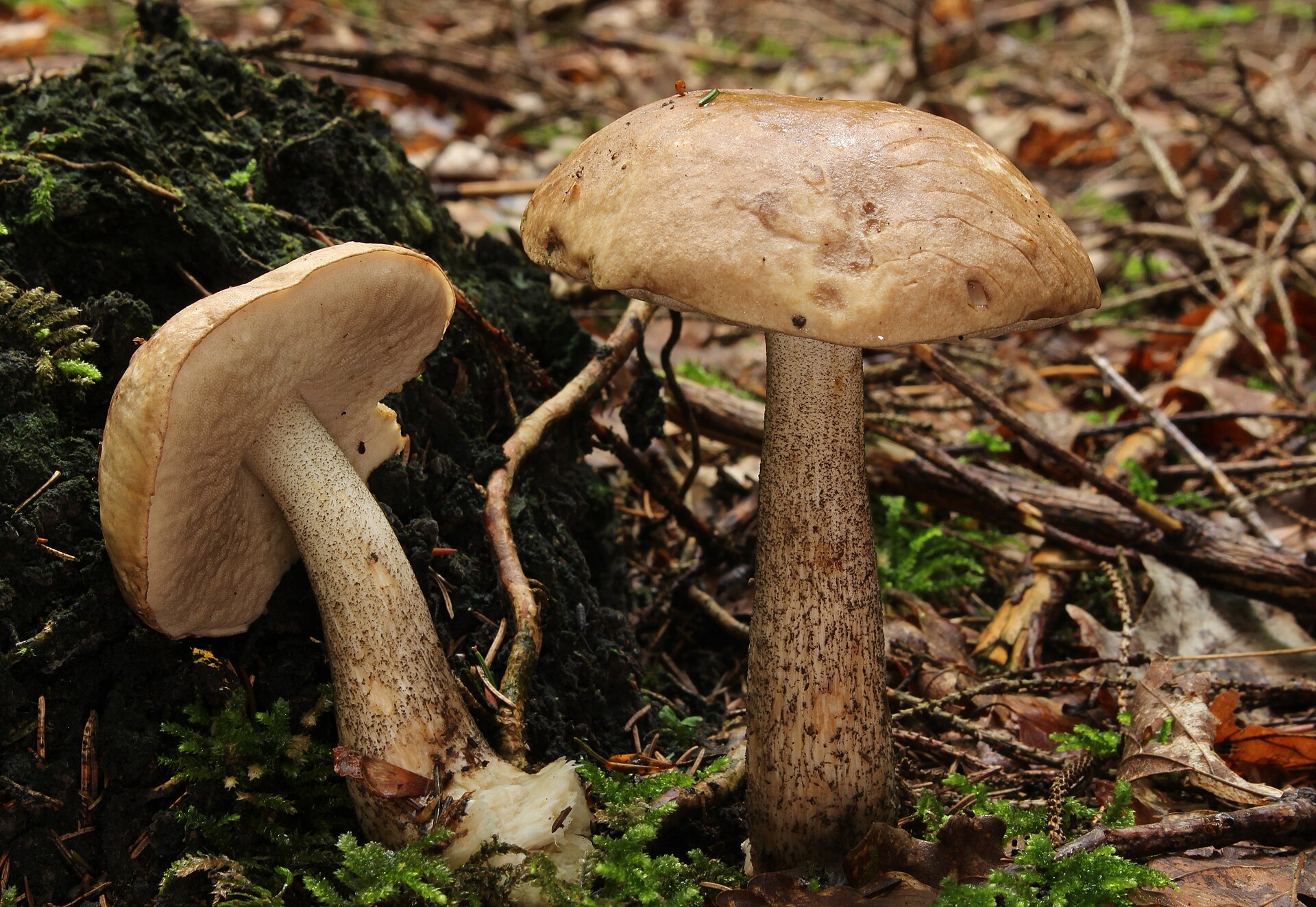
Birch bolete
Leccinum scabrum
★★★★★
Good edible mushroom
Birch bolete is usually darker brown on the cap. The bog bolete is particularly pale and associated with wetter habitats.
Read more about Birch bolete ›Preparation
Clean carefully and cut away the dirty stem base. Cook by frying or other thorough heating. Rough-stemmed boletes should not be eaten raw.
Recipe suggestions
Creamy Marsh Bolete sauce: fry sliced mushrooms until the liquid has evaporated, add onion and butter and pour in cream. Season with salt, pepper and parsley.
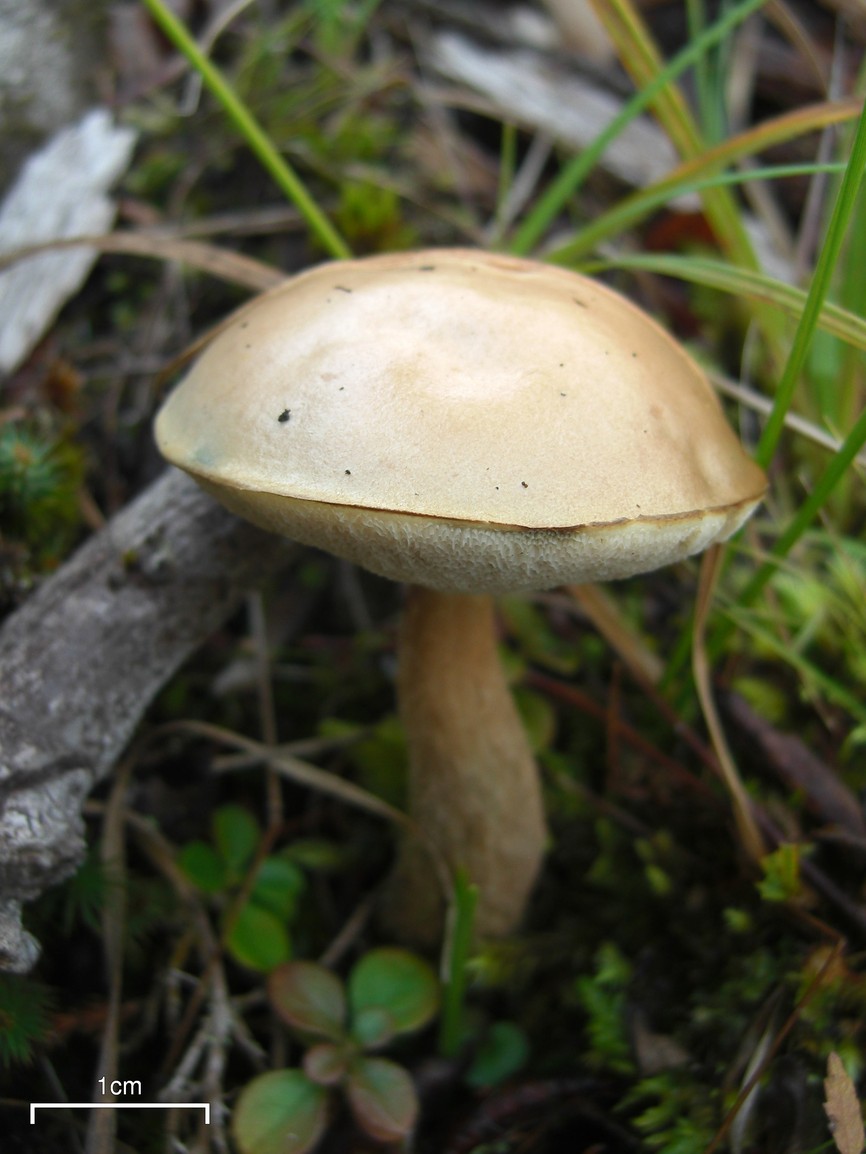
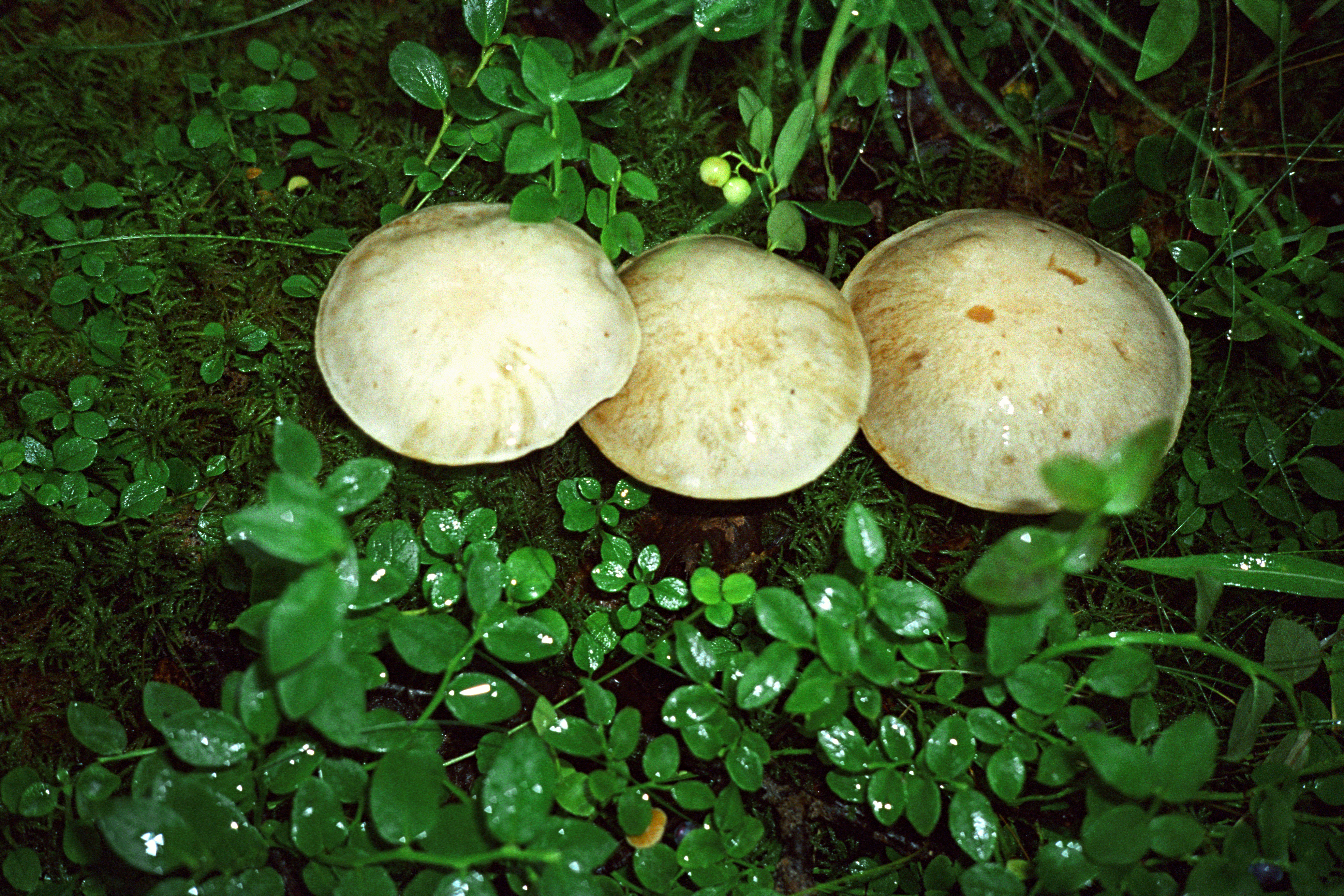
Images – study the mushroom from several angles
Click an image to display it as the main image.
⚠ Important safety information
Identification should be based on several characteristics and habitat, not only the pale colour. Always cook rough-stemmed boletes thoroughly.
Identification should be based on several characteristics and habitat, not only the pale colour. Always cook rough-stemmed boletes thoroughly.
Facts and sources
Sources
Svampguiden; SLU Artdatabanken/Artfakta.
Svampguiden; SLU Artdatabanken/Artfakta.
Batch 11 supplemented – should be finally checked against a